

Introduction
Modern companies require fast, personalized service to meet rising consumer expectations. High volumes of daily requests and repetitive tasks across systems make manual processes inefficient and reduce productivity. The AI Digital Assistant addresses these challenges by understanding natural language, retrieving information, and automating business processes. This enables companies to improve performance and enhance the customer experience. Generative AI has transformed digital assistants into essential business tools. With a single platform, companies can engage customers and employees and perform targeted actions within enterprise systems. Organizations across industries use AI to increase efficiency, boost productivity, and provide 24/7 support. This guide outlines what an AI Digital Assistant is, its benefits, key features, and its importance for modern businesses.
What Is an AI Digital Assistant?
The AI Digital Assistant is artificial intelligence software that answers queries, retrieves information, and executes business processes using natural language. It understands context and integrates with enterprise applications to deliver more relevant results than traditional chatbots. Unlike structured dialogue flows, an AI Digital Assistant analyzes user intent and delivers tailored responses for more efficient communication and faster task resolution. It uses Natural Language Processing, Large Language Models, and enterprise knowledge search rather than keyword-based matching. For example, employees can instantly access vacation day information from HR systems, reducing manual follow-up and saving time. Customers can check order status and update delivery addresses without contacting customer service, streamlining requests and reducing support workload. An AI Digital Assistant turns routine communications into intelligent business transactions, increasing efficiency and improving the customer experience.
Why Businesses Are Investing in AI Digital Assistants
Customer expectations are always rising. Additionally, there is an ever-growing level of operational complexity experienced in businesses today. Employees have to handle increased workloads, and customers expect prompt responses across various communication channels. Therefore, many businesses find themselves unable to remain efficient and consistent. Under such circumstances, companies should consider a better way to deliver their services and information. Rather than relying on outdated processes, they should adopt innovative solutions to improve productivity and efficiency.
An AI Digital Assistant helps companies address these challenges by combining conversational intelligence with automation capabilities. It does not replace employees but rather automates mundane tasks. Thus, the team members will waste less time on monotonous tasks and be able to focus on difficult ones. Moreover, the businesses will gain improved responsiveness and efficiency.
Quicker Answers to Customer Queries
Nowadays, customers want to be assisted immediately, irrespective of the hour and the mode of communication. Yet waiting hours for an answer to their emails usually results in frustration and dissatisfaction. Luckily, an AI Digital Assistant offers prompt assistance 24/7. If customers want to learn about products, arrange appointments, track their orders, or need technical support, the assistant will provide a quick, accurate response. In this way, customers will get all the necessary help without having to wait for a free agent to answer. Moreover, the assistant can handle multiple dialogues simultaneously, providing customers with consistent service during peak periods. Thus, companies reduce response time, improve customer satisfaction, and engage customers. Meanwhile, the support agents have fewer routine tasks and can focus on solving complex problems.
Improved Employee Productivity
Employees often spend precious time searching for documentation, policies, procedures, and internal information. In this case, these distractions reduce productivity and significantly slow down work. Additionally, jumping from one system to another takes additional time. However, an AI Digital Assistant offers a consolidated knowledge base with all information easily accessible. This means there is no need to search across multiple platforms; employees can ask in natural language, and the digital assistant instantly finds relevant information from company-approved sources. Thus, employees can save time to do other tasks. Also, collaboration becomes more efficient because all team members have access to the same updated information. At the same time, managers answer fewer repetitive questions. Therefore, companies increase employee productivity, optimize internal processes, and allow employees to focus on more critical tasks.
Reduction of Operational Expenses
Many business processes include repetitive tasks such as responding to customer inquiries, processing requests, scheduling appointments, updating data, and forwarding support tickets. These activities raise operational costs and lower employee productivity. An AI Digital Assistant can automate these tasks, reducing manual labor costs while maintaining high-quality service. This allows employees to focus on more complex work that requires creativity and expertise. Automation reduces errors, increases efficiency, and enables companies to manage higher workloads without additional staffing costs.
How AI Digital Assistants Work
The AI Digital Assistant leverages artificial intelligence and enterprise knowledge to interpret queries and automate business processes, delivering faster and more personalized experiences. Unlike other automation solutions, the AI Digital Assistant applies intelligence to each interaction. It analyzes user intent, retrieves information from credible knowledge bases, and connects with business processes to complete tasks. This ensures accurate responses and automates routine work.
Step 1: Determine the User’s Intention
The process starts when a user submits a query. The AI Digital Assistant uses NLP and LLMs to evaluate intent and context rather than relying solely on keywords. For example, a customer might ask, “Where is my order?” while an employee could say, “Am I allowed to work from home on Friday?” The digital assistant identifies each intent and provides the most appropriate response. The digital assistant understands conversational language, recognizes follow-up questions and varied phrasing, and maintains context throughout the interaction. Users do not need to remember specific commands, enabling companies to deliver fast, personalized responses.
Step 2: Search Enterprise Knowledge
Once the intent is detected, the AI Digital Assistant searches business information without delay. Rather than relying on static knowledge in frequently asked questions, the assistant provides accurate answers by drawing on authorized business knowledge sources. With that said, the assistant provides consistent and reliable information to the users.
The authorized business knowledge sources might include:
- Internal knowledge bases
- Policies
- Manuals
- Procedures
- HR material
- Training resources
- Customer support articles
In addition, users get access to the latest information rather than outdated answers. In addition, the assistant uses centralized knowledge, ensuring consistency throughout the business operations. No matter which departments users ask for information, all departments will provide the same information. In other words, businesses will prevent mistakes and ensure consistent communication between departments.
Step 3: Integration with Business Systems
Modern AI assistants do more than provide information. They also interact with business applications to support daily operations and go beyond basic question-and-answer tasks.
For example, the assistant can integrate with the following applications:
- CRM tools
- Help desks
- Human Resources software
- ERP systems
- Scheduling platforms
- Email apps
- Calendar software
This integration allows the assistant to access real-time data and complete tasks across platforms, reducing the need for users to switch between applications. For example, the assistant can schedule appointments or initiate password resets directly.
Step 4: Automate Business Workflows
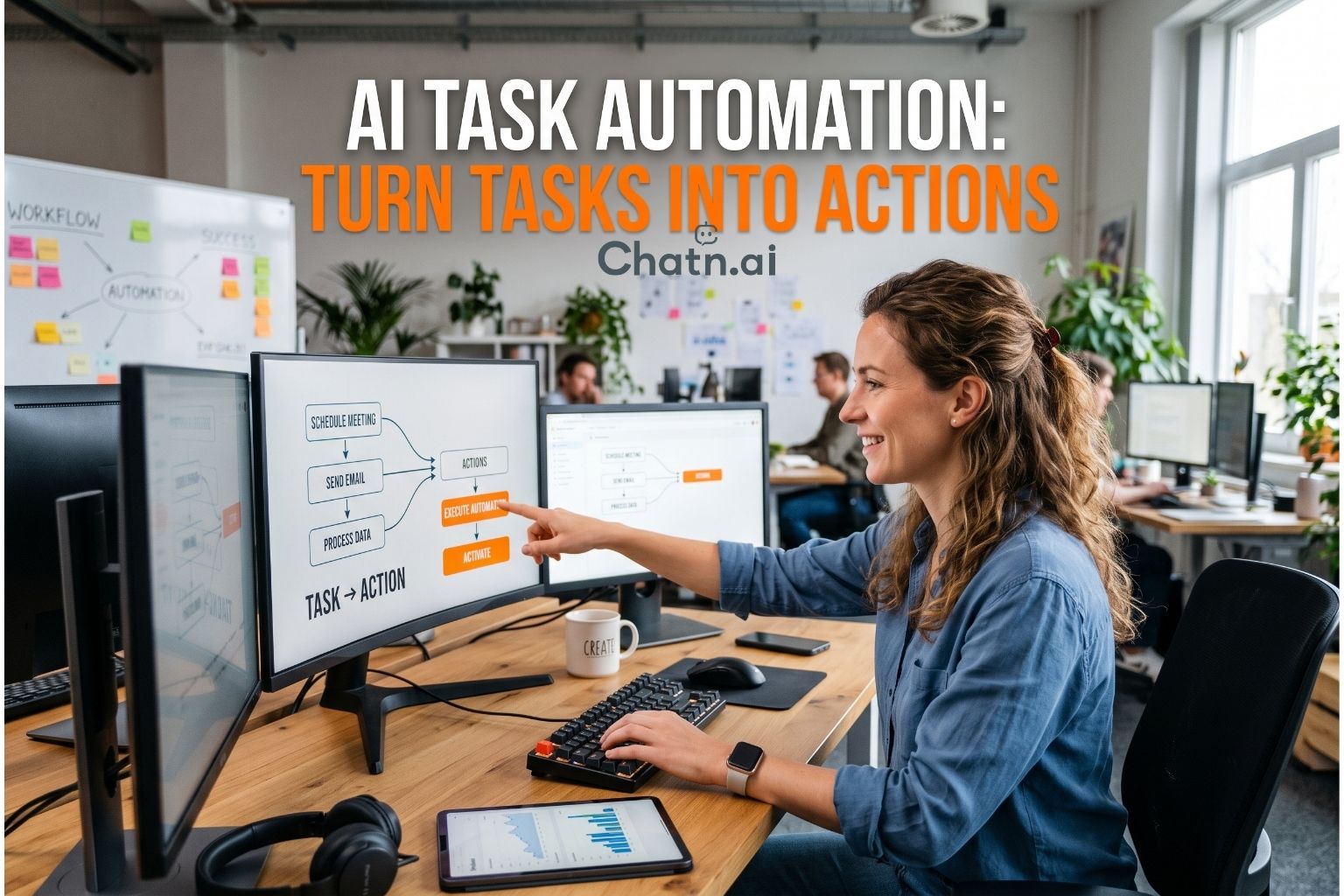
The AI Digital Assistant automates routine processes and completes or initiates business actions. It stands apart from traditional conversational tools that only provide information.
Depending on the request, it can:
- Create support tickets
- Route customer inquiries
- Schedule appointments
- Update CRM records
- Submit internal requests
- Generate reports
- Approve routine workflows
- Notify employees of important updates.
As a result, employees spend less time on repetitive tasks and can focus on strategic work. Customers benefit from faster, more accurate service. Automated workflows also reduce errors, improve consistency, and accelerate business processes. By streamlining operations, organizations increase productivity and efficiency, creating seamless digital experiences that support growth and deliver greater value to customers and employees.
Real-World Use Cases of AI Digital Assistants
Organizations across industries use AI Digital Assistants to enhance customer experience, streamline operations, and boost productivity through one unified platform.
Customer Service
Customer service is a primary use case for AI Digital Assistants. Customers expect prompt, 24/7 responses across all channels. The assistant provides immediate support for common inquiries, reducing wait times for live agents and improving the overall experience. It can, for instance:
It can, for instance:
Answer common questions (both what and how)
- Track orders
- Schedule appointments
- Process returns
- Update account information
- Raise tiered issues to human agents
The assistant handles multiple customer conversations simultaneously without compromising service quality. This improves responsiveness and customer satisfaction, enabling support teams to address more complex issues. Organizations can then provide more personalized support and build stronger customer relationships.
Sales and Lead Qualification
Sales teams frequently address repetitive questions before reaching qualified prospects, which can delay deal closures and hinder relationship-building. An AI Digital Assistant streamlines lead qualification by gathering customer information, recommending products, answering pricing questions, and scheduling appointments for product inquiries and follow-up. It provides prompt responses and keeps all parties informed. Available 24/7, the assistant enables businesses to capture opportunities outside standard hours. This allows sales teams to focus on high-value interactions, shorten the sales cycle, increase lead conversion, and improve the customer experience.
Employee Support
Staff often search for policies, benefits, IT resources, and onboarding materials, but locating this information is often inefficient. Navigating multiple systems wastes time and lowers productivity.
An AI Digital Assistant addresses this challenge by serving as an internal knowledge resource. Employees receive accurate answers within seconds, eliminating the need to search through multiple documents.
Employees can instantly:
- Find HR policies
- Request time off
- Access onboarding resources
- Locate company procedures
- Complete IT support requests.
- Retrieve internal documents
This allows staff to spend less time searching for information and more time on productive tasks. Managers receive fewer repetitive questions and can focus on strategic priorities. As a result, organizations increase productivity, streamline employee support, and enhance workplace efficiency, leading to better business outcomes.
Operations and Workflow Automation
Effective collaboration and communication are vital for business operations. However, manual processes slow progress, increase administrative workload, and reduce productivity. Businesses now require faster, more efficient management of routine tasks. An AI Digital Assistant simplifies operations by automating repetitive tasks and streamlining workflows across teams. For example, it can route approval requests, generate reports, update databases, notify stakeholders, assign tasks, and track workflow progress. As a result, staff can dedicate more time to strategic work and less to manual tasks. Automation reduces errors, ensures process consistency, and accelerates task completion. This improves team collaboration, increases business visibility, and supports greater efficiency, cost savings, and scalable growth.
Essential Features to Look for in an AI Digital Assistant
AI solutions do not all offer the same benefits. Some tools are limited to answering basic questions; others automate processes, integrate with enterprise systems, and facilitate complex business operations. Hence, it is crucial for businesses to weigh up an AI Digital Assistant carefully before investing. Furthermore, the right solution can significantly improve productivity, streamline operations, and optimize the customer and employee experience. Automation, scalability, security, and integration are other features organizations should consider, in addition to conversational skills. This means that they can make the most of their investment and promote the sustainable development of their business. These capabilities can help organizations select an AI Digital Assistant that brings tangible benefits, enhances business efficiency, and elevates the user experience throughout the business.
Natural Language Understanding (NLU)
An effective AI Digital Assistant understands natural human communication without depending on specific keywords. It responds naturally and delivers relevant information based on user intent. Users can phrase questions in different ways and receive consistent responses, including during follow-up questions and ongoing conversations. The assistant recognizes follow-up queries and maintains context, making interactions more intuitive and engaging. This approach increases user satisfaction, enhances the customer experience, and builds trust in AI-based support.
Enterprise Knowledge Search
Reliable information is essential for any intelligent assistant. An AI Digital Assistant should go beyond standard FAQs by sourcing answers from trusted business knowledge, including policy documents, product manuals, knowledge bases, internal documentation, and other approved resources. This approach ensures employees and customers consistently receive timely and relevant responses. Centralized knowledge reduces conflicting information and improves accuracy, fostering trust, enhancing collaboration, and minimizing confusion. Ultimately, enterprise knowledge search enables faster, more accurate customer service and promotes consistency across all departments.
Workflow Automation
A modern AI Digital Assistant streamlines business processes to improve efficiency and productivity. Beyond providing information, it can perform basic tasks independently. It can automatically generate support tickets, schedule appointments, submit requests, and update records without human intervention. This automation streamlines workflows, saves administrative time, reduces errors, and ensures consistency. As a result, staff can focus on strategic tasks, optimizing operations and delivering faster, more consistent experiences for customers and employees.
Common Mistakes Businesses Make When Implementing AI Digital Assistants
Although AI offers significant opportunities, successful implementation requires thoughtful planning. Unfortunately, many organizations make avoidable mistakes that reduce the effectiveness of their investment.
Treating AI Like a Basic FAQ Bot
Many companies view AI Digital Assistants as enhanced FAQ pages, which prevents them from leveraging the full range of available capabilities. Modern AI goes beyond answering questions. It understands dialogue, interprets user intent, accesses enterprise knowledge, automates processes, and completes business tasks efficiently. AI can also integrate with business systems to streamline operations and increase productivity. Companies should leverage these advanced capabilities and move beyond traditional customer support applications.
Ignoring Knowledge Quality
An AI Digital Assistant relies on the information it can access. Organizations must ensure their knowledge sources are current, complete, and accurate for effective performance. Outdated, incomplete, or inconsistent knowledge bases cause the assistant to provide inaccurate or inconsistent responses. This undermines trust among customers and employees, reduces efficiency, and limits the assistant’s effectiveness. To maintain high-quality responses, organizations should regularly review, update, and validate their knowledge base. Accurate information allows the AI Digital Assistant to deliver consistent, reliable support and greater value to all users.
Automation of All Processes Instantly
While automation improves productivity, companies should avoid automating all processes at once. Rapid implementation can overwhelm staff, disrupt workflows, and result in costly errors. Companies should begin by automating highly repetitive, high-volume tasks that deliver quick, visible results. This approach eases adoption, reduces risk, and helps employees adjust to new technologies. As teams gain experience, organizations can automate more complex processes and identify further opportunities for improvement, supporting successful AI Digital Assistant implementation.
How Chatn Helps Businesses Build Smarter AI Digital Assistants
Chatn goes beyond conversational AI by integrating enterprise knowledge and workflow automation into one solution. It delivers intelligent automation, security, application integration, and scalability, enabling enterprises to create digital assistants for customers and employees. Chatn analyzes user intent and provides context-aware responses, moving beyond pre-programmed conversation flows. It leverages reliable knowledge bases and integrates with business systems to automate routine tasks, such as customer support, employee self-service, lead qualification, appointment scheduling, and document access. Chatn supports multi-channel communication, ensuring a consistent experience across digital platforms. This helps enterprises increase efficiency, reduce manual tasks, and streamline workflows.
The Future of AI Digital Assistants
AI is developing fast. Hence, in the coming years, AI Digital Assistants will be even more advanced and smart. Future assistants will offer their services proactively through analyzing users’ behavior, past history, and business information. They will give recommendations without being asked, will notice bottlenecks in workflows, and automate business processes that are more complicated than ever. Moreover, multimodal AI will enable assistants to understand text, speech, images, and documents in a single conversation. Therefore, businesses will provide their clients with a richer and faster experience. Besides, many AI agents will work together in different departments to perform certain tasks. Thus, businesses will have improved processes, improved decision-making, and increased efficiency. In conclusion, AI Digital Assistants will become digital colleagues that help businesses innovate, collaborate more effectively, and grow sustainably.
Conclusion
Modern businesses require more than automation. They need intelligent solutions that interpret communication, access reliable information, and complete meaningful tasks. An AI Digital Assistant provides these capabilities. These tools help companies improve customer service, empower employees, optimize processes, and reduce administrative costs. They also enable faster, more personalized customer interactions, streamline employee tasks, and support analysis and automation, resulting in greater productivity and consistent experiences.
Long-term success depends on selecting the right platform. Businesses should prioritize integration, scalability, and continuous improvement through analysis and automation to ensure these capabilities support customer service, employee support, and operational efficiency. This approach paves the way for effective solutions. Chatn distinguishes itself by combining intelligent conversations with efficient workflow automation, enabling businesses to enhance customer service, support employees, and streamline operations. This foundation helps companies strengthen their competitive edge and drive long-term innovation as AI technology evolves.