
Consumer expectations are rising in every sector. Customers expect immediate responses, personalized service, and seamless communication across all channels. However, many organizations continue to use outdated support systems, which cause delays and reduce customer satisfaction. Legacy practices cannot meet increasing demands. To scale effectively, businesses need more agile strategies. AI-driven digital assistants address these challenges by managing conversations, improving workflows, and increasing engagement across channels. These systems provide quick responses, reduce the support team’s workload, and ensure consistent, scalable customer experiences around the clock.
Companies increasingly regard intelligent AI assistants. Companies now view intelligent AI assistants as essential assets, not just technology upgrades. Early adoption of AI-driven assistants helps organizations improve efficiency, scalability, and customer satisfaction. Platforms such as Chatn.ai automate interactions while maintaining authentic, human-like engagement, re overhauling customer support, sharpening workflows, and redefining contemporary communication.
What Is Digital Assistant AI?
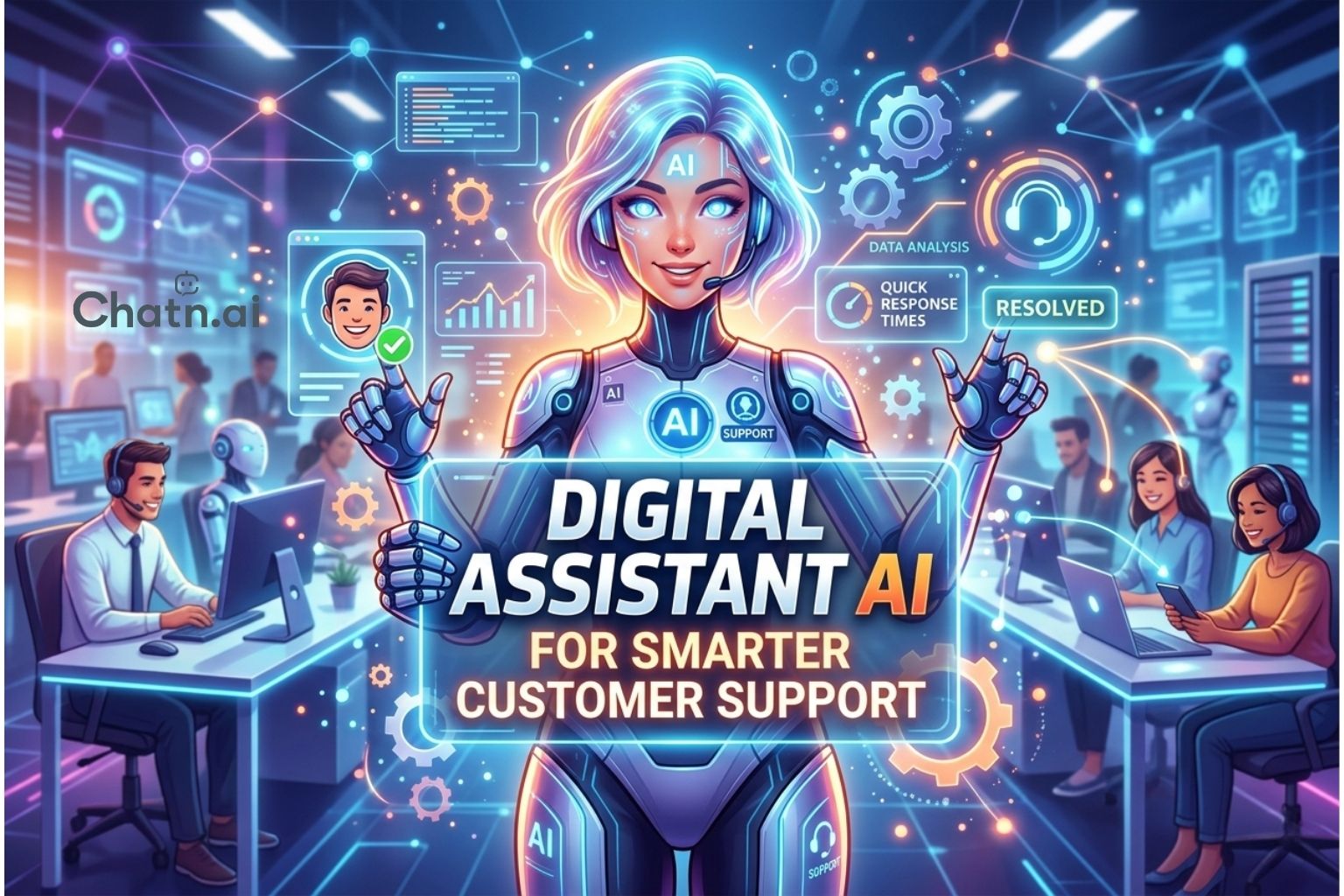
Digital assistants are intelligent software that automatically converse with users in real time, helping them. In contrast to traditional chatbots, modern AI assistants can understand context, interpret user intent, and provide more natural interactions. This means businesses can offer more intelligent, tailored customer interactions without relying solely on human agents.
Also, digital assistant AI offers a range of advanced features that further enhance communication and streamline workflows. These technologies include:
- Natural language processing
- Machine learning
- Conversational AI
- Predictive analytics
- Intelligent automation
These technologies enable digital assistant AI to respond dynamically, rather than through limited workflows or scripts. Therefore, businesses can manage customer interactions more effectively and accurately over various communication channels.
AI assistants can support various aspects of business today. Digital assistant AI has the power to assist companies in various ways, such as:
- Respond to client inquiries in real-time. Provide prompt response to customer inquiries.
- Reduce repetitive administrative tasks through automation
- Enable internal requests for staff. Enable staff requests internally.
- Efficiently route service tickets
- Generate and qualify leads
- Improve workflow efficiency
Additionally, these smart systems evolve over time and learn from customer interaction and behavior. As a result, the digital assistant AI improves over time. This continuous improvement not only boosts operational efficiency but also enhances customer engagement.
Why Businesses Are Moving Toward AI Assistants
Businesses are turning to AI Assistants for several reasons. Communication and dialogue with customers is now more challenging than ever. In this day and age, customers demand that businesses provide instant answers, personalized interactions, and flawless customer service across all channels. They also wish to see firms available at all times, with no delays or inconsistencies in their service.
These are the expectations of modern customers:
- Immediate responses
- 24/7 availability
- Personalized interactions
- Fast issue resolution
- Consistent communication
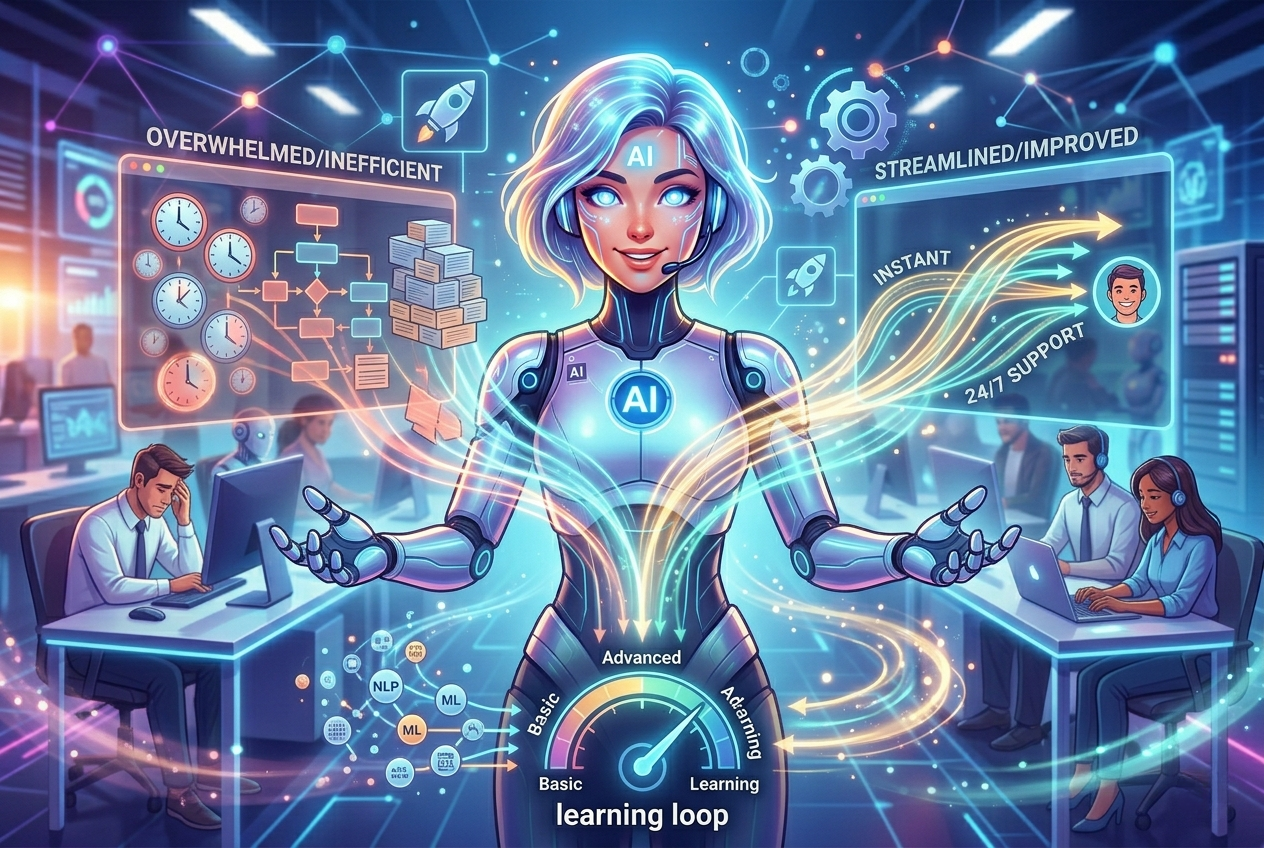
But many companies are having trouble meeting these increasing demands with only human resources. Manual processes can lead to delayed responses and operational delays, whereas support agents can be valuable resources. This often leads to overworked staff, slow response times, and frustrated customers. This can result in high workloads, lagging response times, and customer dissatisfaction. Meanwhile, costs are still climbing for businesses, and staffing difficulties persist. This means that organizations must have solutions that are scalable and can be implemented with a minimal impact on the total overhead. As such, an organization needs solutions that can be implemented at scale without substantially higher overhead. This is where the AI capabilities of digital assistants come in handy. Digital assistant AI simplifies and optimizes customer interaction automation, streamlines workflows, and minimizes repetitive workloads. Furthermore, AI-driven solutions can process thousands of conversations simultaneously while maintaining the same communication quality.
For instance, AI support can respond to typical customer queries instantly, route support tickets, and manage common service requests without human intervention. This allows support teams to focus on more in-depth issues that require critical thinking and individualized attention. This leads to increased productivity, reduced load on the business, and a better customer experience. Furthermore, AI-powered digital assistants help organizations scale customer support more quickly and adapt to rising communication demands.
How Digital Assistant AI Improves Customer Experience
In today’s business landscape, customer experience is a critical factor in long-term success. Today, consumers are used to receiving instant responses, a personalized experience, and a consistent message every time. In the increasingly competitive business world, it is imperative that businesses provide solid support experiences. Sadly, inadequate communication can result in customer dissatisfaction, reduced customer satisfaction, and trust in the brand. Sometimes, the failure to respond quickly enough and provide correct service compels customers to go elsewhere for faster, more efficient service. Consequently, companies can no longer afford to stick to an outdated communication system. Thus, it is essential for businesses to adopt smarter, more proactive approaches to customer support. That’s where AI-powered digital assistants come in handy.
AI-powered digital assistants can streamline business interactions, decrease response times, and improve personalization and customer engagement across various communication channels. Additionally, AI-powered assistants enhance communication uniformity and support teams in addressing increasing customer needs more effectively. This means businesses can enhance customer satisfaction, boost engagement, and foster long-term customer relationships.
Getting Real-time Support from Multiple Channels
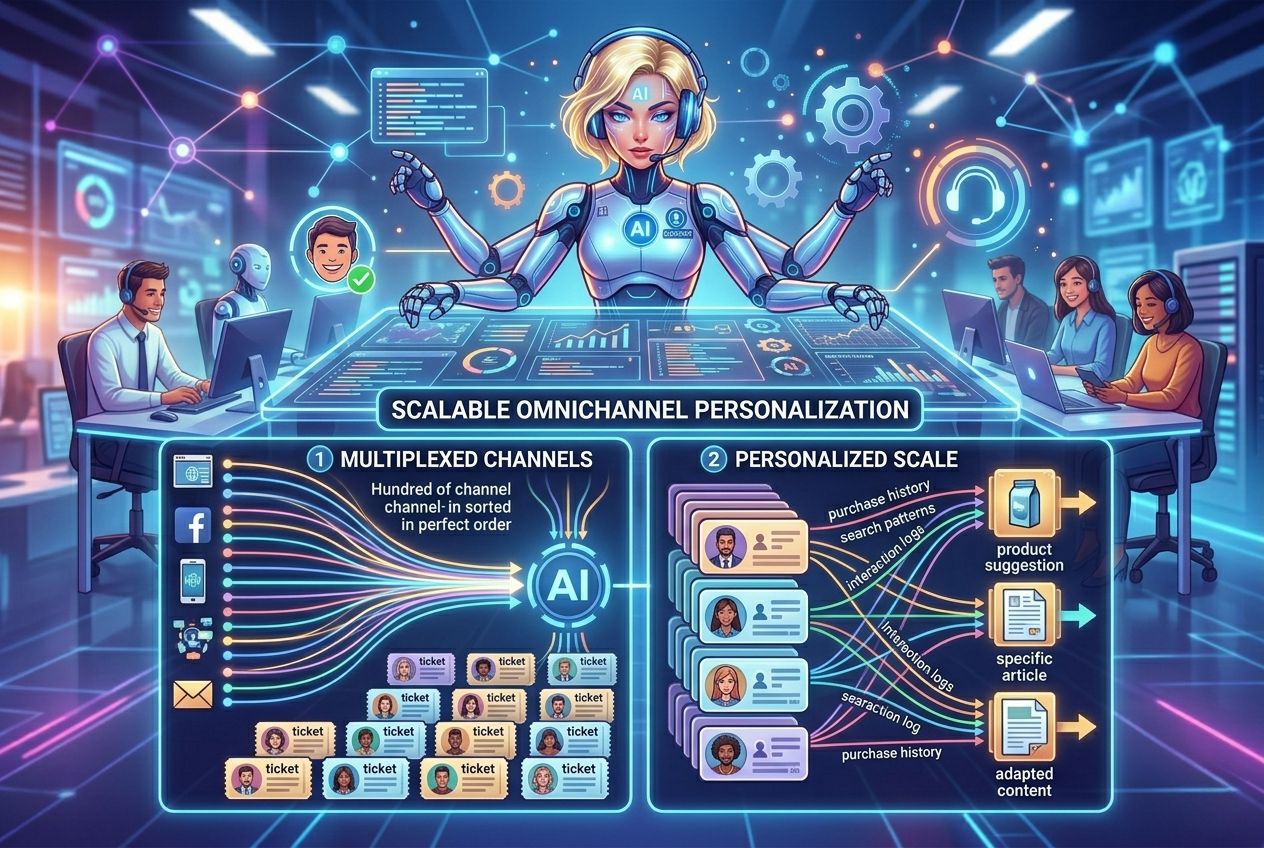
Today’s customers use a variety of channels to reach the business, and they want it done in real time. These days, they use websites, social media, mobile apps, messaging platforms, email, and customer portals to contact support teams. Consequently, communication has become more dispersed and more difficult to handle on a person-to-person basis.
Maintaining all these channels, however, poses operational complexity and delays in response times. Support teams often struggle to respond to multiple messages simultaneously. As a result, businesses may experience slower response times, lost inquiries, and even poor customer experiences. This challenge is addressed by AI-powered digital assistants, which keep all communication in one place in real time. This allows businesses to provide a seamless, consistent customer service experience regardless of where customers interact. Additionally, AI systems seamlessly integrate conversations into a single workflow, streamlining the process and minimizing confusion for support teams.
For instance, AI assistants can:
- Promptly respond to requests from websites. Quickly respond to website requests.
- Manage social media messages and queries effectively.
- Routes are automatically created as support tickets.
- Help users within mobile applications. Support customers within the mobile apps.
- Seamlessly bridge communications between different platforms
Besides, this omnichannel solution can help you maintain consistent communication while also minimizing response times. This can lead to improved customer experiences, faster response times, and more efficient support delivery for businesses.
Personalized Conversations at Scale
Customers no longer want a witty or one-size-fits-all reply. Rather, they’re increasingly calling on businesses to know their preferences, needs, and previous interactions. Personalization is becoming a major factor in satisfying and retaining customers in today’s competitive world. This level of personalization is very difficult to achieve manually as a business grows and the number of customers increases. Consequently, many organizations find it challenging to maintain consistent personalized communication across all interactions. That’s where a digital assistant AI can be a powerful help.
AI for a digital assistant analyzes customer behavior, conversation history, and real-time interaction patterns. It can then automatically respond to a customer’s needs, without requiring any manual effort from the support staff. Furthermore, the systems learn from every interaction, enhancing their accuracy and relevance with every use.
For instance, AI assistants can:
- Suggest products according to the customer’s behavior and purchase history.
- Provide relevant, specific support articles tailored to the problem.
- Integrate into ongoing discussions across sessions
- Adapt to users’ wishes and their tendency to interact with the content.
Moreover, this smarter customization can be applied at scale, enabling companies to interact with thousands of customers simultaneously. This results in more interesting, significant, and customer experiences, and with a degree of efficiency.
The Business Value of Digital Assistant AI
However, AI digital assistants offer many advantages beyond customer service, such as enhancing overall business operations. In this competitive world, businesses need to continually strive to improve efficiency, cut costs, and boost productivity to stay ahead of the game. This is why companies have begun implementing AI solutions to simplify processes and boost productivity across teams. As a result, AI tools are gaining traction among organizations seeking to streamline operations and improve team performance.
Consequently, companies adopting digital assistant AI typically see tangible benefits in their operations, such as:
- Faster workflows
- Lower operational costs
- Better productivity
- Improved customer retention
- Higher scalability
More importantly, these advantages are directly related to short and long-term efficiency and growth. AI systems can, for instance, automate repetitive manual tasks that often impede teams and create operational bottlenecks. They will also support organizations in responding more quickly to customer needs and internal requests.
First and foremost, with the digital assistant AI, employees can focus on high-value tasks that require human creativity, judgment, and problem-solving. Teams can focus on strategic projects that help them grow their business, rather than getting bogged down in repetitive tasks. This means companies will achieve better overall performance without the need for an unbalanced workforce.
Reducing Support Team Burnout
Every day, customer support teams are dealing with more work than they can handle. Agents in many organizations receive a tremendous number of repetitive inquiries daily, which take up a lot of time and energy. This means employees get stressed out earlier, become tired and less productive, ultimately resulting in a decline in quality of service and customer satisfaction. Hence, businesses need to identify better ways to mitigate that operational stress. That is where a digital assistant AI becomes essential to boost the effectiveness and health of employees at the workplace.
Digital assistants powered by AI eliminate strain on the workforce by automating repetitive, routine customer inquiries. For instance, AI systems can perform tasks such as:
- Password resets
- Order tracking
- Appointment scheduling
- FAQ responses
- Basic troubleshooting
Also, these systems are available 24 hours a day, providing timely support for customers without overloading the human agents. This means support teams don’t get bogged down by repetitive requests and can better plan their workloads. This means that human agents can focus on more sophisticated customer issues and concerns that demand empathy, critical thinking, and problem-solving. Furthermore, this enhanced task allocation. Creates a healthier, more balanced work environment. In the end, this equilibrium will improve workers’ productivity and boost customer satisfaction, thereby contributing to better business performance.
Scaling Customer Support Without Scaling Costs
As a company grows, it receives customer messages across many channels. As businesses grow, they get many questions and requests for help, and people expect good service. Usually, companies hire more people to handle all the work. This makes costs go up really fast, and it is hard to keep growing. So companies are looking for ways to do things. This is where AI-powered digital assistants come in. It is a way to help customers without needing a huge team.
Digital assistant AI helps companies grow without needing to hire many people. In fact, computers can handle thousands of customer messages simultaneously and still respond well. This means companies can work more effectively without relying on large teams. Also, a digital assistant AI can handle changes in how busy it is, so it always works well even when a lot of people are using it. This is really helpful during things like
- Seasonal demand spikes
- Product launches
- Marketing campaigns
- Business expansion
Plus, computer systems do not get tired or stop working, so companies can always provide good service even when many people need help at the same time. In the end, businesses can control costs, work more effectively, and grow more easily without making customers unhappy. Digital assistant AI is really good at helping Customer Support. That is what companies need to scale Customer Support.
Digital Assistant AI Beyond Customer Support
Many companies view AI assistants only as customer service tools. However, their capabilities extend much further. Today, businesses use digital assistant AI across multiple departments.
AI for Sales Assistance
Sales teams have to deal with a lot of leads and customer interactions every day. They need to respond and do a good job of turning interested people into actual buyers. So it is very important for sales teams to be efficient and fast.
AI that helps with sales is very useful for improving sales teams. This kind of AI automatically does tasks that sales teams do every day, which takes a lot of time. This means sales teams can focus on things that will actually make them money. For example, AI can do things like:
- Lead qualification
- Product recommendations
- Follow-up reminders
- Appointment scheduling
- Sales funnel engagement
AI systems also talk to customers in real time, so no opportunities are missed because someone didn’t respond quickly enough or was too busy. This keeps the sales process moving and organized. So salespeople can spend time on what matters, like closing deals, building relationships with customers, and having important conversations. They do not have to waste time on tasks like paperwork. This means they can sell more, customers are happier, and the sales team does a better job overall. AI for Sales Assistance really helps sales teams do their jobs better.
AI for Employee Support
Internal operations benefit a lot from AI automation as businesses grow. As companies grow, employees need information, tools, and support to stay productive. So companies are using assistant AI to make internal communication better and improve workplace efficiency.
Businesses now use AI assistants to support internal functions, including:
- HR support
- Employee onboarding
- IT service requests
- Internal knowledge management
- Policy guidance
These AI systems also answer employee questions right away, reducing delays that happen with manual support. For example, employees can quickly access HR policies, submit IT requests, or get onboarding guidance without waiting for a human. Also, an AI digital assistant ensures that information is consistent and easy to find across the organization. As a result, employees get more reliable support, which improves productivity and job satisfaction. At the time, internal support teams have less work to do and can focus on complex or strategic tasks. This balance creates an efficient and responsive internal work environment. Employees benefit from AI for employee support. AI for employee support makes their work easier. AI for employee support benefits both employees and internal support teams.
The Future of Digital Assistant AI in Business
Digital assistant AI is evolving rapidly as businesses seek smarter, more efficient automation. As technology improves, companies are adopting adaptive and predictive systems. So, Digital Assistant AI will play a role in business operations in the coming years.
Soon, businesses will use more advanced Digital Assistant AI, including:
- Predictive customer support
- Voice-enabled AI assistants
- Hyper-personalized interactions
- AI-driven workflow ecosystems
- Smarter business automation
These new ideas will not only improve customer communication but also change how businesses manage internally and make decisions. For example, predictive systems will help companies know what customers need before they have a problem, and voice-enabled assistants will make things easier to use.
As technology continues to improve, Digital Assistant AI will become part of businesses. Digital Assistant AI will not just be a tool; it will be a helper. A main system that makes businesses smarter. So businesses that start using Digital Assistant AI early will have an advantage over others, grow, and be more flexible. These companies will be better at adapting to customer needs and market changes.
Final Thoughts: Why Digital Assistant AI Matters Now
Customer expectations continue to rise across industries. Traditional communication methods are no longer sufficient to meet these demands. Manual processes are often time-consuming, costly, and limit business growth, which can negatively impact customer satisfaction and overall performance. To stay competitive, companies need more flexible solutions. AI-powered digital assistants address these challenges by automating tasks, personalizing customer interactions, and delivering effective support across multiple channels.
What is really important is that AI improves digital assistant bots. Most importantly, AI-powered digital assistants enhance both the customer experience and business operations. For example, it reduces response times, streamlines workflows, and ensures consistent communication with customers. This allows businesses to deliver faster, more reliable service without adding complexity to their operations. They are positioned to grow in the long run and address problems. On the one hand, businesses that wait too long to automate may fall behind competitors that are already delivering faster, smarter service to customers.
Platforms like Chatn.ai enable businesses to transition to communication systems that align with current customer expectations and operational needs. In the end, the future of talking to customers is not about doing things by hand. Ultimately, the future of customer communication is not manual. It is intelligent, automated, scalable, and driven by AI assistants. Digital assistant AI makes this future possible.