
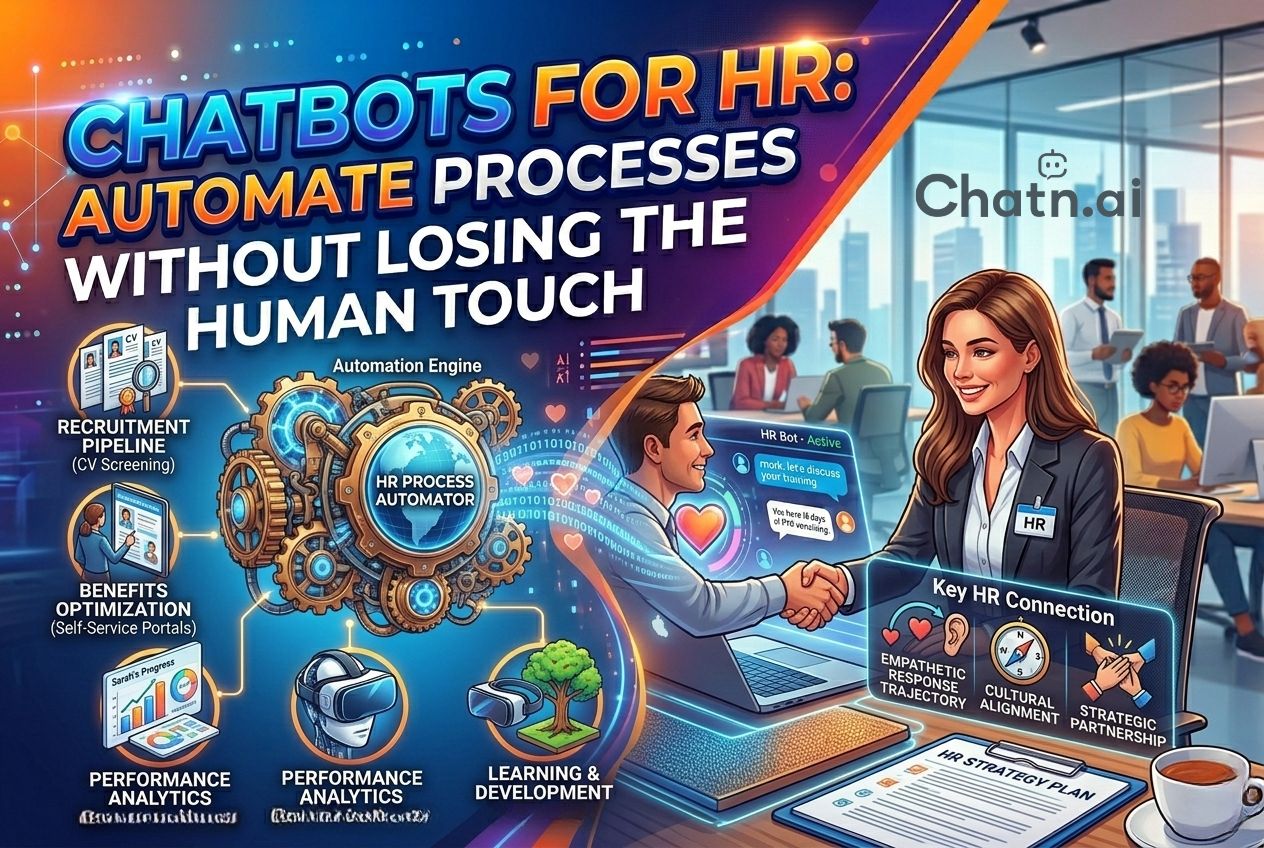
The pressure on human resources personnel is unparalleled due to employee demands, tightening compliance regulations, and the time wasted responding to repetitive HR questions. As a result, manual HR processes cannot scale effectively. Luckily, HR chatbots automate routine interactions and enable HR departments to minimize workload while enhancing the employee experience. This post will discuss how HR chatbots can streamline workflows, improve accuracy, and add a human touch. We also offer practical ways to implement and adopt best practices to maximize ROI.
Why HR Teams Are Reaching a Breaking Point
Modern HR teams handle more tasks than ever before. Beyond recruiting and onboarding, they must manage benefits, payroll questions, compliance, and employee engagement.
The Price of Recurring HR Interviews
Routine questions like leave balances, policy clarifications, and timesheet queries are consuming hours of HR teams’ time every day. In the meantime, workers usually wait for responses via email or Slack, which further slows processes and makes them more frustrating. As a result, such repetitive questions not only decrease productivity but also deny HR personnel the opportunity to work on strategic priorities. By overcoming these issues, organizations will be able to regain precious time and enhance employees’ overall experience.
Expectations of Employees have changed
Employees in the modern workforce demand quick, precise, and convenient support. Moreover, they are increasingly comparing interactions with HR to their customer service experiences, expecting them to be just as fast and convenient. Consequently, they desire answers at all times and places. In the absence of automation, HR departments cannot meet these expectations and may experience burnout, which ultimately affects productivity and employee satisfaction.
What Are Chatbots for HR? (And What They Are Not)
Basically, HR chatbots are artificial intelligence-based helpers that are willing to actively converse with employees to share information, accomplish tasks, and automate workflows. The chatbots also interact conversationally, unlike traditional HR portals, which are always static and require manual navigation. The chatbots recognize context and constantly learn as they interact. As such, they provide quicker, more effective support, minimize redundant administrative tasks, and enhance employees’ overall experience.
HR Chatbot vs Traditional HR Portals
Unlike the old-fashioned HR portal, where users have to browse complicated menus and search the database manually, HR chatbots offer a more guided, conversational experience that provides answers much faster. Furthermore, employees can pose questions in natural language and receive answers instantly, in the correct form. Consequently, chatbots can minimize frustration, save time, and help the HR department focus on more valuable activities.
Rule-Based Bots vs AI-Powered HR Chatbots
Rule-based bots operate under strict workflows, though customers are most frequently annoyed by their rigid, unresponsive nature. Conversely, AI-based HR chatbots are context-aware, can respond to various situations, and can escalate complicated cases to human HR teams. In turn, this strategy promotes more efficiency, accuracy, and timely provision of employees with the necessary assistance.

Core Use Cases Where HR Chatbots Deliver the Most Value
HR chatbots are not just tech toys—they provide measurable business impact. Implementing them strategically transforms HR operations across multiple touchpoints.
Automation of Employee Self-Service and HR Helpdesk
By using HR chatbots, organizations can automate the most common questions, such as PTO balances, payroll questions, and benefits. Automation gives HR staff more time to focus on strategic initiatives while providing employees with immediate support and precise responses. In addition, the method minimizes response delays, improves efficiency, and enhances employees’ overall experience.
New Hire Support and Onboarding
The onboarding process for new employees is very overwhelming, as they are never sure of policies, forms, training schedules, and IT setups. Luckily, HR chatbots will walk new employees through it, answer all questions and queries immediately, and understand the work. Automation reduces confusion, helps employees adapt faster, and boosts overall productivity. Also, HR departments will experience fewer repeat requests and a smoother onboarding process.
PTO, Attendance, and Policy Clarifications
Employees often have numerous questions about leave, attendance, and HR policies. Managing these tasks can overwhelm HR departments. Organizations can benefit from using chatbots in HR by providing employees with instant, accurate answers to their questions, reducing errors and misunderstandings. Automation ensures employees’ questions are answered and improves the efficiency of work processes.
Internal HR Knowledge Management
By integrating chatbots into the HR department, organizations can manage HR knowledge centrally, ensuring that organizational policies, updates, and compliance documents are always available in real time. Automation eliminates the need for employees to search for documents manually and prevents the circulation of outdated information.
Benefits of Using Chatbots for HR Teams
The advantages of HR chatbots extend beyond automation—they impact the overall efficiency, compliance, and employee satisfaction.
Decreased HR Workload Without Reducing Staff
By implementing chatbots for HR, organizations can automate repetitive inquiries, allowing HR teams to handle higher volumes efficiently without hiring additional staff. Moreover, chatbots act as workforce multipliers, freeing employees to focus on strategic initiatives while maintaining service quality. Consequently, HR departments become more productive, responsive, and capable of supporting a growing workforce without added costs.
Faster Response Times and Better Employee Experience
Using HR chatbots, employees get immediate 24/7 responses, eliminating the delays that typically slow down the process. Automation speeds up response times, which helps improve employee engagement and build trust. Moreover, this feature is even more critical for teams working remotely or across the globe.
Enhanced Accuracy and Policy Compliance
Organizations can provide standardized, approved information to all employees via HR chatbots. Automation reduces the risk of errors and policy non-compliance. Additionally, HR professionals can exercise greater control over the information communicated, ensuring that policies are accurate and up to date.

Common Mistakes Companies Make with HR Chatbots
While chatbots are powerful, incorrect implementation can reduce effectiveness. Knowing common pitfalls ensures a smoother rollout.
Treating the Chatbot Like an FAQ Page
Organizations often fall into the trap of treating chatbots like static FAQ pages, a far cry from AI’s actual capabilities. Poorly designed interactions leave users frustrated in conversations that fail to meet their needs. Better-performing chatbots in the HR space engage employees in dynamic conversations that move them forward.
Over-Automating Sensitive HR Conversations
Although automation improves efficiency, HR teams should not automate all conversations. For instance, HR teams cannot automate conversations about conflict resolution, disciplinary issues, or employee concerns. As a result, HR chatbots should be able to identify such conversations and escalate them to ensure that employees are treated with care and consideration when it matters most.
Overlooking Data Privacy and Access Controls
Since HR chatbots handle confidential employee data, it is essential to implement appropriate security measures from the very beginning. Otherwise, organizations may face compliance issues and even data breaches. Hence, incorporating the proper security protocols from day one is essential to ensure that HR chatbots are secure and privacy-friendly.
How ChatN Approaches Chatbots for HR Differently
ChatN designs HR chatbots specifically for internal teams, not generic customer-facing interactions. This ensures practical, secure, and scalable solutions.
Designed for Internal Teams, Not Just Customers
Unlike generic off-the-shelf solutions, ChatN focuses on employee workflows and addresses HR requirements. Therefore, HR chatbots can process complex inquiries efficiently while maintaining the human element. ChatN provides employees with accurate, prompt assistance, allowing HR to focus on strategic planning while maintaining a human touch.
Secure, Role-Based Access to HR Knowledge
To safeguard confidential information, ChatN ensures that HR knowledge is accessible only to authorized employees. This way, the privacy of information is ensured while also facilitating widespread use of chatbots in the HR department. In addition, role-based access ensures compliance and trust among employees.
Seamless Integration with HR Systems and Processes
By seamlessly integrating with payroll, benefits, ATS, and intranet software, ChatN ensures that HR processes run smoothly and efficiently. HR chatbots eliminate manual data entry and provide real-time updates across various platforms. Moreover, this integration enables HR professionals to quickly access accurate and up-to-date information, thereby improving decision-making and the overall employee experience.

How to Know If Your Organization Is Ready for an HR Chatbot
Adopting a chatbot requires strategy. Not all HR teams are immediately ready, but key indicators signal readiness.
Indications That Your HR Department Needs Automation
If your HR department is dealing with a large number of repetitive inquiries, it might not be able to meet employees’ needs. Furthermore, if there is a delay in responding to employee inquiries, it might demotivate the employees. If HR staff members are experiencing burnout, it may lead to decreased productivity and engagement. Furthermore, inconsistencies in responses to policy inquiries may increase the risk of non-compliance. Using chatbots for HR might be beneficial.
Questions to Ask Before Using Chatbots for HR
HR teams must answer several questions before using chatbots. First, which systems should organizations integrate? Next, which processes should organizations escalate? Additionally, how will success be measured? Finally, how will data privacy and regulatory compliance be maintained during implementation? Asking these questions ensures a smooth implementation process and helps HR teams achieve the best results with chatbots.
The Future of HR Automation with AI Chatbots
HR chatbots are evolving from simple assistants to fully integrated digital HR partners.
From Support Tool to HR Digital Assistant
With advancements in HR technology, sophisticated chatbots can now manage intricate HR processes, forecast employee needs, and even offer advice. As a result, these chatbots reduce the workload of HR professionals and help them devote more time to strategic projects.
Collaboration Between Humans and AI in HR
Moving forward, the future of HR depends on successful collaboration between humans and AI. In this case, the use of chatbots in HR enables the efficient handling of repetitive tasks, freeing HR professionals to focus on complex employee interactions. In this way, the collaboration between humans and AI in HR maximizes efficiency while maintaining the human element that employees appreciate.
Final Thoughts: Chatbots for HR Are No Longer Optional
As the HR environment changes, employee demands and compliance requirements are increasing. To meet this challenge, HR chatbots are providing scalable, accurate, and human-centric support. By using AI-powered HR chatbots such as ChatN, organizations can reduce their workload, enhance the employee experience, and ensure compliance, while enabling the HR department to focus on more strategic objectives. At the end of the day, intelligent HR professionals understand that the future is not about replacing people but about augmenting them. As such, the use of chatbots in HR is a key step towards a more efficient, employee-centric organization.