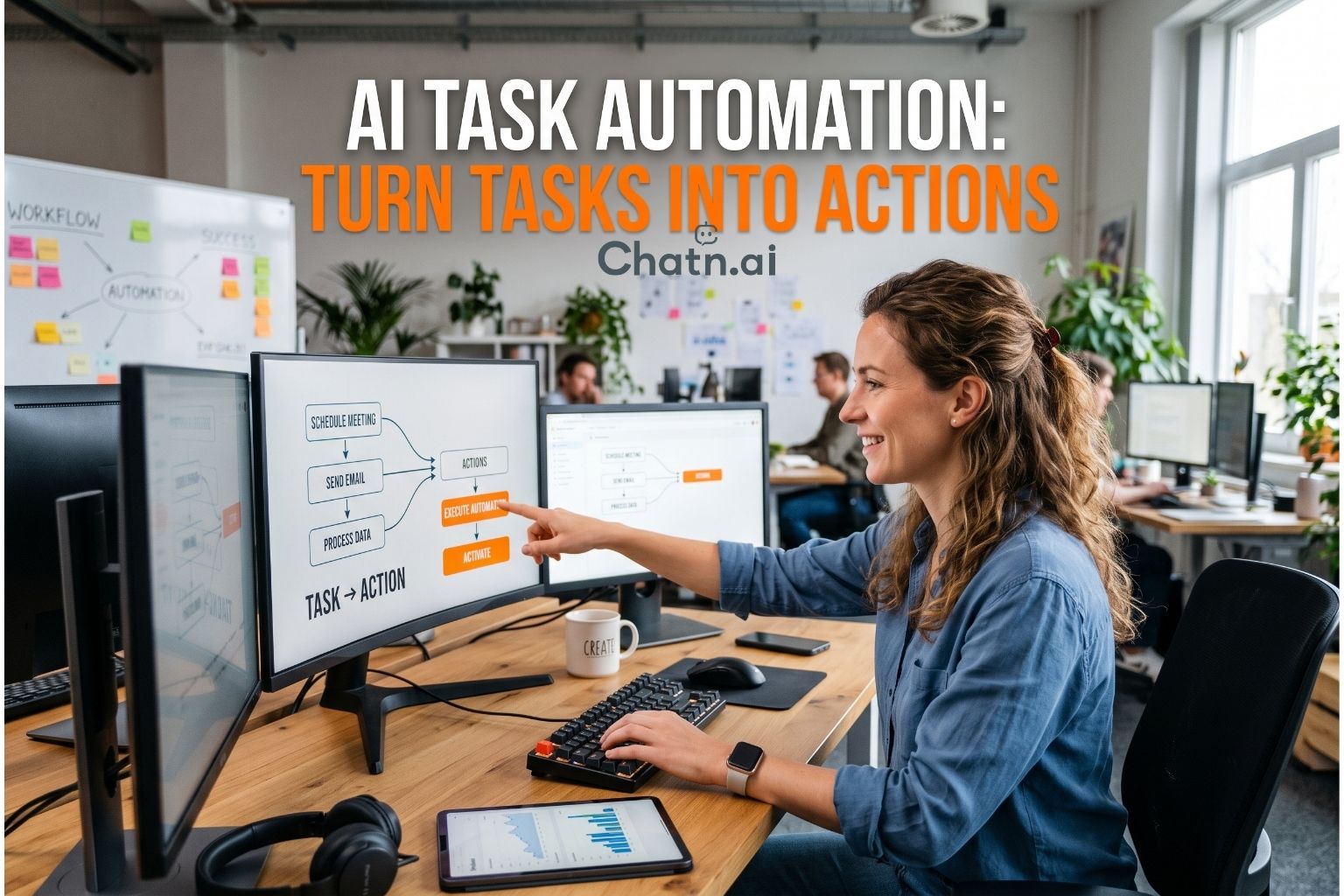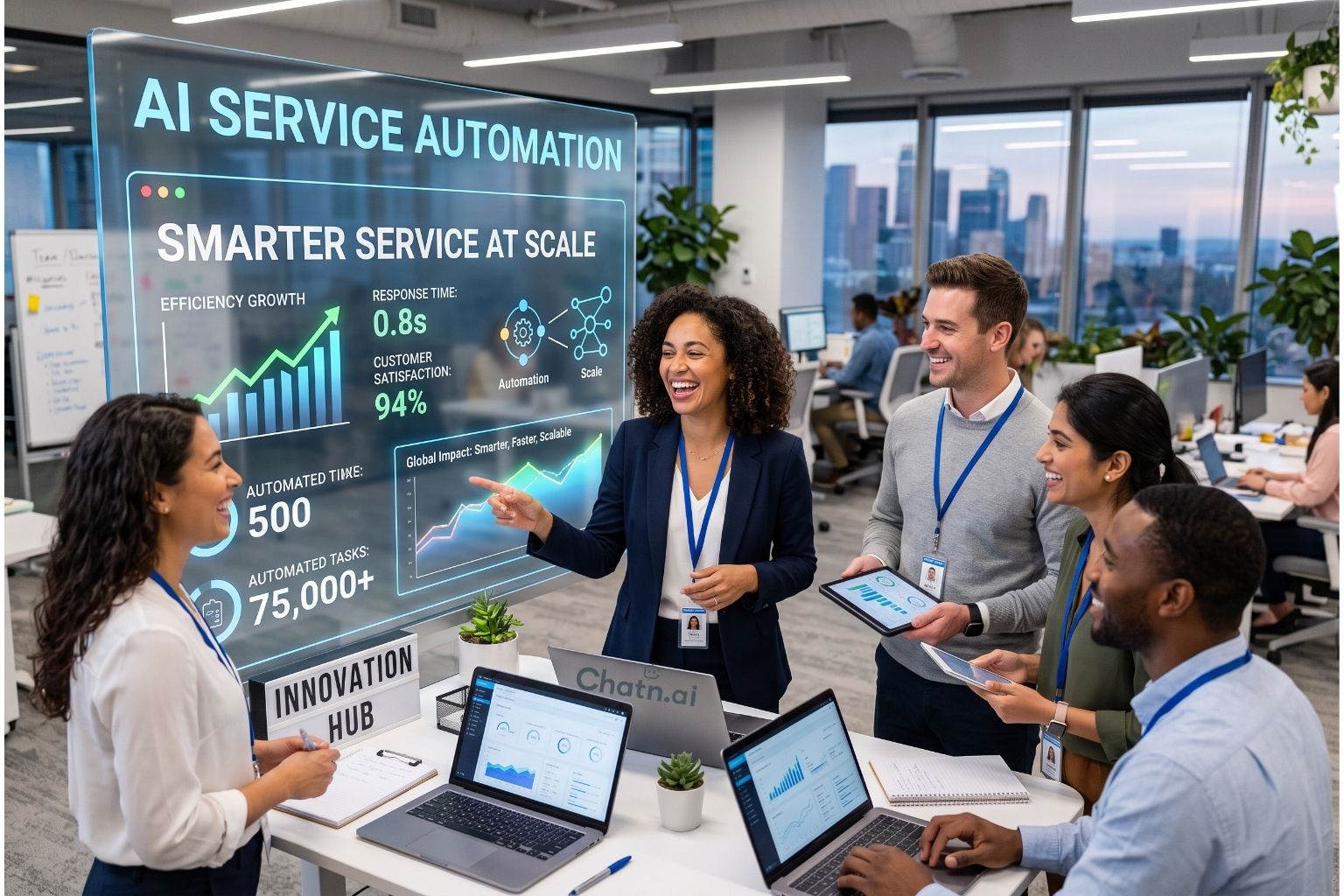


As more business moves online, many companies still rely on employees to handle repetitive digital tasks. Teams answer basic questions, find information, keep systems running, and handle routine work. As digital work grows, companies face more challenges. Teams have to handle bigger workloads while maintaining high quality. Hiring more people is one way to cope, but it is not always the best answer. An AI Digital Workforce can help solve these problems. Instead of just being another software tool, AI assistants and agents can become part of daily work. They handle specific tasks, talk to customers, share approved information, and support staff to boost productivity. This lets employees focus on work that needs judgment, creativity, and personal interaction.
What Is an AI Digital Workforce?
An AI Digital Workforce consists of an organized team of AI systems that carry out specific digital tasks alongside human workers. These systems interact with customers, manage information, respond to queries, facilitate workflows, and perform repetitive tasks within defined parameters. An AI Digital Workforce is no longer just a resource or novelty; it is now integrated into daily business operations. Traditional automation relies on rules and is most effective for predictable processes. AI adds flexibility by enabling systems to interpret information and respond to diverse requests. For example, AI support can understand client questions and provide relevant responses. At the same time, AI agents can manage multiple tasks within a workflow and move them forward. Therefore, the impact extends beyond automation. An AI Digital Workforce transforms how businesses organize, manage, and complete digital work.
Traditional Automation vs. an AI Digital Workforce
Structured processes with predictable inputs are usually automated the old-fashioned way. But an AI digital workforce can handle more dynamic digital interactions. For instance, AI systems can analyze natural-language requests, fetch relevant information, help users, and initiate approved actions. This allows businesses to enable workflows that demand greater flexibility than traditional automation. While businesses can certainly use AI to replace legacy processes, they must recognize that they cannot automate every process. Instead, they should select the most appropriate approach for each one. Actually, the best approach is to use both technologies. AI can handle interactions that involve language comprehension and responding to context, while conventional automation is better suited to highly predictable processes. When these features are combined, companies can design more flexible processes and ensure the reliability of existing automation. Ultimately, it’s about balancing human effort with AI capabilities. Instead, companies should employ each technology when it is most useful.
AI Assistants vs. AI Agents
The typical roles of AI assistants are to locate information, answer questions, and perform certain tasks. But AI agents can be given more tasks within their permissions. For instance, AI agents can follow multi-step workflows and execute approved actions according to instructions and business rules and based on available information. Consequently, they can enable businesses to go beyond the “question and answer” interaction. But an AI agent is just part of a larger digital workforce.
An AI Digital Workforce offers a bigger operating model, where AI assistants, AI agents, knowledge systems, workflows, integrations, and humans can all be combined. These elements can work together to boost the efficiency of digital collaboration within businesses. As a result, this separation is important when companies plan their AI strategy. The question isn’t about what AI tool to purchase; it’s more about what tasks can be given to AI, and where people can stay involved. The key is to align AI capabilities with business work to ensure human expertise remains at the core of critical decisions, ultimately.
Why Businesses Are Building AI Digital Workforces
Businesses are facing multiple pressures. Today’s customers demand quicker responses, and employees are tasked with more complex workflows. Meanwhile, digital interactions are rising across sales, customer service, HR, and day-to-day operations. Consequently, organizations need to be more efficient while introducing no unnecessary complexity. Businesses can recruit more staff to handle increasing workloads, but these staff members may not be able to handle repetitive digital tasks.
As a result, numerous companies are seeking to move beyond individual automation initiatives. Rather, they want flexible systems that can support staff and clients across a variety of business processes. In this context, an AI workforce may be able to handle repetitive digital tasks for businesses. AI assistants and agents can take care of suitable tasks, provide information, support workflows, and move tasks out. In addition, companies can continually build the features as they discover fresh opportunities. The ultimate aim is to have a more capable workforce, able to use AI to be efficient while also leveraging human expertise.
More Work Does Not Always Require More People
As a business grows, the volume of work increases. Companies must respond to more customer inquiries, pursue additional leads, and manage more internal requests. However, businesses do not always need to delegate new tasks to employees. Identifying repetitive digital tasks and assigning them to AI systems can be more efficient. For example, AI assistants can manage repetitive inquiries, collect data, and support routine operations. This allows employees to focus on tasks that require judgment, creativity, problem-solving, and relationship-building. This approach does not replace human effort but shifts how businesses leverage employees’ skills and expertise. Ultimately, AI can manage repetitive tasks, enabling employees to concentrate on higher-value work.
AI Can Extend Human Capacity
Think about an employee who has to answer the same internal questions for hours and hours. Routine questions can be responded to by an AI assistant, allowing the employee to focus on more complex requests and deliver relevant information to the client. The employee can thus dedicate more time to solving more complex problems, or to providing more value in their work. Likewise, customer support teams can leverage AI to handle simple interactions, respond to frequently asked questions, and deliver authorized information. Meanwhile, human agents can handle more delicate cases, complex matters, and more empathetic discussions. This means teams can respond more efficiently without losing meaningful human interaction. The true promise is in the combination of human and artificial intelligence – human-AI collaboration. AI can handle suitable digital work, and where it matters most, people use their judgment, creativity, experience, and empathy. Ultimately, businesses can leverage AI to augment human efforts, not just replace them.
Scale Digital Work Without Scaling Every Manual Process
A business needs to scale up without scaling down all the repetitive activities that occur within it. Rather, technology can help solve escalating workload issues. An AI-powered workforce can enable organizations to support increasing numbers of digital interactions without the same number of manual interactions. For instance, AI can take care of customer questions, guide inquiries, handle employee requests, and more, all of which are common tasks. As demand increases, businesses can use AI to handle suitable repetitive tasks while employees focus on more complex responsibilities. This will allow businesses to boost their capacity without imposing the same amount of extra strain on their staff. What’s more, businesses can build up AI capabilities as new opportunities are discovered incrementally. This lets companies grow their digital efforts without growing their manual efforts.

What Can an AI Digital Workforce Actually Do?
The value of an AI Digital Workforce becomes clearer when businesses look at specific tasks. The possibilities extend beyond chat.
Customer Support
Many of the queries that are answered by customer service teams are repetitive. When customer demand increases, these common transactions can eat up employee time. Fortunately, AI can help teams respond to common questions, give them approved information, troubleshoot common issues, and forward complex requests to the appropriate representative. For this reason, companies can minimize idle time and offer quicker help. Most importantly, AI can manage routine interactions, whereas human representatives can engage in conversations that demand empathy, judgment, and problem-solving. As a result, they can improve service efficiency without eliminating the use of humans in customer service.
Sales and Lead Qualification
Likewise, there are numerous digital interactions within the sales teams’ workflow. A sales representative can spend hours answering the most basic questions, gathering information about their prospects, and determining qualified leads. An AI sales assistant can interact with website visitors, respond to frequently asked questions about the product, gather the relevant details, and qualify leads. Thus, the sales representative can focus more on prospects that require customized guidance. Moreover, AI can make businesses more responsive to potential customers at an earlier stage of the buying cycle. This means organizations can develop a more efficient funnel for their leads, from initial interest to a sales conversation that moves toward qualification and leads to a sale, while sales teams can concentrate on nurturing relationships and conversion.
Human Resources
Employees often ask HR teams the same questions. As organizations expand, such requests can easily take up precious HR time. For instance, staff might require data on company policies, benefits, the onboarding process, company processes, or company resources. HR teams can use an AI HR assistant to get approved details swiftly rather than doing so manually. This means staff can get answers faster, and HR professionals can save more time dealing with repetitive requests. HR teams, meanwhile, can dedicate more time to employees, more complex issues, and organization-wide issues. Furthermore, an AI HR assistant can respond consistently to the information that it has been approved. Thus, companies can enhance employee access to data and help HR departments operate more effectively.
The Business Benefits of an AI Digital Workforce
A properly functioning AI Digital Workforce should provide tangible value to businesses. But business value goes far beyond automation and removal of manual activities. Instead, businesses can leverage AI to achieve faster responses, support staff, and provide more consistent digital experiences.
Faster Responses
AI can respond to routine digital requests instantly. In other words, customers and employees will receive information without delays, even when people are busy. Plus, faster responses may allow organizations to cut unnecessary lines and ensure that processes flow smoothly. That is, businesses can optimize processes and let employees focus on requests requiring personal attention.
Higher Productivity
Employees often waste time performing repetitive and routine tasks. In such situations, businesses can offload repetitive work by using AI. As a result, employees are freed from performing unnecessary work. In particular, they can concentrate on more valuable and productive tasks. For instance, they can solve complex issues, support customers, collaborate, and make decisions.
Consistency of Responses
Human employees can provide high-quality service to customers and colleagues. But it becomes more difficult to maintain consistency once teams perform large amounts of interactions. To tackle this challenge, businesses can employ AI-based workflows and standardize responses using approved information and processes. Thus, customers and employees will get consistent answers during routine interactions. Consistent AI-based support can also serve as a starting point for human employees who handle complex tasks. That is, businesses can combine the consistency of AI support and the flexibility of human employees.

Where Humans Still Matter Most
The rise of AI does not make human employees less important. In many cases, it makes their strengths more valuable.
Complex Decision-Making
Not all decisions need to be grounded in context, knowledge, and responsibility. In this sense, a company should not entrust its every decision to AI. AI can provide relevant information, reveal patterns, and facilitate analysis. Still, organizations should know where people are expected to exercise final decision-making authority. In such a way, a company can use AI while involving people’s expertise when decisions are more sophisticated.
Relationship Building
Building trust is challenging and cannot be automated. Though an AI tool could help with routine conversations, customers may prefer human communication when their issue is not simple. This way, companies should use AI technology to enhance customer communication, not to replace meaningful human connection. In other words, AI can help with routine issues while humans engage in empathic dialogue with clients.
Creative and Strategic Work
Strategy implies something more than information-processing. Rather, it demands understanding of business objectives, market environment, customers’ needs, employees, and dynamic situations. In addition, employees have creativity, experience, and a distinctive vision that will help them deal with complex situations. Thus, companies can combine insights from AI with employee experience to make informed decisions. Eventually, companies can benefit from using AI for creative and strategic activities while people provide vision, wisdom, and experience.
How to Know If Your Business Is Ready for an AI Digital Workforce
Not every business needs an AI Digital Workforce immediately. However, several signs can indicate a strong opportunity.
Ask these questions:
- Do employees answer the same questions repeatedly?
- Do customers wait for routine responses?
- Do teams spend too much time searching for information?
- Are digital interactions increasing?
- Do employees perform predictable administrative tasks?
- Do customers expect faster or continuous support?
- Are teams struggling to scale?
If several answers are yes, your organization may have strong automation opportunities. Still, businesses should avoid automating processes simply because AI exists. The best starting points are usually repetitive, digital, high-volume, measurable, and well-defined workflows.
The Risks of an AI Digital Workforce—and How to Manage Them
AI can create significant value. However, responsible implementation requires careful planning.
Incorrect Information
AI tools require accurate sources of information to give relevant and consistent answers. Thus, companies must designate approved sources of knowledge and update them regularly. Furthermore, the company must update information if there are changes in policies, products, or procedures. With accurate knowledge, the company will be able to help AI work better.
Badly Designed Workflow
AI cannot fix all the broken processes in the company. Rather, businesses must improve inefficient processes before automating them. For instance, if the workflow confuses employees, introducing automation will only increase confusion. Hence, teams must map out the process, remove unnecessary actions, and clarify employees’ roles before introducing AI-driven automation. In conclusion, improved workflows serve as a better basis for efficient AI workforce automation.
Absence of Human Escalation
AI also requires certain limitations. That is why companies must outline situations in which an employee should start working on the case. For instance, teams may outline conditions for situations requiring human intervention – complex requests, sensitive issues, rare situations, or decisions requiring human intelligence. As a result, AI will deal with appropriate tasks while employees will handle cases requiring more advanced skills.
Conclusion: Build a Workforce Where Humans and AI Work Better Together
Companies do not have to automate all of their processes. Rather, companies must find which processes should be automated and when AI could add significant value. This is where an AI Digital Workforce would become useful. Using AI assistants, AI agents, business knowledge, workflows, and human control, companies could create better digital capabilities. Luckily, companies do not have to undergo a huge transformation from the very beginning. Instead, they can start by automating one repetitive workflow, analyzing its efficiency, and scaling what works.
Here is the formula:
- Identify
- Map
- Automate
- Integrate
- Escalate
- Measure
Then, businesses can introduce AI into other workflows as they discover new possibilities. Thus, companies could improve their digital capabilities without changing every process. For Chatn, this philosophy is a vision of how AI could help in businesses. Companies do not have to use AI separately from their employees. Instead, companies can integrate AI into regular workflows as a digital layer. Eventually, the future of work is not only about using AI. Rather, it is about building cooperation between people and AI. By building this cooperation correctly, businesses can turn repetitive digital work into productivity, scalability, and increased value for customers. And at the same time, people could concentrate on judgment, creativity, relationships, and strategic decision-making. Ready to build your own AI Digital Workforce? Learn how Chatn.ai can assist you.