
Remember when "premium support" meant paying extra to reach a real human faster? In 2026, that's completely flipped. The premium experience is now about letting your customers talk: naturally, instantly, and on their terms: whether they're dialing your support line or clicking a chat widget on your website.
Here's what changed: 82% of customers now prefer AI chatbots to waiting for human representatives. Not because they've settled for less, but because voice AI delivers something traditional support never could: immediate resolution without friction, repetition, or those soul-crushing hold queues.
Why Voice Is the Interface That Won
Text-based support was revolutionary when it arrived. But typing out problems on tiny phone screens? Having to describe complex issues in writing? That's cognitive overhead your customers don't want to deal with.
Voice is humanity's natural interface. We've been talking for 100,000 years. We've been typing for what, 150? When customers can simply speak their issue: whether through a phone call or by clicking a microphone icon on your chat widget: you've eliminated the single biggest friction point in customer service.

This isn't about novelty. It's about removing barriers between problem and solution. When your customer's washing machine breaks at 11 PM, they don't want to navigate dropdown menus or type "warranty information" into a search bar. They want to say, "My washing machine is leaking, and I need help now."
The Three-Tier Reality of Modern Support
Here's where most businesses get tripped up: they think about channels in silos. Phone support over here. Chat over there. Text messages somewhere else. Meanwhile, your customers are moving fluidly between all three, expecting seamless experiences.
Tier 1: Voice & Phone Support
This is your frontline powerhouse. Contact centers using voice AI report a 35% reduction in call handling time and a 30% increase in customer satisfaction. Queue times drop by up to 50%. Why? Because voice AI doesn't need bathroom breaks, doesn't get flustered, and can handle fifty conversations simultaneously with the same attentiveness.
When someone calls your business, they're getting an intelligent assistant that remembers their previous interactions, understands context, and adapts its responses based on emotional cues. Frustrated customer? The AI recognizes the tone and adjusts: slower pace, more thorough explanations, empathetic language.
Tier 2: Chat Widgets with Voice Capability
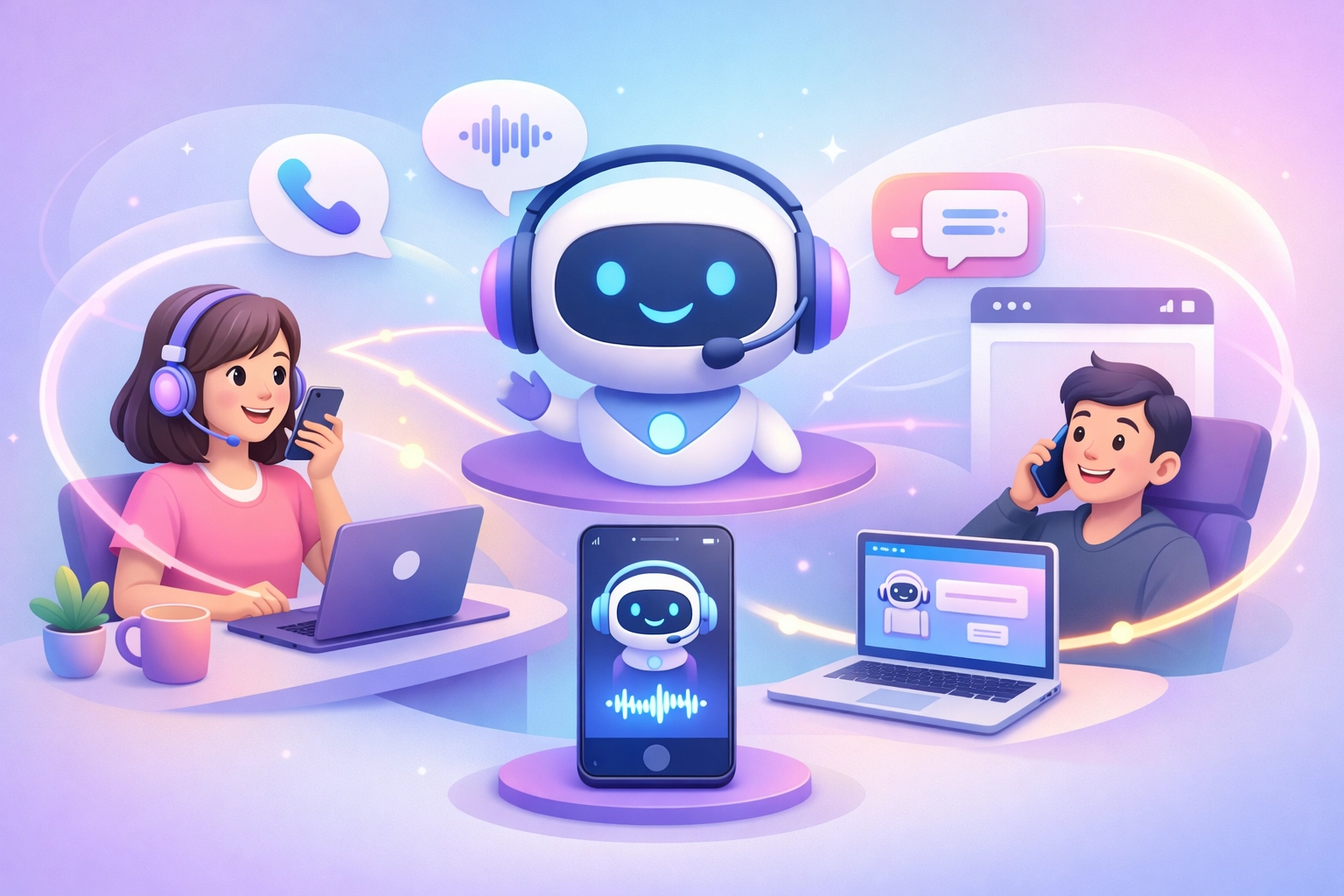
This is where the magic really happens. Your customer is browsing your website, has a quick question, clicks the chat icon, and sees a microphone button. Instead of typing, they just talk. The same AI that handles phone calls is now providing support through your chatbot ui, seamlessly integrated into your web presence.
The chatbot design isn't about flashy animations: it's about making voice activation obvious and effortless. One click, start talking, get answers. Whether they're on desktop or mobile, the experience remains premium.
Tier 3: SMS & Text Integration
Sometimes your customers want asynchronous support. They text you while multitasking, expecting intelligent responses they can review at their convenience. Your voice AI system handles these interactions too, maintaining conversation history and context across every channel.

Ready-to-Use Assistants, Not DIY Experiments
Let's address the elephant in the room: most businesses don't have time to build AI systems from scratch. Those DIY bot kits that promise "build your own chatbot in minutes"? They're leaving companies with clunky, scripted experiences that frustrate customers more than help them.
Your business needs realistic ai chat that actually works: right now, not after six months of tweaking chatbot scripts and hoping for improvement. This is exactly why Chatn.ai built ready-to-deploy assistants that handle voice, phone, chat, and text from day one.
You're not hiring a team of AI engineers. You're not writing training data or debugging conversation flows. You're getting an intelligent assistant that's ready to take calls, answer questions, and solve problems across every channel your customers prefer. Deploy it this week, not next quarter.
The Emotional Intelligence Factor
Here's what separates good voice AI from transformative voice AI: emotional attunement. Advanced systems now detect frustration, confusion, and satisfaction through tone, pitch, and speech patterns, then adjust their approach in real time.
Think about what this means practically. A customer calls, already irritated because they've been dealing with an issue for days. The AI recognizes elevated stress indicators in their voice and immediately shifts strategy:
- Acknowledges the frustration explicitly
- Speaks more slowly and deliberately
- Offers clear next steps without deflection
- Escalates to human support when appropriate
Compare that to a confident customer who just needs quick information. Same AI, different approach: faster pace, concise answers, efficiency prioritized.
This isn't science fiction. This is the baseline expectation for premium support in 2026. Your customers have experienced it elsewhere. They expect it from you.

The Omnichannel Promise Actually Delivered
"Omnichannel support" has been a buzzword for years, mostly meaning "we have multiple channels but they don't talk to each other." True omnichannel means your customer can start a conversation on your website chat, continue it over the phone, and follow up via text: with the AI remembering everything.
By 2026, one in ten customer service interactions are fully automated by agentic voice AI: sophisticated systems executing complex multi-step tasks autonomously. The average interaction now lasts 11 minutes and resolves issues that previously required multiple human touchpoints, transfers, and follow-ups.
Your customer doesn't repeat themselves. Ever. The AI knows their history, their preferences, even their communication style. If they prefer direct answers without small talk, it remembers. If they appreciate a friendlier tone, it adapts.
This is why queue time reductions of up to 50% aren't just statistics: they represent a fundamental reimagining of what customer support means.
What This Means for Your Business Right Now
If you're still routing customers through phone trees, forcing them to type out complex problems, or making them wait 15 minutes to reach a human who may or may not be able to help, you're offering a sub-premium experience.
Your competitors are deploying voice AI systems that:
- Answer immediately, 24/7, across time zones
- Understand regional accents, dialects, and code-switching
- Solve problems autonomously without escalation
- Proactively reach out before issues become complaints
- Maintain conversation context across every channel
The question isn't whether to embrace voice AI. The question is how quickly you can deploy it before customers start comparing your support experience to companies that already have.
The Premium Standard Is Here
Premium support in 2026 isn't about exclusive access or paying extra. It's about reducing customer effort and emotional friction. Voice AI delivers this at scale by eliminating wait times, removing repetition, understanding emotional context, and proactively preventing problems.
When customers can resolve issues through natural conversation on any device at any time, traditional hold queues and form-filling become relics of inferior service. Your human agents can focus on complex cases requiring genuine empathy and judgment: making both customer and agent experiences substantially better.
This is the new baseline. Voice-enabled chat widgets. Phone systems that understand context and emotion. Text support that maintains intelligent conversation history. Ready-to-use assistants, not DIY projects.
The businesses thriving in 2026 aren't experimenting with chatbot scripts or tweaking ai chatbot design templates. They're deploying complete voice AI systems that work across every channel their customers prefer.
Your customers are ready to talk to AI. The technology is ready. The only question left is: are you?