

Why You Need a Chatbot in 2025
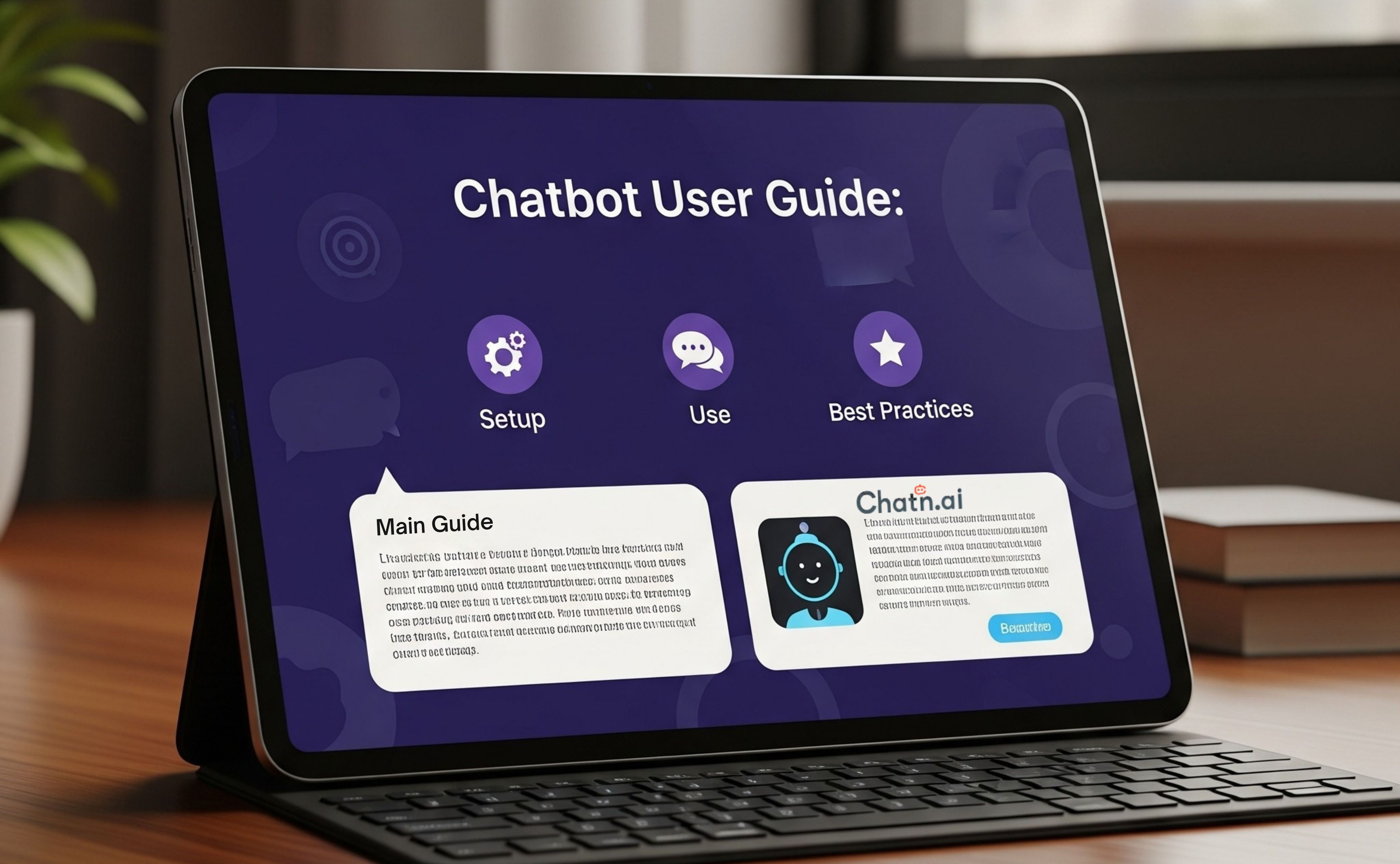
In this ultimate guide on chatbot users, you will learn how easy it is to install, operate, and maximize your chatbot. Customer expectations have today become high. Consequently, companies must provide speedy service and 24/7 services. Chatbots are especially successful in that.
Chatbots, through the help of AI, are used to quickly respond to customer requests, help lower the operational costs, and increase customer support across several platforms. A 30 percent decrease in customer service prices and a 40 percent increase in customer satisfaction are among the reported details of corporates using chatbots.
Key Benefits of Chatbots
- 24/7 Customer Support: Always respond, even outside business hours.
- Improved Engagement: Personalized chats lead to better experiences.
- Cost Savings: Fewer agents, faster resolutions.
- Scalability: Easily manage thousands of conversations at once.

Now that you understand their value, let’s walk through how to set up your chatbot the right way.
Getting Started: How to Set Up Your Chatbot
Setting up a chatbot isn’t just about plugging in a tool. It starts with clear intent and strategic planning. This section walks you through the foundation of a successful chatbot setup.
Choose the Right Use Case
First, identify where your chatbot will bring the most value:
- Lead generation
- Sales qualification
- Customer support
- Internal HR helpdesk
Start with one use case, then expand as your bot grows smarter.
Define the Bot’s Purpose and Personality
After you decide how you’ll use your chatbot, it’s time to develop the personality of the said chatbot. Begin by establishing the tone and language style that is most genuinely representative of your brand, e.g., friendly, professional, playful, or formal, and so on. Next, please give it a catchy and inviting name. This not only brings humanity but also provides the touch with that goes into all communications.
Additionally, voicing consistency helps establish user trust and create an end-to-end messaging experience. Users will be more likely to associate with and make sense of your brand when your bot sounds like your brand. Defining purpose and personality early will help you to lay the groundwork for meaningful and engaging conversations even at the first contact.
Build Your Bot with Chatn.ai
Chatn.ai makes it easy to build AI chatbots, even without coding experience. Use the drag-and-drop builder to create conversation flows tailored to your users. Integrate with platforms like Slack, Messenger, or your website in just a few clicks.
Features to Use:
- Pre-built templates
- Multilingual support
- Smart intent recognition
- Live agent handover options
Chatbot Launch Checklist
Before going live, ensure the following:
- Test with multiple scenarios
- Set up fallback triggers for unknown queries
- Connect live chat handover (when needed)
- Enable analytics and error tracking
Now that your bot is live, let’s look at how to use it effectively.
How to Use Your Chatbot Effectively
The release of your chatbot is only the first step. You should constantly track and enhance its performance to fully utilize its potential. Begin by looking at conversation logs to identify common questions, unrecognized intents, or user frustrations. Next, tune your answers to actual evidence.
Third, update your chatbot to the current content and the most frequent questions. This makes it timely and updated. Also, incorporate it with your support, sales, or even HR team to improve internal processes and enhance efficiency.
Do not forget to use the human fallback options. Ask questions that require human assistance to a live person when the bot fails to answer. This maintains a streamlined user interface that is easy to use.
Taking an active role in monitoring your chatbot will help you to make it more innovative, more useful, and a better fit for the varied demands of your users.
Monitor Conversations Regularly
To maintain your chatbot functioning optimally, you should get used to tracking the visits regularly. First, review chat transcripts to spot patterns—such as frequently asked questions, common drop-off points, or repeated misidentified intents, drop-off locations are frequent, or the wrong intent is often assumed. These insights show the exact points of difficulty for the users.
The second step is to modify your conversation flows, optimize bot responses, and fill any knowledge gaps based on the data. Even slight adjustments can, over time, become notable in building engagement and satisfaction.
Moreover, you can identify research trends and emerging needs by analyzing the signals. With vigilant monitoring and optimization in chatbots, you will offer a more pleasant experience and quicker responses to anyone.
Train with Real User Data
A chatbot launched by you must be learning every time, so it remains effective. It can be one of the best ways of enhancing it through actual user interactions. Analyze real-life conversations as a baseline to see what is missing and what are unpredictable queries or emerging patterns of intent.
Next, the program’s Chatbot will be updated with new knowledge to enrich the conversation tree with new phrases, revised FAQs, and variants of the user intent. This maintains your bot up to date and prepared to change customer requirements.
What is more, Chatn.ai makes this process simpler, with built-in learning tools. Such capabilities enable you to train your bot rapidly and easily, without writing code or trial and error.
Actively training your Chatbot with real data can help it become a more intelligent, more engaging chatbot that can ask more accurate questions because it will answer more correctly and cope with a wide variety of questions.
Use Human-in-the-Loop Strategy
Even the most intelligent chatbot may fail to handle certain situations. This is why your team should develop a human-in-the-loop strategy. Your chatbot should automatically redirect complicated or delicate requests to an on-demand agent. Such an effortless transition ensures that the users do not waste their time or get frustrated by not getting the correct answers. In addition, it indicates that your company appreciates genuine support when it is needed.
Establish clear alerts, such as frequent questions or dissatisfaction of some kind, that require the assistance of a human. When using Chatn.ai, it is easy to control such transitions inside the tool. You can effectively combine the efficiency of automation and the understanding of human agents to make a support structure that will be both intelligent and reliable. In the end, this sense of balance enhances satisfaction, creates user confidence, and affirms that your brand will look after customers.
Integrate with Your Teams
Your chatbot should support—not replace—your teams. Sales, marketing, and HR can all benefit. For example:
- Sales bots qualify leads and book demos.
- HR bots handle FAQs for new hires.
- Support bots resolve common technical issues.

Chatbot Best Practices for 2025 and Beyond
AI evolves rapidly, so keeping your chatbot current means regular updates and innovative improvements. Start by humanizing the tone—make it conversational, friendly, and approachable to build user trust. Focus on accessibility: keep responses short, ensure mobile compatibility, and support multiple languages to serve a diverse audience. Regularly update content with new offers, seasonal messages, and company policy changes to keep it fresh and relevant. Use intelligent triggers to re-engage users, such as when they go idle or exit a page.
Most importantly, prioritize security—follow privacy regulations and use encrypted connections to protect user data. Chatn.ai integrates all these features to help your chatbot stay effective, engaging, and aligned with both user needs and business goals. Adopting these best practices ensures your chatbot is always ready to meet evolving expectations and deliver a top-tier digital experience.
Keep the Conversation Human
AI evolves fast, so your chatbot must keep pace with regular updates and innovative improvements. Start by humanizing it—use a friendly, conversational tone to build trust. Prioritize accessibility with short replies, mobile-friendly design, and multilingual support to serve a broad user base. Keep your content fresh by updating offers, seasonal messages, and company policies. Use smart triggers to re-engage users when they go idle or leave a page. Above all, safeguard user data with strong privacy measures and encrypted connections. Chatn.ai includes all these features by default, helping you deliver secure, engaging, and business-aligned experiences. By following these best practices, your chatbot remains relevant and ready to meet tomorrow’s expectations—today.
Make It Accessible
To make your chatbot truly inclusive, focus on accessibility. Start with short, clear, and easy-to-understand responses—long text overwhelms users, especially on mobile. Simplify navigation using buttons, quick replies, and carousels to guide users smoothly through conversations. These interactive elements reduce friction and improve the experience.
Ensure your chatbot works flawlessly across all devices, especially smartphones, where most users engage. Without a responsive design, you risk losing your audience. Also, provide multilingual support to accommodate diverse users. Allowing people to interact in their native language builds clarity, trust, and respect.
By prioritizing accessibility, you remove barriers, make interactions more intuitive, and create a better experience for every user—no matter who they are or where they are.
Update Regularly
Don’t let your bot become outdated. Update it with:
- Seasonal content
- New promotions
- Updated company policies
- Trending user questions
Use Smart Triggers
Set behavior-based triggers to re-engage users. Examples:
- Time-based greetings (“Welcome back!”)
- Abandonment reminders (“Still need help?”)
- Scroll triggers (“Need assistance with this section?”)

Secure Your Bot
Performance and usability matter—but security must come first. Even the most intelligent chatbot becomes a liability without proper safeguards. That’s why securing your chatbot isn’t optional; it’s essential.
Start by encrypting sensitive user data—both in transit and at rest—to prevent breaches and build user trust. Comply fully with privacy regulations like GDPR. Inform users clearly about data usage and offer opt-out options when needed. Limit access through role-based permissions to reduce the risk of unauthorized changes or exposure.
Fortunately, Chatn.ai makes all of this easy. With built-in security features—encryption, compliance tools, and user controls—you can scale confidently. By baking security into the platform, you actively protect your users, brand, and business.
Common Mistakes to Avoid
Even smart bots fail when poorly implemented. Avoid these common pitfalls:
No Clear Goal
One of the most common chatbot mistakes is launching without a clear goal. Without direction, your chatbot can confuse users, deliver irrelevant responses, and waste your investment. Instead of helping, it may frustrate users with nonsensical answers.
Start by defining your chatbot’s purpose. Ask yourself: What should this bot achieve? Possible goals include generating leads, answering FAQs, onboarding new employees, or supporting service tickets.
Once your goal is clear, design your chatbot’s tone, flow, and functionality around it. This alignment ensures each interaction moves users toward the intended outcome. A defined goal also makes performance easier to track. You’ll know which KPIs matter and how to improve over time. By setting a clear objective from the beginning, you lay the groundwork for success. Your chatbot becomes a valuable tool—not just a novelty—with real results and ROI.
Creating a Reliable Chatbot: Simplify, Analyze, Support, and Update
Overloading your chatbot with too many features can overwhelm users and reduce effectiveness. Instead, simplify each conversation flow to keep it clear and purposeful. At the same time, don’t ignore analytics. From the start, review chat logs and performance data to gain insights that help refine user experience. Without data, you’re operating unthinkingly.
Additionally, never skip human fallback. While automation handles many queries, some situations demand empathy and complex reasoning. That’s why live agent support is essential for resolving advanced issues. Moreover, stale content erodes user trust. Static bots with outdated information quickly lose credibility. Regularly update your chatbot’s responses to reflect current needs, tone, and accurate information. By combining a focused design, real-time data, human support, and fresh content, you build a chatbot that feels intelligent, helpful, and reliable. This approach turns your bot into a valuable assistant—not just a novelty.
Future-Proofing Your Chatbot with AI
Future chatbots will deliver adaptive, innovative experiences. To stay competitive, businesses must adopt advanced tools. Breakthroughs in Natural Language Understanding (NLU) now help AI better grasp context, tone, and nuance. Chatn.ai leverages cutting-edge NLU to keep conversations fluid and accurate. At the same time, chatbots are going multimodal—adding voice, image, and video—making it essential to future-proof your platform. Personalization is also critical. AI-powered bots can recall user preferences and provide tailored responses that boost engagement. Chatn.ai enhances this with memory-based personalization to improve satisfaction. Finally, deeper integration with CRM, ERP, and HR systems is revolutionizing automation, enabling more intelligent workflows and data-driven decisions. These innovations ensure your chatbot stays relevant and competitive while delivering superior digital experiences. By adopting these technologies today, you prepare your chatbot to meet tomorrow’s user expectations confidently.
Final Thoughts: Your Roadmap to Chatbot Success
Your chatbot is more than a tool—it’s your frontline representative. With the right setup, regular updates, and user-focused improvements, your bot will deliver immense value.
To recap, this chatbot user guide covered:
- Why chatbots matter in 2025
- Step-by-step setup strategies
- Tips for everyday use
- Best practices for long-term success
- Common mistakes to avoid
- How to future-proof your investment

It’s time to turn insights into action. Let Chatn.ai help you build a smarter, more efficient chatbot today.
Call to Action: [Try Chatn.ai now] to create intelligent, scalable, and engaging chatbot experiences that grow your business.