
The most challenging aspect of growth is no longer generating traffic. Instead, the challenge is to transform that traffic into revenue.
Today’s buyers move fast. They make comparisons immediately and demand responses immediately. Consequently, conversions are being silently reduced daily by slow, manual sales processes.
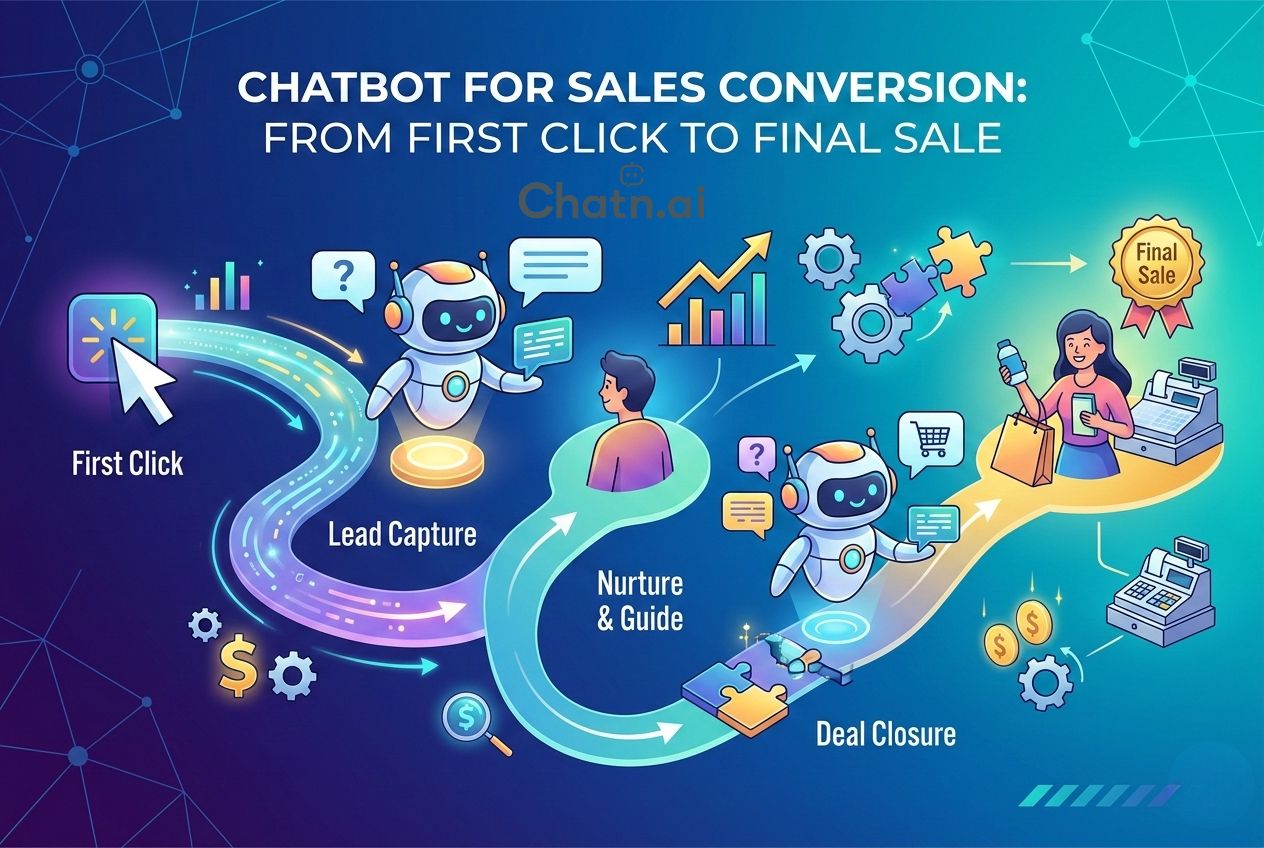
It is at this point that a sales conversion chatbot comes in. Instead of allowing people to spend time window shopping, indecisively, and abandoning, AI chatbots engage people when it is appropriate. They aggressively drive prospects and disqualify leads on demand. Above all, the sales conversion chatbot turns buyers’ interest into action.
Many businesses like yours can make more sales by relying on chatbots to convert, rather than conventional funnels that only slow down growth and can increase company headcount. This guide will show you how.
The reason Sales Conversion is the true Bottleneck to growing a business
The majority of companies do not have problems getting traffic. Instead, they find it challenging to convert the traffic into revenue.
In the meantime, advertising spending is increasing, and competition is intensifying. But website conversion rates are stuck at the ground. As a result, firms end up spending more to attract visitors but yield fewer satisfactory returns.
Eventually, stagnation occurs not because of a lack of interest, but because conversions fail at crucial stages of the buyer’s journey.
Traffic That You Do Not Convert Into Buyers Is Waste
Each click is money, but the vast majority of the visitors do not interact with sales teams. They scan pages, waffle, and walk away. Businesses lose potential revenue without even noticing it.
Static landing pages cannot address open questions and objections in real time. Additionally, forms can be a source of friction, which irritates prospects. Consequently, well-intentioned customers are lost well before sales teams can reach them.
Contemporary Customers Demand Instant and Customized Interactions
Buyer behavior has shifted significantly, and the business needs to keep up.
The prospects of today require instant responses and, at the same time, demand personal responses that will capture their needs. They prefer conversational over long, dry forms. Consequently, it will result in a loss of trust due to any delay in engagement and a drop in conversion rates.
Thus, companies that do not offer instant, personalized interactions miss opportunities, and that is why conversational experiences consistently surpass traditional sales funnels.
What does a Chatbot Sales Conversion mean?
A sales conversion chatbot is much more than a support bot. It is an AI-driven sales assistant that is proactive and guides buyers through the funnel step by step. Not only can it get visitors interested, but it can also qualify leads with intelligence and hand high-potential opportunities straight to sales teams. This way, it will not have left any prospects unattended, and every conversation will result in measurable outcomes.
Sales Chatbots and Support Chatbots
Support chatbots aim to solve problems, whereas sales conversion seeks to maintain momentum and take action. Where the support bots are passive in responding to questions, sales bots engage in direct questioning to determine intent and customer wants. Subsequently, they steer prospects toward a smooth path through the next stage of the purchasing process, with each contact propelling the sale.
What Place do Conversion Chatbots occupy in the Sales Funnel?
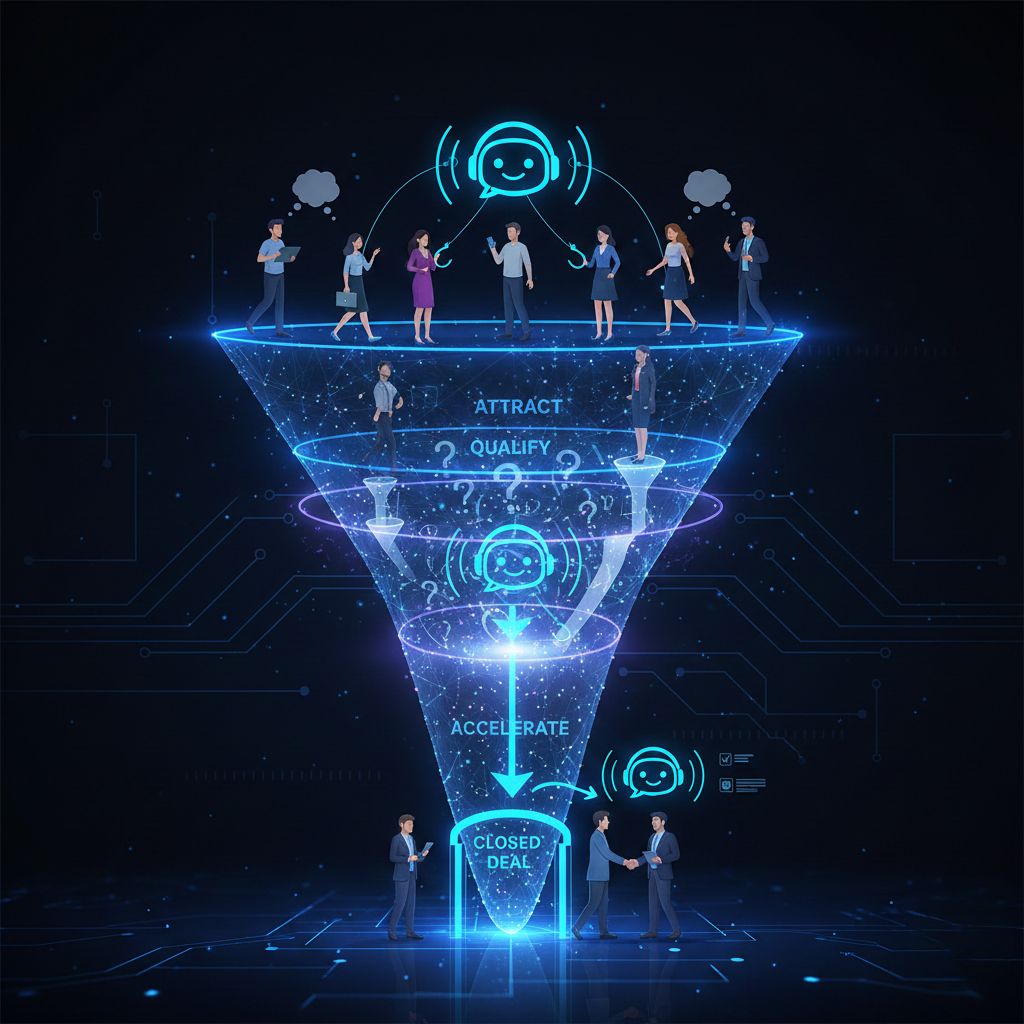
The sales conversion chatbots will operate throughout the sales funnel, ensuring no lead is left behind.
They attract attention straight at the funnel, hook visitors as soon as they show interest, and avoid the problem of early drop-offs. They can qualify leads at the center of the funnel efficiently and nurture them with specialized interactions that keep prospects warm and moving forward. They are at the bottom of the funnel, speeding up the decision-making process by providing timely guidance, addressing objections, and so on.
Sales conversion chatbots address all funnel phases, eliminating the loopholes through which leads typically fall and increasing overall conversion rates.
The Revenue Increases of a Chatbot for Sales Conversion
A sales conversion chatbot is not just a helpful interaction; it will lead to quantifiable business outcomes. It turns interest into action by engaging prospects in real time and guiding them through the purchase process. These chatbots directly affect revenue and enhance overall sales performance.
Live Interaction with 100 percent Lead Retention
A timing in sales usually counts more than a message. A sales conversion chatbot identifies visitors’ immediate intent immediately, so no potential consumer is lost. It takes the initiative to start a dialogue when prospects visit pricing pages, product features, or other important content. As a result, the number of visitors who do not engage with the business decreases, and overall interaction increases instantly, which preconditions higher conversions.
Real-time Automated Lead Qualification
Setting priorities is essential because not every lead should receive the same amount of attention. To determine budget, intent, and urgency, a sales-conversion chatbot poses intelligent, dynamic questions. After that, it automatically assigns a score to each lead based on their answers. The system identifies high-potential prospects immediately. Sales teams can save time and increase their chances of closing deals by focusing solely on high-quality opportunities.
Customized Discussions at a Large Scale
Conversion is directly affected by personalization, but human sales teams cannot customize every interaction at scale. By examining visitor behavior, page history, and responses in real time, a sales-conversion chatbot gets around this restriction. After that, it instantly tailors conversations for each prospect, providing pertinent advice and addressing their specific needs. Every prospect feels heard and appreciated as a result, all without requiring manual labor from your team.
Increased Close Rates with Quicker Sales Handoffs
In sales, speed often determines the deal winner. To ensure no opportunity is lost, a sales conversion chatbot routes qualified leads to the right sales representatives right away. Additionally, it conveys the full context, including objections, preferences, and pain points, so that representatives can interact with comprehensive information. Automation shortens sales cycles, boosts close rates, and eliminates repetitive questioning.
Chatbot for Sales Conversion Across Every Funnel Stage
Sales conversion doesn’t happen in one step.
It happens through progression.
Top of Funnel: Creating Interested Leads from Visitors
Since prospects’ attention is short-lived at the top of the funnel, marketers must capture it immediately. A chatbot for sales conversion actively greets users, provides prompt support, and makes recommendations for pertinent resources based on their actions. As a result, visitors start interacting immediately rather than passively browsing, and this tiny yet crucial change significantly increases overall engagement rates.
Lead nurturing in the middle of the funnel without manual follow-ups
Consistent nurturing is crucial because most leads need to be educated and guided before making a purchase. A sales conversion chatbot explains value propositions, compares solutions, and proactively addresses objections. Additionally, it automatically nurtures leads even after business hours, ensuring prospects stay interested at all times. Consequently, leads remain warm and progress steadily toward conversion, allowing sales teams to stay concentrated on high-priority opportunities.
Bottom of the Funnel: Eliminating Friction Before Purchase
Removing obstacles is essential to closing deals because decisions frequently stall in the last stages. A sales conversion chatbot actively explains prices, arranges demos, and walks potential customers through the following steps. It also lessens reluctance by addressing last-minute worries and offering instant reassurance. As a result, this last push greatly increases overall conversion rates and speeds up decision-making.
Key Features of a High-Converting Sales Chatbot
The first step to understanding chatbot performance is understanding the elements that drive high-converting chatbot performance. High-performing sales conversion chatbots consistently share specific capabilities that enable them to engage prospects effectively, qualify leads intelligently, and drive measurable revenue. The key features of a business’s chatbot system will allow it to deliver active sales support rather than functioning as a basic customer service tool.
Conversational AI, Not Scripted Trees
The system operates through conversational artificial intelligence that does not rely on prearranged dialogue patterns; the use of fixed scripts results in robotic communication that fails to capture the interest of contemporary consumers. The capability of conversational artificial intelligence to handle various dialogue situations enables it to understand user intent and deliver appropriate responses. The system creates a human-like interaction that establishes trust and allows users to connect meaningfully with the system while maintaining their interest throughout the dialogue.
CRM and Sales Tool Integrations
Disconnected systems create delays for sales teams, resulting in lost business opportunities due to operational inefficiencies. Thus, sales conversion chatbots require complete integration with CRM systems, calendar tools, and all other sales platforms. The system helps teams execute tasks promptly and stay updated on leads by automatically transferring data after each conversation, until the deal closes.
Smart Routing and Intent Detection
Sales professionals need to focus on proper timing and target selection, taking immediate action on high-quality leads to avoid losing them. The sales conversion chatbot detects when buyers show interest and sends each lead to the correct sales representative for handling. The system improves closing rates and boosts overall sales team productivity by matching leads with representatives at optimal times.
Analytics That Tie Conversations to Revenue
The analysis approach connects dialogue study to tracking financial results. The business needs to focus on trackable results, as vanity metrics do not drive growth. The sales conversion chatbot operates as a tracking system that measures its impact on pipeline development and identifies which customer interactions drive revenue growth. The system provides complete visibility, enabling teams to optimize operations, demonstrate return on investment, and make business decisions that enhance overall sales results.
Real-World Use Cases for Chatbots in Sales Conversion
Sales conversion chatbots succeed across industries.
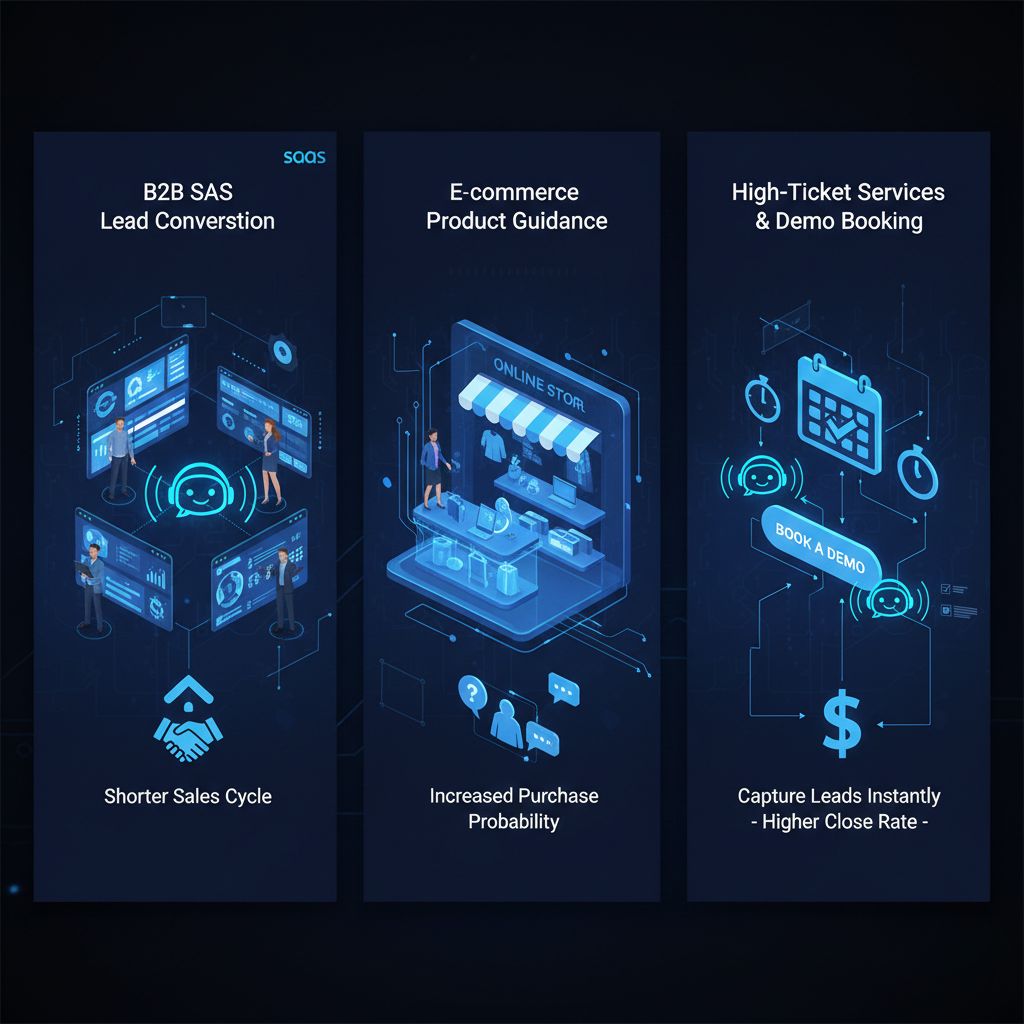
B2B SaaS Lead Conversion
B2B buyers conduct extensive research, so guiding them effectively is crucial. The sales conversion chatbot guides prospects through product features, pricing, and demo options while it qualifies leads to send to sales teams. The process results in shorter sales cycles, enabling teams to focus on high-quality opportunities that lead to better deal outcomes..
E-commerce Product Guidance
The presence of excessive choices makes it difficult for customers to make purchasing decisions, so businesses must provide clear guidance. The sales conversion chatbot recommends products to customers, offers instant answers to their inquiries, and handles their objections. The digital sales associate solution maintains customer interaction while decreasing their decision-making burden and boosting their purchasing probability.
High-Ticket Services and Demo Booking
The timing of complex, high-value services must be precise, as any delay will result in lost business opportunities. A sales conversion chatbot proactively books consultations as soon as a prospect shows interest. The system instantly detects buyer intent, enabling leads to be captured before competitors have a chance to react, thereby increasing the likelihood of closing the deal.
Common Mistakes That Kill Sales Conversion Chatbots
Even powerful tools fail when used poorly.
Treating the Chatbot Like a FAQ Page
Businesses need to engage in actual conversations with their customers, as their current systems require more than automated answers. The FAQ page function of bots creates an ineffective solution that fails to help customers achieve their goals. The process results in businesses losing essential opportunities to advance customers through the sales process, while reducing obstacles and increasing actual sales performance.
Asking Too Many Questions Too Soon
The aggressive qualification process will drive users away from the system, so operators must use proper timing methods to handle customer interactions. The best sales conversion chatbots succeed by finding the optimal balance between providing valuable information and asking targeted questions. Through strategic engagement with prospects, they build trust and sustain interest while advancing customers through the sales process without causing customer dissatisfaction.
The absence of a definite conversion target creates a problem
Every conversation must have a clear direction, because without a defined objective, even the best chatbot can lose effectiveness. The sales conversion process through chatbots will fail to succeed without a defined purpose. Establishing specific goals will enable our team to evaluate their impact on lead qualification, customer engagement, and sales closure.
How ChatN.ai Powers Smarter Sales Conversions
ChatN.ai was built with one goal: conversion
Revenue Generation Designs This System For More Than Simple Customer Interactions
ChatN prioritizes tangible sales outcomes over surface-level engagement because meaningful conversations must drive measurable results. The sales conversion process starts with each chatbot interaction, which helps potential customers move closer to making a purchase decision. ChatN establishes revenue impact as its core focus, leading to all customer interactions driving both pipeline development and overall business results.
Seamless Human and AI Collaboration
AI systems handle large-scale operations better than humans do, while humans handle intricate decision-making tasks. The ChatN system operates as a dual-function system that enables users to switch between its chatbot and sales representative functions while providing customized support to customers. The system provides immediate, appropriate support to all leads, resulting in better conversion rates and improved total revenue performance.
Scalable Sales Enablement Without Hiring
The ChatN system enables you to expand your lead conversions without increasing staff when your business pipeline grows. The system creates predictable, sustainable development by automating essential sales interactions and the lead qualification process. Businesses can grow their revenue streams while maintaining constant customer contact through their effective sales methods.

Measuring the ROI of a Chatbot for Sales Conversion
What gets measured can be optimized, so tracking key performance indicators is essential. A sales conversion chatbot needs three metrics to evaluate its revenue impact, which include:
- Conversion rate lift, showing how interactions drive more prospects to take action.
- Qualified leads generated, highlighting lead quality improvements.
- Time to first respond, measuring speed and responsiveness.
- Cost-per-acquisition reduction, demonstrating efficiency gains.
Businesses can track these metrics to obtain precise insights into their chatbot’s revenue impact as they develop methods to improve business outcomes.
The Future of Sales Conversion Is Conversational
Today’s buyers prefer interactive dialogues over traditional sales funnels. Sales conversion processes will become more efficient through AI advancements, leading to more intelligent systems that prioritize human interaction. Businesses that implement conversational strategies today will establish enduring market dominance. Companies that do not implement necessary changes will experience business decline because they miss out on chances to grow their operations.
Conclusion: Turn Every Conversation Into Revenue
A sales-conversion chatbot has become an essential tool that businesses must use to maintain their competitive position. Sales chatbots create a new way for companies to generate revenue by engaging prospects immediately, assessing leads, and guiding customers through the sales process. The system enables ChatN.ai teams to achieve higher conversion rates by eliminating obstacles that would slow their progress and force them to expend unnecessary effort. The business generates revenue from each conversation, but its chatbot solution captures every lost opportunity.