

Introduction – The Evolution of AI and Chatbots
Artificial intelligence (AI) is revolutionizing how businesses engage with customers. Over the years, chatbots have become a staple in customer support, handling simple queries and automating responses. However, as customer expectations grow and businesses demand smarter automation, AI agents have emerged as a more advanced solution.
Unlike traditional chatbots, AI agents leverage machine learning, natural language processing (NLP), and real-time data analysis to understand context, make decisions, and adapt to complex interactions. They go beyond scripted responses, offering a more human-like, personalized experience.
For businesses striving to improve efficiency, customer satisfaction, and workflow automation, understanding the distinction between chatbots and AI agents is crucial. In this article, we’ll explore their differences, capabilities, and why AI agents are the future of intelligent automation.
What Are Chatbots?
Chatbots are software programs designed to simulate human conversations, helping businesses automate customer interactions. They function primarily through text-based interfaces such as websites, messaging apps, and customer service portals. While some chatbots rely on simple rule-based systems, more advanced versions leverage artificial intelligence (AI) to enhance interactions.
The Basics of Chatbots
Chatbots fall into two main categories:
- Rule-Based Chatbots: These follow predefined scripts and respond based on specific keywords or commands. They work well for straightforward tasks such as answering FAQs or guiding users through structured processes.
- AI-Powered Chatbots: These utilize natural language processing (NLP) to understand user intent, context, and variations in language. Unlike rule-based chatbots, AI-powered versions learn from interactions and improve over time.
While chatbots are useful for handling simple tasks like scheduling, answering frequently asked questions, and providing basic support, they struggle with complex interactions that require deeper understanding and decision-making.
Limitations of Traditional Chatbots
Despite their benefits, traditional chatbots have several drawbacks:
- Lack of contextual awareness: Many chatbots struggle to understand nuanced or multi-turn conversations. They rely on predefined scripts and fail when users go off-script.
- Limited adaptability: Rule-based chatbots require constant updates and manual adjustments to accommodate new queries, making them inefficient for dynamic business environments.
- Minimal workflow integration: Most chatbots function as standalone tools and lack deep integration with business systems like CRMs, contract management platforms, or AI-driven analytics.
These limitations create challenges for businesses that require more intelligent automation. As customer expectations grow, companies need solutions that go beyond simple chatbot interactions—leading to the rise of AI agents.
What Are AI Agents?
AI agents are advanced automation tools that surpass traditional chatbots in intelligence and capability. Unlike basic chatbots that rely on scripts or limited AI, AI agents leverage machine learning, natural language processing (NLP), and advanced decision-making algorithms to perform complex tasks. They don’t just respond to queries—they understand intent, learn from interactions, and adapt over time.
AI Agents and Their Advanced Capabilities
AI agents offer a higher level of automation and intelligence compared to traditional chatbots. Key capabilities include:
- Contextual Understanding: AI agents comprehend entire conversations rather than relying on keyword recognition, allowing for more human-like interactions.
- Continuous Learning: Through machine learning, AI agents improve with every interaction, refining their responses and becoming more effective over time.
- Seamless Business Integration: Unlike standalone chatbots, AI agents connect with CRMs, contract management platforms, analytics tools, and other business systems to streamline operations.
How AI Agents Enhance Business Automation
AI agents don’t just answer questions—they actively drive efficiency and automation across various business functions. They can:
- Analyze customer sentiment to provide highly personalized interactions based on tone, intent, and behavioral patterns.
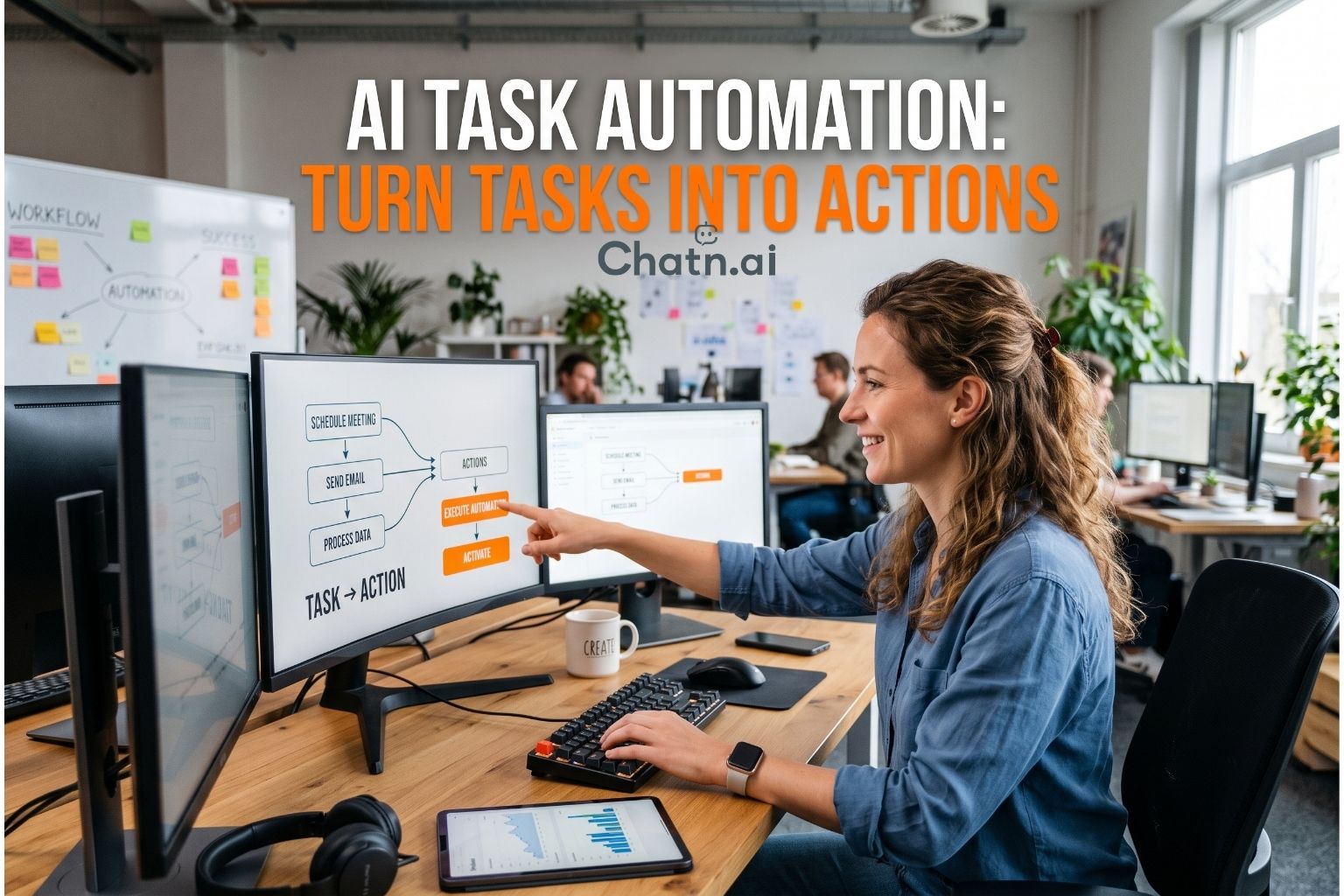
- Automate complex workflows, such as contract approvals, compliance tracking, and document processing, reducing manual effort and errors.
- Generate real-time, data-driven insights to help businesses make informed decisions and improve customer experiences.
By continuously adapting to new data, AI agents become more efficient over time, making them essential for businesses looking to scale operations, improve customer satisfaction, and gain a competitive edge. Their ability to integrate, learn, and automate ensures that businesses stay ahead in a rapidly evolving digital landscape.
Key Differences Between AI Agents and Chatbots
Feature | Chatbots | AI Agents |
Learning Ability | Limited | Uses machine learning to evolve |
Context Awareness | Basic | Understands context across interactions |
Workflow Integration | Minimal | Fully automates complex workflows |
Decision-Making | Predefined rules | Adapts and makes intelligent decisions |
Use Cases | FAQs, basic support | Advanced automation, contract management, customer service |
These distinctions make AI agents a superior choice for businesses looking to optimize processes and improve efficiency.
Why AI Agents Are the Future of Business Automation
AI agents are transforming how businesses operate by offering smarter, more adaptive automation. Unlike traditional chatbots, AI agents continuously learn, improve, and integrate across multiple business functions. Their ability to personalize interactions, automate complex workflows, and scale effortlessly makes them a game-changer for modern businesses.
Smarter Customer Interactions
AI agents analyze past interactions and real-time data to provide highly personalized responses. This results in:
- Faster resolution times: AI agents quickly identify customer intent and provide relevant solutions.
- More accurate responses: Advanced NLP and machine learning ensure precise, context-aware replies.
- Higher customer satisfaction: Personalized interactions enhance user experience and build long-term engagement.
By adapting to customer behavior and sentiment, AI agents deliver a seamless and efficient support experience, far beyond what traditional chatbots can offer.
Automating Workflows with AI
AI agents extend beyond customer interactions by optimizing critical business workflows, including:
- Contract management: Automate document approvals, compliance tracking, and legal workflows.
- Data entry and analysis: Eliminate manual data processing and extract actionable insights in real time.
- Customer support: Handle complex inquiries with human-like understanding and accuracy.
By reducing manual intervention, AI agents free up resources, minimize errors, and ensure businesses operate with maximum efficiency.
Scalability and Adaptability
One of the biggest advantages of AI agents is their ability to scale without constant reprogramming. They evolve alongside business needs and integrate seamlessly with existing infrastructure:
- Seamless system integration: AI agents connect with CRM, ERP, and business intelligence platforms for end-to-end automation.
- Real-time data processing: They analyze vast amounts of information instantly, providing businesses with actionable insights.
- Effortless scalability: AI-driven automation allows businesses to expand their capabilities without overhauling existing systems.
As AI continues to advance, businesses that embrace AI agents will gain a competitive edge by improving efficiency, enhancing customer experiences, and future-proofing their operations.
How to Implement AI Agents in Your Business
Integrating AI agents into your business can drive efficiency, automate workflows, and enhance customer interactions. However, successful implementation requires careful planning and the right strategy.
Choosing the Right AI Solution
Selecting an AI-powered solution depends on your business needs and operational goals. Key factors to consider include:
- Identifying critical automation areas: Determine where AI can improve efficiency, such as customer support, contract management, or data processing.
- Ensuring seamless integration: Choose AI platforms like Chatn.ai that work with existing CRM, ERP, and workflow systems.
- Prioritizing adaptability and learning: Opt for AI solutions that continuously learn from interactions and improve decision-making over time.
By selecting the right AI agent, businesses can maximize automation without disrupting existing operations.
Best Practices for AI Implementation
A structured approach ensures smooth AI adoption and long-term success. Follow these best practices:
- Start with high-impact areas: Implement AI in departments with immediate automation benefits, such as customer service or contract approvals.
- Empower employees: Provide training and resources to help teams work alongside AI agents effectively.
- Monitor AI performance: Track key metrics and use analytics to refine AI-driven processes.
- Continuously optimize: Regularly update AI models based on real-world interactions and emerging business needs.
With the right strategy, AI agents can become an integral part of business automation, driving efficiency and long-term growth.
Conclusion – The Shift from Chatbots to AI Agents
While chatbots have their place, AI agents are paving the way for the future of business automation. Their ability to process complex data, learn from interactions, and seamlessly integrate with business systems makes them invaluable for organizations aiming to stay ahead.
By adopting AI agents, businesses can:
- Enhance customer experiences.
- Automate repetitive workflows.
- Boost efficiency and improve decision-making accuracy.
The shift from chatbots to AI agents is not just a trend but an inevitable evolution. Companies that embrace AI-driven automation will not only stay competitive but also secure long-term success.