
Businesses have to move fast and work well. They need to change and be more efficient. A lot of teams still have problems with doing the same work over and over. They also have trouble talking to each other. Their systems are not connected. This makes it hard for them to get things done every day. When businesses get bigger, things get more complicated. So employees spend more time managing their work than doing important things.
This is why AI productivity systems are really important now. These systems put together automation, AI, and collaboration tools. They help businesses work better, reduce manual effort, and make their daily work easier.
What is really great about AI productivity systems is that they help teams focus on the work. They do not have to repeat the tasks. AI productivity systems also help teams communicate more effectively, make decisions faster, and organize their work.
Platforms like Chatn.ai help businesses streamline operations through automation and conversational support. Instead of relying on unconnected tools, businesses can adopt a unified system that is fast, scalable, and efficient for the long term.
In this guide, we will explore how AI productivity systems function. We will examine why businesses are increasingly adopting them. We will discover how these systems are transforming the workplace.
What Are AI Productivity Systems?
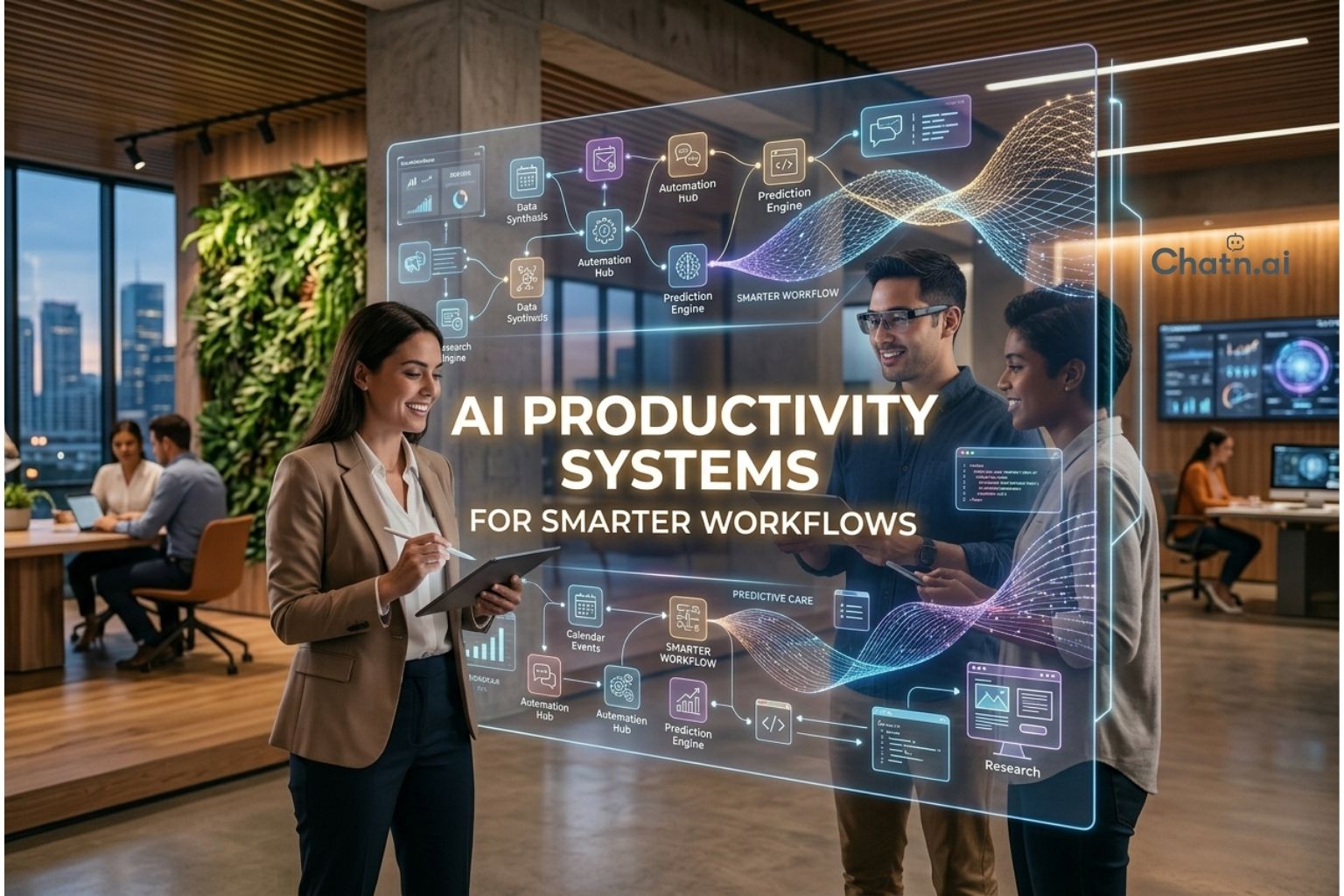
AI productivity systems are platforms that help businesses work more effectively by automating and leveraging artificial intelligence to make decisions. They change the way companies do things by making their processes faster, smarter, and more connected.
Usually, productivity software helps organize tasks and store information. AI productivity systems do more than that. They actually help employees by making their work easier and faster, and by automating tasks they do repeatedly.
For example, an AI productivity system can do things like:
- Route support tickets
- Schedule follow-ups
- Find information that the company already has
- Manage approvals for workflows
- Help with customer interactions
- Coordinate what the team is doing
This means that businesses can get things done faster and do things the same way every time.
AI productivity systems differ from productivity tools in that they connect everything together. Employees do not have to keep switching between platforms. They can just use one system that has everything they need and makes their work easier.
Teams can focus less on organizing and more on important work that impacts the business.
This changes what we mean by productivity. For people who have to coordinate everything and manage tasks, companies can use artificial intelligence and automation to streamline their workflows. AI productivity systems make business operations easier and faster.
Why Businesses Are Investing in AI Productivity Systems
AI productivity systems are platforms that help businesses work more effectively by automating and leveraging artificial intelligence to make decisions. They change the way companies do things by making their processes faster, smarter, and more connected.
Usually, productivity software helps organize tasks and store information. AI productivity systems do more than that. They actually help employees by making their work easier and faster, and by automating tasks they repeat.
For example, an AI productivity system can do things like:
- Route support tickets
- Schedule follow-ups
- Find information that the company already has
- Manage approvals for workflows
- Help with customer interactions
- Coordinate what the team is doing
This means that businesses can get things done faster and do things the same way every time.
AI productivity systems differ from productivity tools in that they connect everything together. Employees do not have to keep switching between platforms. They can just use one system that has everything they need and makes their work easier.
Teams can focus less on organizing and more on important work that impacts the business.
This changes what we mean by productivity. For people who have to coordinate everything and manage tasks, companies can use artificial intelligence and automation to streamline their workflows. AI productivity systems make business operations easier and faster.

Core Features of AI Productivity Systems
Modern AI productivity systems include several advanced capabilities that improve workplace efficiency.
Workflow Automation
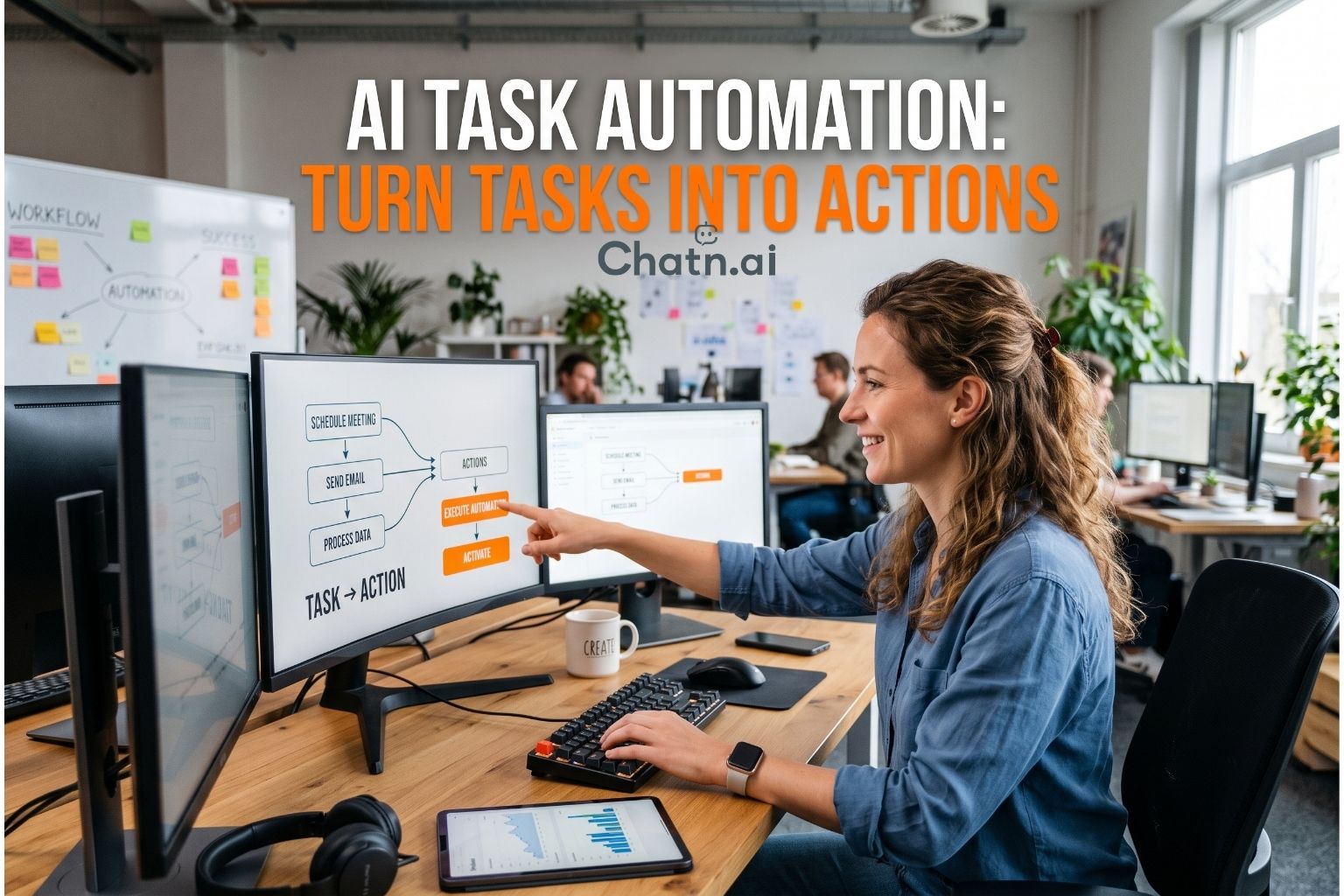
Workflow automation eliminates the tasks employees repeat. These tasks slow down the business. Now computers do these tasks for us. They do them fast. They do them the same way every time. These computer systems also support approvals and scheduling. They send out notifications. Make sure the right people get the right tasks. All of this happens automatically, so nothing gets held up.
As a result, the business can move faster with fewer delays. While employees still have paperwork to complete, they gain more time to focus on important work. Workflow automation not only makes the business run smoothly and reliably, but it also helps drive business growth.
Conversational AI Interfaces
Conversational AI enables employees to interact with systems. They do not have to look at screens or search for many different tools. Employees can just ask the AI assistant for what they need. As a result, teams access information more easily. Instead of spending time searching or learning how to organize systems, employees just ask the AI and receive quick answers. This reduces employee frustration and increases productivity. Employees complete tasks faster by spending less time searching and more time using the AI assistant’s information.
Conversational AI Interfaces like Chatn.ai make it easier for people to work together and get things done. This makes it easier for companies to make things simpler for their employees. Companies can create systems that let people talk and get work done in one place using AI Interfaces.
Intelligent Task Management
Intelligent task management systems help teams work more efficiently by organizing tasks by urgency, importance, and relevance. These systems dynamically assess workloads and update priorities in real time, making it clear which task to tackle next.
For example, these systems proactively identify incoming requests, intelligently distribute work among team members, and automatically recommend the most effective next steps, helping teams excel in every situation.
Additionally, they help ensure critical tasks are consistently completed on time, increasing confidence that every key responsibility is addressed.
With intelligent task management, employees always understand which tasks matter most. This lets them focus on activities that deliver business results, reducing time spent on manual coordination.
By spending less time managing tasks and more time on meaningful work, employees can be more productive and deliver greater impact.
How AI Productivity Systems Improve Workflows
AI productivity systems create measurable improvements across business operations.
Reducing Administrative Work
Tasks slow down teams a lot. Many employees spend hours on approvals, updating spreadsheets, and doing work that adds little value. However, AI systems help reduce this work by automating tasks. Employees do not have to do every step. They can use automation to execute processes consistently.
As a result, work gets done efficiently. Employees get back time that they can use for projects, solving problems creatively, and doing work that helps the business grow. They can focus on initiatives and higher-impact work. This directly contributes to business growth.
Accelerating Communication
Communication can be really slow at times, causing big problems for teams. When people send messages, they can get lost in long email conversations or spread out across different messaging platforms. As a result, it takes longer to get a response, making the team less efficient.
There is a way to make this better. Systems that use intelligence to help teams work better can bring all communication together in one place, so teams do not need to use many channels—they can simply use one system to find, follow, and manage information.
These systems also ensure that people receive information at the right time automatically. As a result, people do not have to spend time looking for messages or waiting to hear from someone.
This allows teams to respond more quickly to challenges and collaborate effectively. By ensuring everyone is aligned on project goals and roles across departments, work processes remain efficient, and the company as a whole benefits from improved performance.
Improving Decision-Making
Business decisions need information, and they need it on time. In many companies, important information is scattered across multiple systems. This makes it hard to make decisions. It slows everything down.
To make things better, AI productivity systems help get all the information. They take information from operations and turn it into something easy to understand and use. This way, managers do not have to spend a lot of time collecting information or making sense of it. The systems do all this work automatically. Present the information in an easy-to-read format.
Leaders can access the necessary information faster and spot trends more quickly, without waiting. AI productivity systems allow managers to access all necessary information in one place, eliminating the need to navigate multiple systems.
This means that AI can provide advice, helping people make decisions faster and with more confidence. This makes the whole company work better and respond more quickly. AI productivity systems and Decision-Making are very important for companies. AI productivity systems help with Decision-Making.

Industries Benefiting From AI Productivity Systems
AI productivity systems provide value across many industries. However, several sectors benefit especially quickly from intelligent workflow automation.
Healthcare
Healthcare organizations handle extensive documentation and administrative duties daily. They must deliver patient care, coordinate appointments, interact with patients and staff, record information, and collaborate across departments.
To address these demands, healthcare organizations use software to streamline tasks. These systems assist with appointment scheduling, facilitate communication, support patient care, and automate paperwork.
These technologies reduce staff workload by automating routine tasks, minimizing delays, and decreasing paperwork, allowing healthcare teams to dedicate more time to patient care. As a result, healthcare teams can dedicate more time to patient care, improving outcomes and organizational efficiency.
Customer Support
Customer support teams manage numerous inquiries and requests daily. They must respond promptly while maintaining high performance across various channels. To streamline this, we use automation for certain tasks. For example, Customer Support can automatically route requests to the appropriate person. Automation also speeds up responses by suggesting replies and handling repetitive tasks.
Customer Support teams can quickly access the information they need. Instead of searching through documents or systems, they receive direct answers from automated tools. This makes Customer Support more efficient and easier to manage. It improves customer satisfaction while simplifying tasks for the Customer Support teams.
Human Resources
The Human Resources team has a lot of work to do. They are in charge of tasks such as helping new employees, answering questions, and ensuring everyone understands the company policies. The Human Resources team receives many requests every day. These requests have to be addressed quickly.
To make things easier, we use computer systems. These systems are like helpers that speed up the Human Resources team’s work. They use talking computers and automated workflows to get things done. This means the Human Resources team does not have to answer every question on its own. The computer system can answer questions, organize work, and direct employees to the information they need.
The computer systems also make it easier for new employees to join the company. They can fill out paperwork, get tasks, and do training on the computer. The systems also help employees find the company policies they need. They can just ask the computer. Get the right information.
This improves the Human Resources team’s efficiency and speed. It also makes the employees happier. The Human Resources team can then focus on important tasks, such as ensuring employees are happy and that the company is functioning well. The Human Resources team can think about the future and how to improve the company.
Why AI Productivity Systems Matter More Than Ever
Today, productivity is less about exertion and more about routine tasks. It relies on how efficiently companies optimize workflows, communicate, and solve complex challenges across teams and systems.
This change shows that AI productivity systems are revolutionizing how companies function. They replace outdated practices by delivering automation and intelligent solutions to everyday operations.
For instance, AI productivity systems enable companies to:
They also equip teams with clear planning and structure, increasing overall performance. Importantly, these systems enable employees to concentrate on high-impact work, driving company growth, innovation, and sustained success.
Platforms like Chatn.ai redefine business operations with conversational AI, automated tasks, and proactive support. Companies streamline processes and eliminate inefficiencies from disconnected systems.
As AI evolves, companies embracing productivity systems will secure a significant long-term advantage. They will operate more strategically and resourcefully than those persisting with outdated methods. AI productivity systems will ensure lasting progress.

Conclusion
Artificial Intelligence productivity systems are changing how businesses work in today’s world. Instead of using old manual ways, companies now use smart systems that make work easier and improve efficiency. These systems help reduce paperwork, improve communication, automate tasks, and improve operations across teams. As a result, businesses work faster, more accurately, and consistently.
AI productivity systems also help organizations create and manage workflows that grow with their needs. They keep operations organized, flexible, and efficient in complex environments. Today, businesses can’t rely solely on tools and manual coordination. They need to adopt systems that support quick decision-making and adaptable operations across the organization.
Platforms like Chatn.ai help drive this change by enabling organizations to build productivity environments powered by conversational AI and workflow automation. This way, teams can centralize operations. Remove inefficiencies that slow down performance.
As workplace demands continue to change, AI productivity systems will become vital for businesses that want to be ready for the future. Companies that adopt AI-powered productivity strategies now will be better positioned for efficiency, scalability, and long-term success with AI productivity systems.