

In today’s fast-paced business world, customers are looking for instant, personalized, and seamless interactions. However, traditional service models are not meeting these expectations. As a result, long wait times, conflicting information, and overworked service teams are causing customer frustration. To overcome these challenges, businesses need a solution that supports growth while preserving interaction quality. A conversational AI platform can streamline and enhance these interactions. With the help of a conversational AI platform, companies can create smarter, faster, and more personalized interactions. “In this blog, we’ll explore what a conversational AI platform is, its benefits, practical uses, and how your business can leverage it.
What is a Conversational AI Platform?
A conversational AI platform is a highly developed, sophisticated software solution that enables a business to automate customer interactions smoothly and efficiently across channels, including web, mobile, and social media. The most important advantage of a conversational AI platform, compared to a conventional chatbot, is that it not only understands the context of the conversation but also interprets it in a highly efficient and natural manner. In addition, the conversational AI platform does not merely respond to a conversation in a scripted manner; it also offers highly dynamic, context-based solutions.
Another advantage of a conversational AI platform, compared to conventional chatbots, is that it allows a business not only to improve the customer digital experience but also to enhance its capabilities. With the help of a conversational AI platform, a business can not only improve customer experience but also gain a significant technological advantage, especially if it uses AI chatbot solutions and conversational features.
Core Components of a Conversational AI Platform
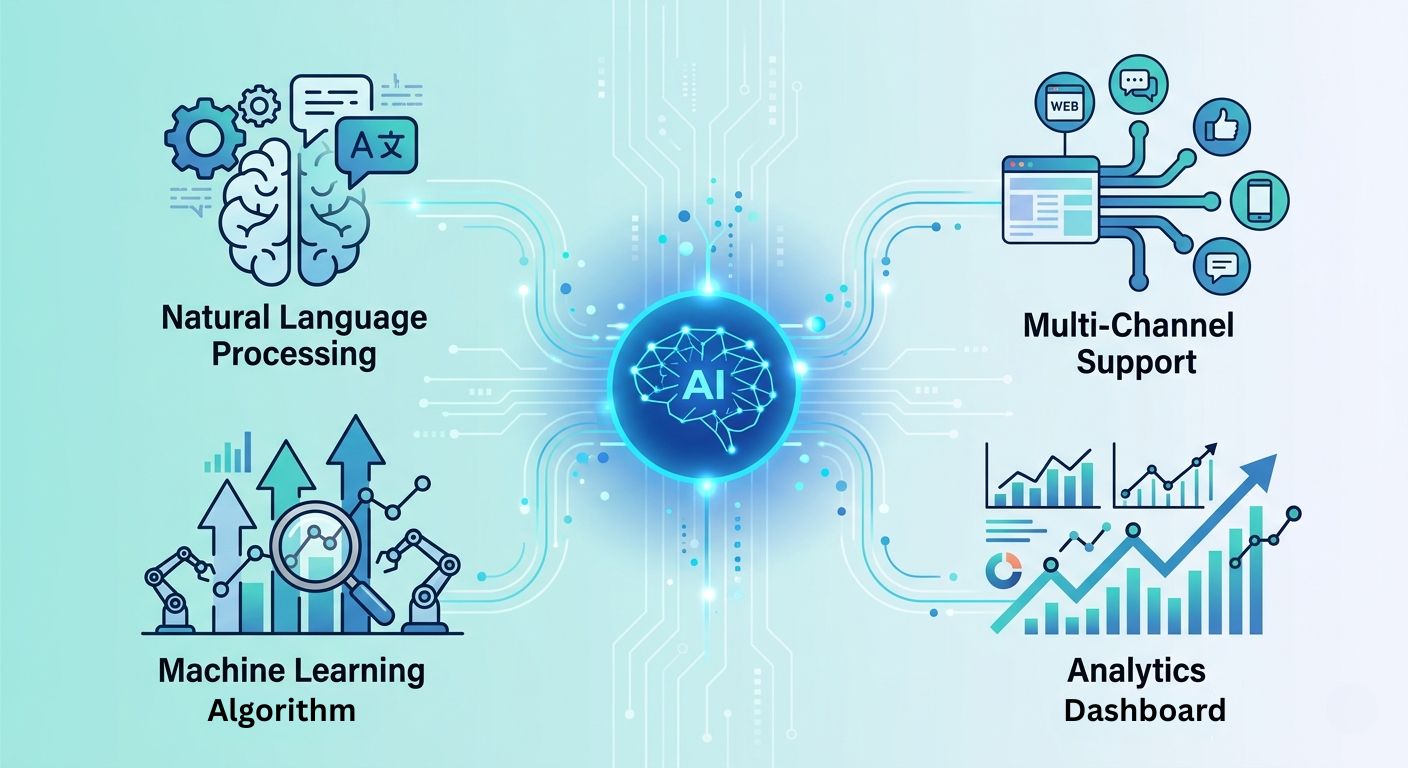
A conversational AI platform comprises several key components that enable highly efficient, intelligent, and scalable customer conversations.
- Natural Language Processing (NLP): This component of a conversational AI platform helps understand customer language and interpret the intent behind the conversation. It helps create a highly efficient and scalable conversation for customers. Using this, companies can effectively handle complex queries and maintain meaningful conversations.
- Machine Learning Algorithm: A conversational AI platform learns from customer interactions and improves response accuracy. As time passes, response accuracy improves, and the conversation becomes highly efficient and scalable.
- Multi-Channel Support: A highly efficient and scalable conversational AI platform helps companies connect with customers across multiple platforms, including the web, mobile, and social media. Using this, companies can effectively connect with customers and deliver highly efficient, scalable conversations.
- Analytics Dashboard: Finally, a conversational AI platform helps companies analyze customer performance and create highly efficient, scalable conversations. Using this, companies can effectively engage with customers and deliver highly efficient, scalable conversations.
Key Benefits of Using a Conversational AI Platform
Investing in a conversational AI platform can transform business operations and customer interactions. Here’s why businesses are adopting it rapidly.
1. Automation of Customer Interactions Without Losing the Human Touch
While customers demand faster response times, they still crave personalized interactions. Fortunately, with a conversational AI platform, businesses can automate customer interactions while still maintaining personalized interactions. For example, whether answering FAQs or helping users with complex interactions, businesses can ensure there is always a human touch at every stage. Furthermore, with automated customer interactions, businesses can ensure that customer support teams have more time to address high-priority issues, thereby improving customer satisfaction.
2. Enhance the Digital Customer Experience
In today’s competitive environment, digital experiences directly impact customer perception. Fortunately, with a conversational AI platform, businesses cannot only provide 24/7 customer support but also enable customers to receive timely support and interact with them across multiple channels. In addition, by analyzing customer history, behavior, and preferences, businesses can make every interaction feel personalized, ensuring each customer feels valued and understood. Furthermore, by providing an exceptional digital customer experience, businesses can differentiate themselves from the competition and build stronger, more meaningful relationships with their customers.
3. Increase Operational Efficiency
A conversational AI platform, with its ability to automate repetitive tasks, greatly reduces costs for businesses. At the same time, businesses can scale effortlessly. Therefore, customer support teams can respond to more customer issues without hiring more people. Secondly, with workflow automation, messages are routed correctly, answers are accurate, and follow-ups are automated. As a result, businesses operate more smoothly, and teams perform tasks more efficiently. Therefore, businesses can optimize their processes through chatbot workflow automation while still delivering high-quality customer interactions.
4. Gain Actionable Insights With AI Analytics
As data is key to continuous improvement, a conversational AI system monitors every interaction and produces valuable insights. By analyzing this data, businesses can identify emerging trends and improve their services to make them more effective. Furthermore, analytics will help businesses optimize conversations, highlight successful responses, and increase customer satisfaction. Businesses can make informed decisions that boost efficiency and deliver stronger results. By leveraging AI-powered conversations, businesses can gain valuable insights and create intelligent, personalized conversations that meet customer expectations.
How to Implement a Conversational AI Platform Successfully
Even the best technology requires thoughtful implementation. Follow these steps to ensure success.
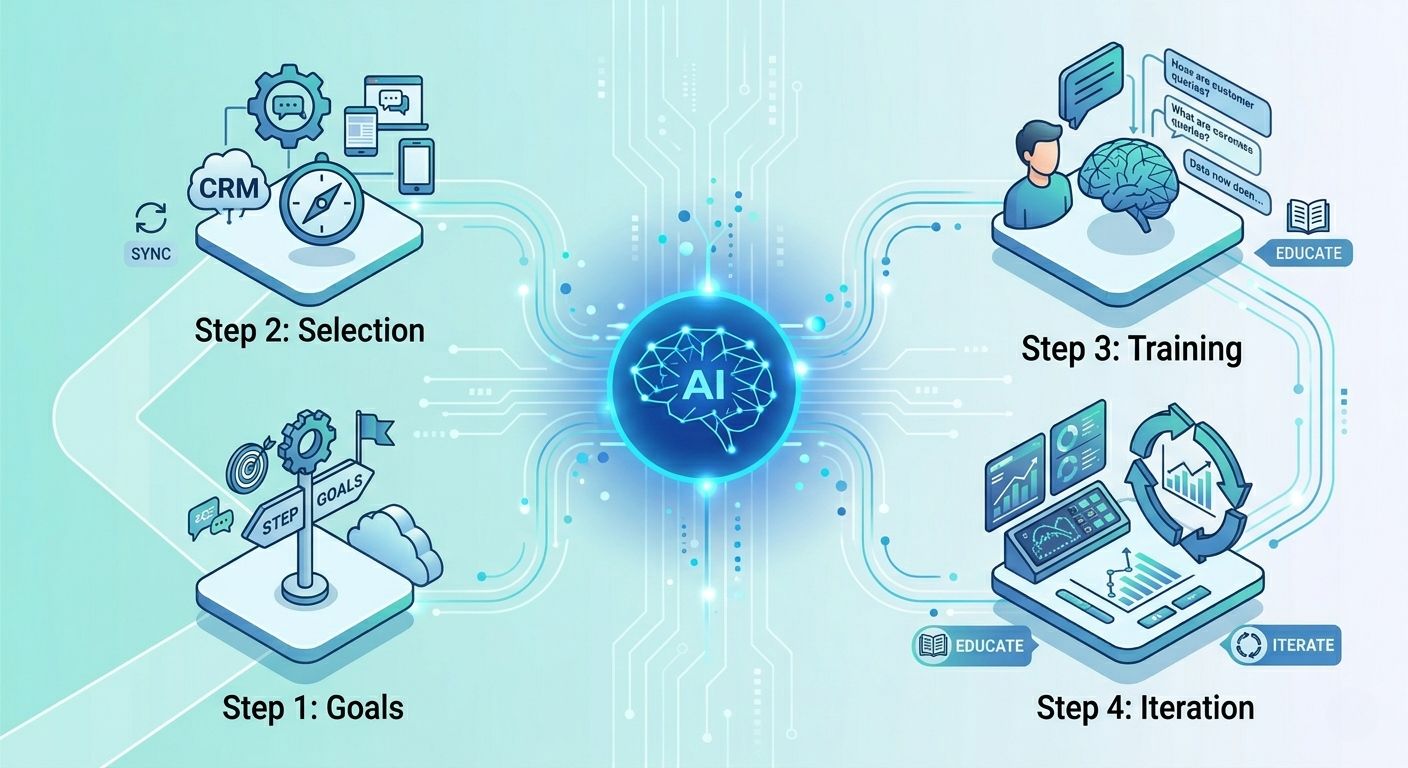
Step 1 – Identify Business Goals
To deploy an effective conversational AI platform, it is vital to start by identifying its goals. For example, are your goals to automate customer support, improve lead qualification, or reduce response times? Also, are your goals to improve customer satisfaction or streamline your business workflows? Businesses can use the AI platform effectively by clearly identifying these goals. In addition, it is vital to ensure these goals are met effectively and deliver maximum ROI.
Step 2 – Choose the Right Platform
When it comes to conversational AI platforms, they are certainly not all the same. Therefore, it is important to carefully evaluate the options. For instance, one should consider multiple channels to facilitate easy customer interaction across the web, mobile devices, and social media. Then, NLP accuracy is important. Clearly defining inputs ensures the AI understands the customer’s intent and responds accurately.
Furthermore, the platform must offer analytics to enable the business to monitor the process and make improvements. Lastly, businesses should integrate the platform with their existing CRM or ERP systems. This way, businesses can be sure that they are choosing the right enterprise chatbot platform that will guarantee easy adoption and quick ROI.
Step 3 – Train and Optimize the AI
After selecting the conversational AI platform, the next step is to train and optimize the AI using customer conversations. To do this effectively, businesses should first train the AI using real customer queries. This setup allows the AI to grasp customer intent, interpret messages, and respond accurately. Furthermore, businesses should also focus on optimizing the AI’s ability to respond effectively to both routine and complex customer queries. This setup enables the AI to respond naturally, simulating human interactions. By doing so, businesses will be able to provide high-quality, satisfying customer experiences.
Step 4 – Monitor, Analyze, and Iterate
Once you have implemented your conversational AI platform, you must monitor and analyze it to achieve the best results. The first step in this direction is to monitor your performance on customer satisfaction, accuracy, and engagement. Moreover, you must analyze your performance and identify areas for improvement. Also, you must look for patterns in customer behavior and potential bottlenecks in your workflow. Based on these analyses, it is imperative that you refine your scripts, update your automated systems, and also refine your AI responses to better serve your customers.
Real-World Use Cases of Conversational AI Platforms
Conversational AI platforms work across industries. Here are examples of how they deliver measurable value.
Customer Support Automation
A conversational AI system can be highly effective in managing FAQs, troubleshooting, and escalating complex issues to the right human agents. Businesses can significantly reduce response times, improving overall customer satisfaction. Additionally, the system’s capacity to automate FAQs enables human agents to be more productive in addressing other critical issues, ensuring that every issue is handled by the right person and in the right context. The AI provides every customer with instant, accurate support, creating an efficient and satisfying experience.
Sales and Lead Qualification
A conversational AI platform can help a business capture leads, qualify them, and even schedule them, ensuring that no opportunity slips away. Additionally, this helps a business avoid losing any leads and ensures that the sales team focuses on converting all qualified leads. Furthermore, the conversational AI platform can help a business identify leads, enabling the sales team to understand them and ensuring a high conversion rate. Therefore, by using AI chatbot platforms, a business not only improves how it handles leads but also increases its conversion rate.
HR and Employee Onboarding
The conversational AI system has the potential to directly assist the HR department in its activities, answering employees’ queries, providing training, and supporting the employee onboarding process. The HR department can improve efficiency by focusing on core activities such as employee engagement, talent development, and planning. Additionally, the chatbot would provide consistency and assist new employees throughout the onboarding process, thereby benefiting the business in many ways.
Role in E-Commerce and Personalized Shopping
A conversational AI platform can assist users during their shopping experience. The platform can also make recommendations to users. Furthermore, it efficiently manages orders and returns. Additionally, it can make personalized recommendations to users. This approach improves the shopping experience for users and boosts business conversions. Moreover, it helps businesses streamline other e-commerce-related tasks. Businesses can focus on key tasks like marketing and inventory management. Users enjoy a better overall shopping experience.
Common Challenges and How to Overcome Them
While powerful, AI platforms come with challenges. Addressing them ensures smooth implementation.
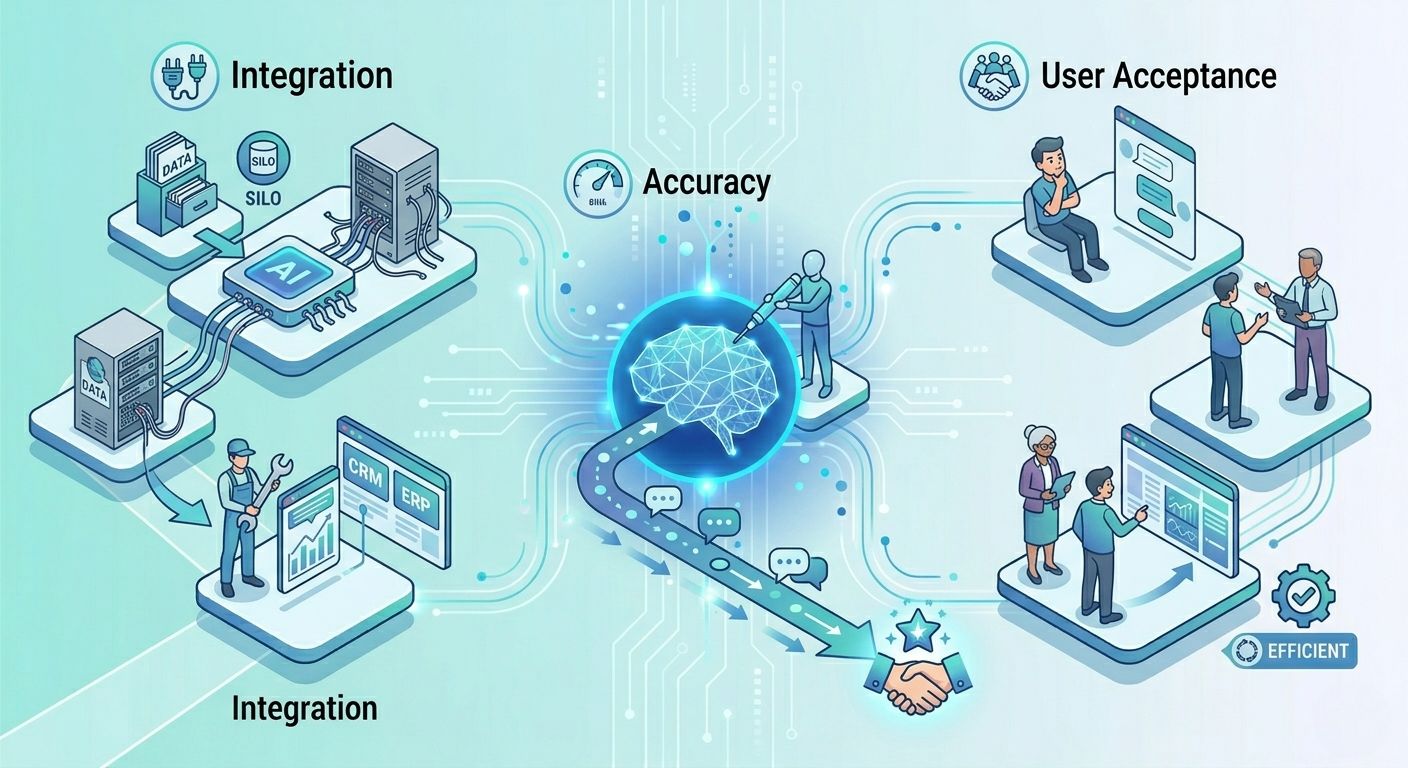
Integration With Existing Systems
For businesses to reap all the advantages offered by a conversational AI system, it is imperative to integrate it with existing systems, such as CRM, ERP, or support software. This way, businesses can avoid data silos, which would otherwise affect their operations. Moreover, by integrating such systems, businesses can enable their teams to work efficiently, make better decisions, and deliver a better customer experience without disruptions.
Maintaining Accuracy and Relevance
To remain effective, businesses must continually update the conversational AI platform. By understanding intent and monitoring interactions, the AI helps enhance the overall customer experience. Therefore, maintaining accuracy and relevance is essential to ensuring that businesses achieve a consistent, high-quality customer experience, thereby maximizing the value of the AI platform.
User Acceptance
Implementing a conversational AI platform may meet resistance from teams unfamiliar with new technologies. Therefore, businesses must involve staff in the process, explain the platform’s importance, and highlight the efficiency it delivers. Providing adequate training empowers the workforce to use the new platform and ensures full adoption.
Future of Conversational AI Platforms
The future of conversational AI platforms is extremely promising, as rapid technological advancements in AI continually enhance their capabilities. For instance, technologies such as generative AI, voice-enabled bots, and hyper-personalization are revolutionizing the way businesses engage with their customers. Therefore, businesses that adopt these technologies early will have a significant advantage over their competitors. Furthermore, as AI technologies continuously automate complex tasks, there is an opportunity to enhance human interactions. AI technologies let businesses focus on the strategic aspects of human interactions. Therefore, businesses that leverage AI-driven conversations not only achieve more efficient business processes but also have opportunities to build stronger customer relationships.
Conclusion: Why Your Business Needs a Conversational AI Platform Now
In today’s fast-paced digital world, it is not optional but mandatory for businesses to have a conversational AI platform in place to remain competitive. Such platforms not only help businesses deliver smarter, faster, and more personalized customer experiences but also enable them to scale their operations more effectively with the power of AI, without compromising the quality and personal touch expected in today’s competitive market.
With ChatN, businesses can now access a powerful conversational AI platform and make the most of AI-driven conversations in their business processes and operations. With ChatN, businesses can now transform their operations and processes most effectively and efficiently, while also staying competitive in today’s digital age and market.
Get Started With ChatN Today
Experience the benefits of a conversational AI platform firsthand. Sign up for a demo or trial to automate workflows, personalize customer interactions, and gain real-time insights that drive growth.