
Introduction – The Rise of Autonomy Over Automation
Corporations have utilized automation for decades, streamlining operations and minimizing manual intervention. However, traditional automation depends on ongoing oversight and rigid, human-defined parameters. Now, a new era is unfolding. Companies are rapidly transitioning from automation to autonomy, with autonomous AI serving as a catalyst for this evolution. Unlike legacy systems, autonomous solutions transcend static instructions. These technologies empower companies to deploy context-aware, decision-driven, and proactive processes.
Consequently, organizations are embracing autonomous systems, signaling a transformative shift toward intelligent, self-directed business processes. Thus, platforms like Chatn.ai are vital to this transformation. With its support, businesses can innovate and integrate autonomous capabilities.
What Are Autonomous AI Systems?
Autonomous AI systems are sophisticated AI platforms that perceive, think, and act on data without constant human intervention. To put it simply, they move beyond automation to enable systems to operate autonomously in variable environments.
They differ from conventional devices because they don’t require instructions after every move. Rather, they constantly assess the environment, weigh their objectives, and decide what to do next. This means that they become quicker and more thoughtful when responding to changes.
In essence, they are digital employees. They perceive input, interpret the data, and react accordingly. Most importantly, they develop their abilities based on interactions and experience. Thus, autonomous AI systems can be considered more than just devices – they represent evolving systems that increase business efficiency.
Important Features of Autonomous AI
An autonomous AI system manages itself by acquiring knowledge and evolving independently through information and experience. It also makes independent judgments based on context. It adapts to changing circumstances, delivers relevant results, executes tasks across multiple systems, and refines its processes by evaluating productivity. An autonomous AI system is distinguished by its independent operation, continual learning, and adaptability. This represents a significant advancement in artificial intelligence.
The Working of Autonomous Artificial Intelligence Systems
To understand their effects, it’s important to know how self-driving AI systems work inside. They may seem complex at first. But if you look closer, things become much easier to understand.
Autonomous artificial intelligence systems are always gathering, studying, and using data. Also, they do not work alone but connect with other systems and tools to reach the needed result. Despite their sophistication, these systems can still be divided into three distinct layers for convenience: the data collection layer, which gathers information; the analysis layer, which processes and interprets the collected data; and the action layer, which executes decisions based on the analysis. Each layer serves its purpose and contributes to the efficient performance of the whole system.
Perception Layer – Recognizing the Environment
The perception layer does not merely passively receive information from multiple inputs; it also analyzes this data. Indeed, the system receives data from customers, businesses, applications, databases, and real-time behavior. Thus, the system acquires a full picture of its environment.
Also, the perception layer goes beyond simply storing unprocessed data, as the system constantly analyzes information about changes. In other words, the system always knows the current state. The purpose of this analysis is to help the AI make accurate and efficient decisions. In essence, the processed data helps the system understand the current situation.
Decision Engine – Think & Plan
The AI applies inferential algorithms to previous data, identifies statistical patterns, forecasts outcomes through contextual modeling, and selects the optimal action based on predefined metrics. Building on this analysis, the intelligent aspect of the process begins. With insights gained from modeled outcomes, the system adds rational analysis to its reactions and chooses the right actions.
As a result of these choices, each engine decision becomes a learning opportunity. Building on the system’s evolving expertise, the engine improves with each step, making future choices more accurate.
Execution Layer – Making Things Happen
At this stage, the system transitions to the execution phase and undertakes its assigned operations in real time. It can deliver automated responses to end-users, orchestrate workflow automation routines, synchronize data across integrated platforms, and execute multiple processes across distributed environments concurrently.
Furthermore, this is the level where artificial intelligence integrates with execution. As a result, the autonomous AI system functions effectively and without interruption, regardless of human intervention. Owing to this architecture, the system maintains continuous and efficient operation.

Reasons for the Movement of Businesses towards Autonomous AI
Modern businesses face increasing operational complexity. As additional stakeholders and technological systems become integrated, manual process coordination becomes less effective, often resulting in project delays and workflow inefficiencies, including financial losses from delayed decision-making. These escalating organizational challenges are prompting companies to seek process automation and digital transformation solutions.
Consequently, companies are adopting autonomous artificial intelligence (AI) systems to more effectively manage dynamic business environments and to optimize and expedite their organizational processes.
Increase in Operations Workload
Workloads have greatly increased across industries. Employees manage more complex operations. Organizations struggle to balance strategic work and repetitive tasks. Manual operations slow down efficiency. To counter these challenges, autonomous AI reduces the operational load. AI handles all repetitive tasks and automates entire processes. Staff can focus on other efforts.
Requirement for Decision-making in Real-time
The markets are evolving rapidly, and organizations have to evolve just as quickly to stay ahead of the competition. Any delays in decision-making may lead to missed opportunities and reduced efficiency. Besides, slow response rates can negatively impact customers and impede growth prospects.
This problem is effectively solved by AI technologies that act in real time and take necessary actions without delay. Furthermore, they continuously analyze and track the flow of new data to guarantee the timeliness and accuracy of decisions.
Increased Expectations from Customers
There is no denying that customer expectations have increased in today’s era. Since users interact with sophisticated systems, their expectation of receiving speedy, personalized replies has increased. They want to receive consistent services without any delays or mistakes.
Autonomous systems take the initiative and respond to customers. The systems analyze customer requirements in real time and make changes accordingly. Thus, organizations can offer faster, more consistent, and more relevant responses to customers without increasing human workload.
Use Cases for Autonomous AI Systems in the Real World
Businesses across various industries are already implementing autonomous AI systems to improve efficiency and reduce workloads. As adoption increases, businesses rely on these systems for tasks that demand promptness and precision, prioritizing practical applications over experimentation.
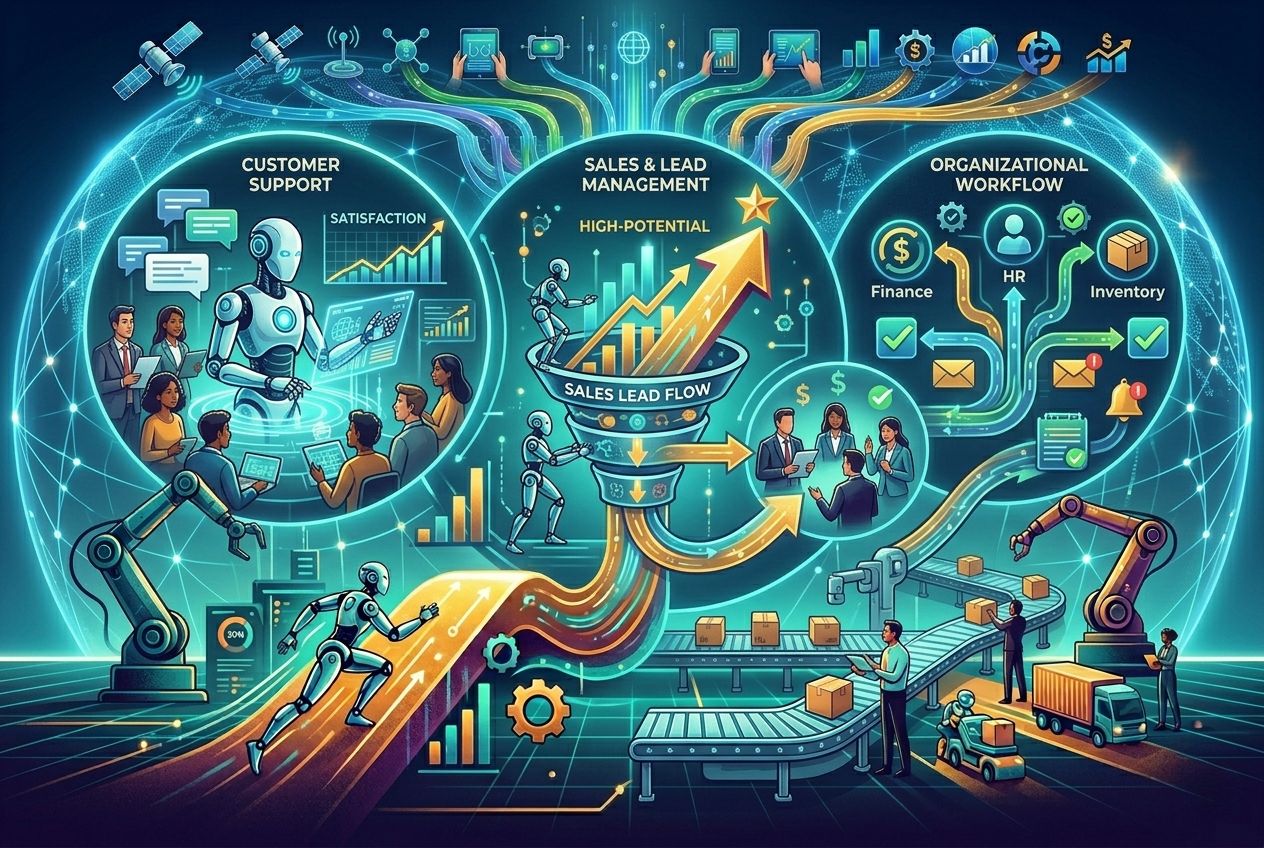
Automation in Customer Support
The automation technology empowers customers to find answers on their own without help from others. The technology helps to decipher the queries and understand what the customer is trying to achieve. Besides, it learns from its experience and improves the relevance of each answer. Thanks to this automation, the customers benefit from quick, efficient, and consistent customer support in every case. Furthermore, the service remains reliable and effective, even as the number of clients grows, because AI solutions can serve many users simultaneously.
Sales and Lead Management
The autonomous AI system streamlines sales and lead management by efficiently qualifying leads, ranking them by importance, and routing them to the appropriate teams. The system analyzes incoming data to identify high-potential leads, ensuring each is managed based on its assessed value and priority.
Additionally, the system continuously optimizes lead distribution to reduce inefficiencies. As a result, the sales team boosts productivity by focusing solely on closing deals, which accelerates the sales cycle.
Automation of Workflow within Organizations
Enterprises are known for implementing AI to organize and automate processes across multiple departments. In doing so, AI is responsible for controlling workflows, connecting various applications, and ensuring there is no communication gap among departments. Approvals, notifications, and updates run automatically without human involvement. As a result, operations become faster and more efficient than they would otherwise be.
Autonomous AI Systems vs Traditional AI Tools
Understanding the difference between traditional AI and autonomous systems is important.
Traditional AI Approach
Traditional approaches to artificial intelligence are mostly reactive. They respond only when an explicit stimulus is provided. As a result, they do nothing until a user instructs them. Consequently, they have a limited set of actions and can respond only to specific stimuli.
In addition, traditional AI approaches require constant user or other assistance. They cannot work independently in a dynamic setting. This limits their effectiveness and flexibility during the application process. They may also fail to cope in cases that are not pre-programmed.
Finally, traditional AI approaches function according to strict rules. This makes these programs quite rigid. They can act only according to pre-programmed criteria and cannot analyze or adapt to changes in context.
Autonomous AI Systems
On the other hand, autonomous AI systems work differently: proactive, they anticipate problems and address them before they become serious issues. Since they are goal-oriented, their actions consistently align with business objectives.
Being self-sufficient, these systems operate independently and require no ongoing human interaction. Their ability to adapt performance in response to workflow changes and real-time information sets them apart. Thus, they do not need constant supervision. The difference between tool-like approaches and intelligent AI is evident, showing how far technology has advanced.
Autonomous AI Systems: The Future
Autonomous AI systems are rapidly evolving toward complete autonomy in their operations. This means they can perform tasks without human intervention, even in complex operations. Not only will autonomous AI systems be able to make decisions, execute workflows, and optimize operations, but they will do so in real-time.
Not only will autonomous AI systems evolve technologically, gaining in intelligence and adaptability, but they will also be further integrated into business ecosystems to facilitate seamless interactions among tools and platforms. This way, business processes will be streamlined and self-optimizing through autonomous AI systems.
AI as a Digital Workforce
As artificial intelligence technologies evolve, AI-driven solutions are increasingly playing a significant role in modern enterprises’ digital workforces. These systems not only replicate tasks performed by human workers but also operate relentlessly, without breaks or downtime.
Moreover, AI systems not only execute individual assignments but also orchestrate operations throughout the entire workflow. They can coordinate multiple tools, processes, and systems to optimize performance. Thus, AI tools represent an advanced digital workforce, allowing enterprises to accelerate operations and boost efficiency while minimizing resource allocation.
Hyper-Autonomous Enterprises
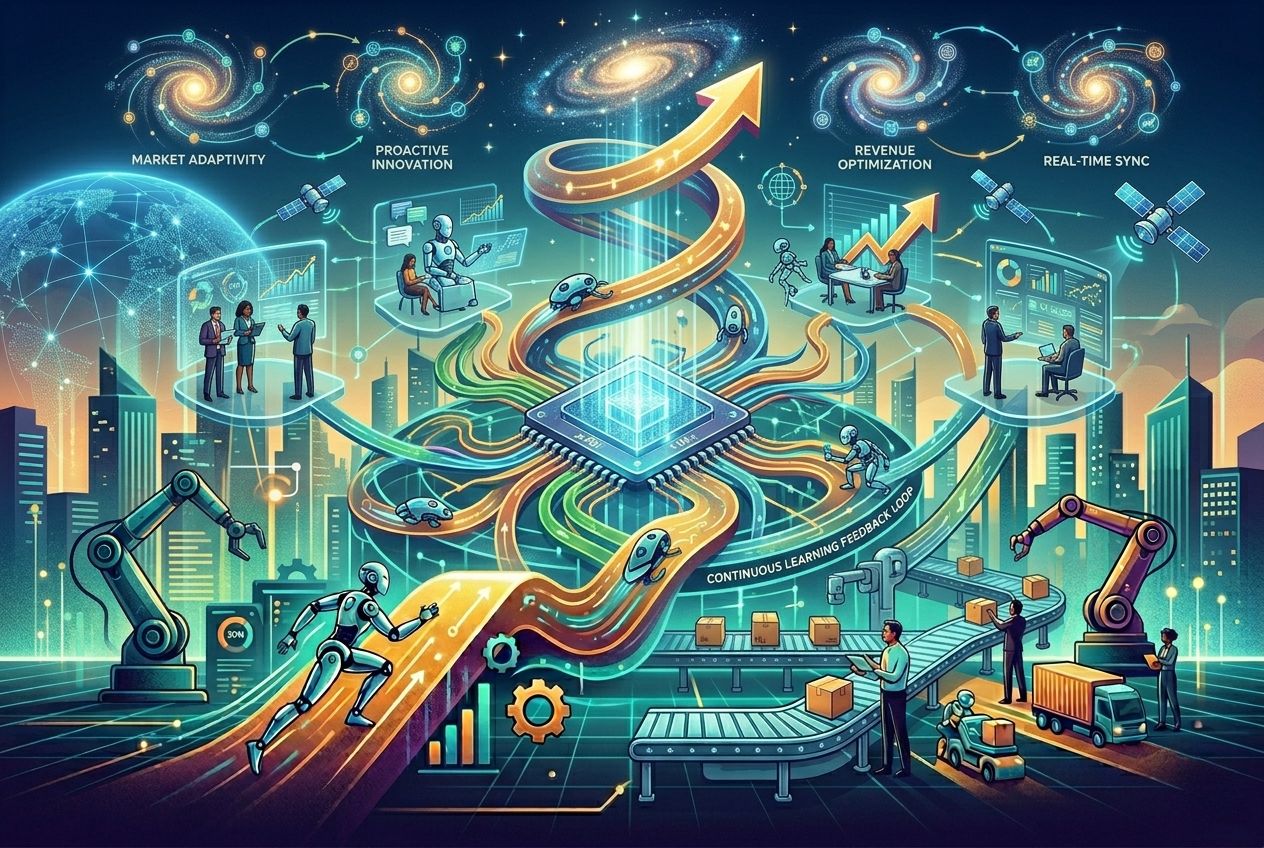
In the coming years, as the technological revolution accelerates, businesses will encounter advanced automation, artificial intelligence, and autonomous capabilities. In this evolving landscape, AI-driven systems will manage processes, perform independent analysis, pinpoint inefficiencies, and systematically refine workflows. Furthermore, these systems will proactively seek innovations to maximize process efficiency.
These systems will collaborate seamlessly, exchange data, and coordinate actions without human intervention. They will rapidly adapt their operations in response to shifting market demands. Consequently, through comprehensive and ongoing integration, traditional organizations will evolve into highly integrated, hyper-autonomous businesses.
Continuous Learning Systems
The AI system learns through feedback after each engagement, acquiring information, evaluating results, recognizing patterns, and refining its processes to improve future performance. Continuous learning allows the AI system to achieve accuracy, efficiency, and adaptability, helping organizations benefit from technology that evolves beyond basic functionality.
Conclusion – Moving Towards Autonomous Businesses
Autonomous AI systems mark a transformative advance in business technology, fundamentally altering organizational operations. Unlike automation, which executes tasks efficiently, autonomous systems empower other machines to analyze, decide, and function independently at all times.
Organizations now encounter increasing complexity and scale, making autonomous systems indispensable. These systems enhance efficiency, precision, and quality, alleviate operational burdens, and deliver consistently reliable service. Above all, autonomous systems are propelling businesses towards becoming truly intelligent and self-operating. This shift offers high productivity and flexibility, allowing organizations to continuously perform efficiently. Companies can achieve this using a platform such as Chatn.ai, dedicated to developing and integrating AI systems. Ultimately, the future will belong to fully autonomous systems.