

Introduction
In today’s rapid business environment, customer demands have reached new heights. For this reason, businesses have had to find new ways to handle customer demands. That is precisely where an AI Chatbot for Business comes into play. By merging AI with automation, businesses cannot only increase customer engagement but also cut costs while boosting revenue. Within this blog post, not only will you understand what an AI chatbot for business is, but you will also learn how a chat AI solution, like that of ChatN.ai, will ensure your business is thriving even in this competitive market.
What Is an AI Chatbot for Business?
Definition and Basic Functionality
An AI chatbot is an innovative software application that actively and intelligently engages users in natural-sounding conversations. Unlike basic chatbots, AI chatbots can capture context, decipher intent, and react dynamically. They can thus answer questions, make recommendations, and execute transactions with ease on any given channel, from websites to messaging apps and social media.
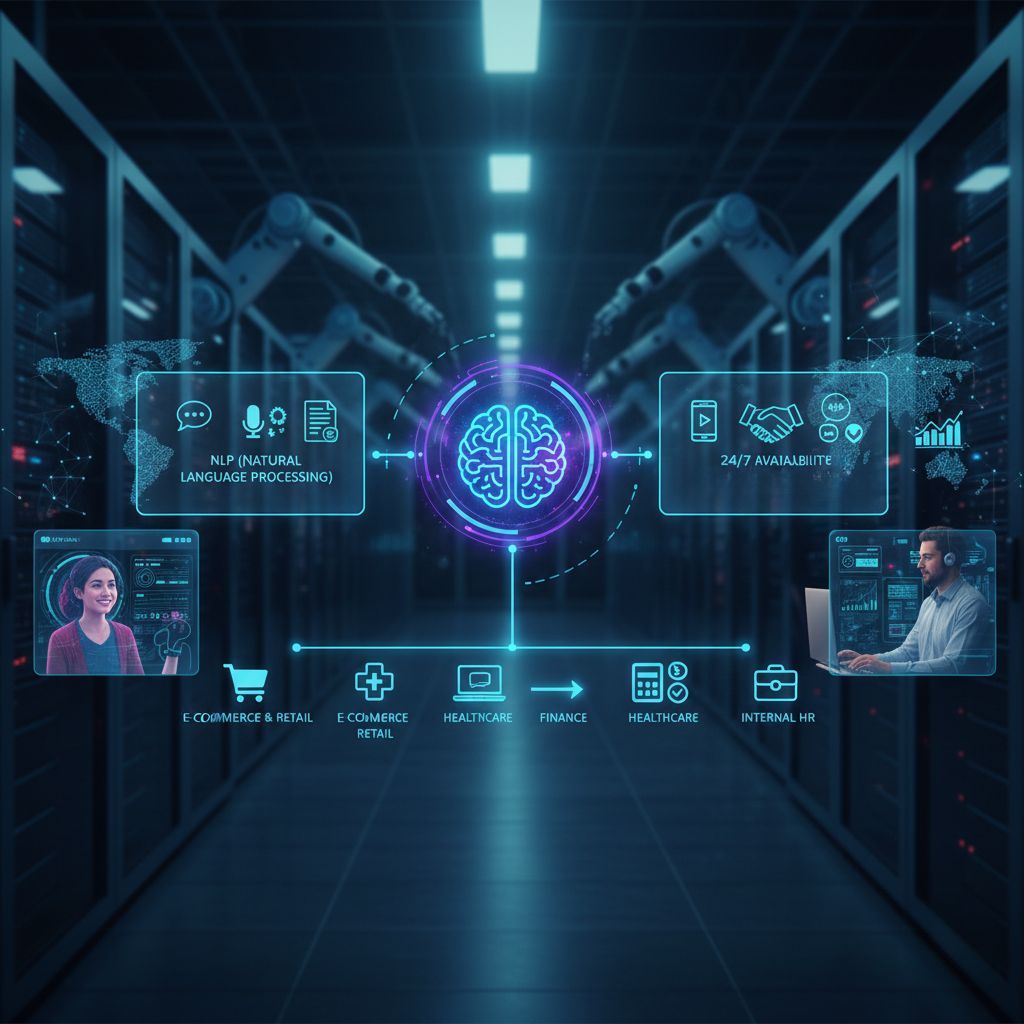
The most important features are :
- NLP, or Natural Language Processing, understands human language effectively and can accurately explain it.
- 24/7 Availability: Always ready to reach out to customers at any moment in time.
- Multichannel support-smooth interaction via web platforms, mobile applications, and messaging.
Further, these capabilities allow the company to provide predictable, reliable interactions for a consistent customer experience and free human agents to handle more complex work.
Artificial Intelligence-Powered Chatbots Transform Business
Chatbots are actively automating mundane tasks and improving efficiency in customer service interactions. These actions have contributed to reduced response time and enhanced result accuracy. Such aspects have brought sectors such as retail, healthcare, and finance within the purview of the impact generated by chatbot implementation. E-commerce sites are using AI-powered chatbots to simplify customer interactions for product selection and purchase. Similarly, healthcare facilities are using chatbots to respond to patient queries. Even internal business functions like HR are becoming more efficient through the use of chatbots.
Key Benefits of AI Chatbots for Business
Customer Experience Upgrades
Modern customers expect quick, personalized customer service. Fortunately, an AI-powered chatbot can offer both, as it can provide prompt, correct answers at any time. In addition, its ability to personalize allows a chatbot to adjust the conversation based on a user’s history and personal preferences. This way, it will help organizations effectively communicate with their customers and even foster strong loyalty. In fact, organizations that emphasize AI experiences can outdo their competitors in customer retention and lifetime value.
Boosted Productivity and Cost Reduction
AI-powered chatbots can easily process several hundred requests at once, compared to human support agents, significantly reducing the load on organizations’ support departments. Also, there is less room for error and faster request processing, enabling organizations to expect significant cost savings. Organizations can expect to save dollars on labor and other operational costs while enhancing scalability as their operations grow, and improving customer interactions.
Lead Generation and Sales Increase
AI chatbots are more than support entities; in fact, they are significant revenue drivers. Consider the following functions of AI chatbots. They are capable of qualifying a lead in a short time, responding to customer queries, and walking the client through every stage of the purchasing process. Additionally, AI chatbots can display products and showcase offers, and businesses can use the abandoned cart feature to convert potential revenue effectively in the online sector.
Data Collection and Business Insights
Chatbots constantly generate valuable insights for customers, which in turn allow companies to improve their strategies and develop highly targeted marketing campaigns; moreover, analytics insights help in making wise decisions and improve forecasting capabilities. Based on data insights, companies can gain a competitive edge and respond to customer trends and needs to improve overall business performance.
Practical Use Cases of AI Chatbots in Business
Support and Service to Customers
AI chatbots handle FAQs, troubleshooting, and even ticketing systems with lightning speed and more accuracy. That naturally means customers will receive correct solutions quickly, reducing wait times considerably and enhancing overall customer satisfaction. Moreover, as these chatbots automate more mundane support tasks, they free up human agents to focus on complex issues, thus improving both the quality of service and team productivity.
Marketing and Customer Engagement
Chatbots can actively launch marketing campaigns, send targeted notifications, and even hold engaging surveys. Headlines capture viewers’ attention, resulting in an enhanced brand image and more customer engagement. Additionally, the live response feature helps businesses adjust campaigns quickly, ensuring a more focused approach to reach the maximum number of users.
E-commerce and Sales Assistance
AI chatbots for online retailers actively recommend products, help customers check out, and remind customers of abandoned carts. As a result, they also serve as a digital sales assistant, sometimes guiding shoppers from browsing to a final purchase. More than this, chatbots provide real-time service and personalized suggestions, thereby improving the customer experience, increasing conversion rates, and boosting overall revenue for online shops.
Internal Business Operations
AI chatbots actively assist internal teams by automating HR tasks, IT support, and employee onboarding. In effect, they answer routine questions, freeing up staff to concentrate on strategic initiatives and higher-value projects. Furthermore, by streamlining internal processes and improving response times, chatbots make operations more efficient and enable teams to be more productive.

How to Implement an AI Chatbot for Business
Determining Objectives And Use Cases
To ensure the AI chatbot is a success from day one, organizations must establish a clear understanding of business goals before implementation. To start with, organizations should clearly determine the chatbot’s functionality for customer service, sales, increased customer engagement, and internal operations. Also, identifying problems and solutions should be part of business efficiency goals..
Picking an Appropriate AI Chatbot Platform
When choosing an AI-based chatbot platform, it is prudent to determine the size of your business and your goals. In such a case, it is always ideal to choose a platform that is integrated and allows for a high level of AI intelligence. Using ChatN.ai would be perfect, as it enables quick chatbot implementation and delivers high-quality consumer interactions. A good platform is also scalable, helping you scale your business and its chatbot.
Integration With Existing Systems
A chatbot that works well needs to integrate seamlessly with other services, such as CRM or ERP software, online shopping solutions, and communication applications. For a seamless customer service experience, organizations must ensure that all elements interact smoothly so customers receive systematic, personalized support across all channels.
Another advantage of integrating AI chatbots with other applications is that there is no risk of errors.
Training, Testing, and Optimization
To ensure your chatbot AI works well, start by training it on customer service interactions. After that, you should continually analyze and find out where improvement is needed. Finally, organizations should optimize response delivery and conversation flow to deliver more accurate, relevant interactions for customers. Moreover, this process also allows your chatbot AI to adjust to new customer needs and business objectives.
Future Trends in AI Chatbots for Business Use
Looking ahead, AI-powered chatbots are undergoing rapid evolution, with businesses witnessing several significant trends. In this context, predictive AI will shape the future of chatbots by enabling them to anticipate customer demands before customers even ask. Moreover, voice-enabled chatbots will make them more accessible in the future, as customers can continue natural conversations rather than typing messages. In addition, hyper-personalization will allow chatbots to tailor each conversation to individual customers in the future.
Common Challenges and How to Overcome Them
Despite their importance and benefits, AI chatbots face various hurdles. For example, AI chatbots could misinterpret complex queries, struggle to integrate with existing infrastructure, or find it hard to win over customers at first. Implementing a structured scope and actively monitoring and optimizing Key Performance Indicators can easily eliminate these problems. Additionally, training AI with authentic data will improve their effectiveness and ensure they perform even better over time.
Best Practices in Implementing an Effective AI Chatbot
Once the future trends and potential pitfalls are understood, organizations must rely on practical implementation approaches to tap the maximum benefits from AI chatbots. To implement this properly, organizations first have to determine appropriate goals and identify areas where AI chatbots, such as customer service and sales, or internal business operations, can best address them. Subsequently, organizations must integrate AI chatbots with other applications and solutions, such as CRMs and ERPs, to ensure everything works correctly and without hassle. Moreover, organizations must diligently train AI and track key performance indicators to improve chatbot responses and efficiency, extract maximum benefit from AI chatbots, and overcome potential pitfalls.

Conclusion
The integration of AI-powered chatbots into business will bring about a significant paradigm shift in how companies interact with their consumers, enabling them to increase conversions and ultimately boost revenue. For instance, by handling mundane tasks, offering personalized services, and generating actionable insights, organizations will gain a significant competitive advantage. Additionally, ChatN.ai offers companies effective, easy ways to incorporate AI-powered chatbots, resulting in effortless business operations, higher conversions, and happier customers. Essentially, AI-powered chatbots are not just an option but a business essential for future-proofing.