

Chatbot Design for Seamless User Experiences
Introduction: Why Chatbot Design Determines Success or Failure
Designing a chatbot is no longer optional. On the contrary, it becomes a defining factor in whether a chatbot is helpful or irritating to users. Nowadays, most companies are rapidly implementing chatbots. Nevertheless, most teams forget to implement their chatbots wisely. This way, users stop engaging with chatbots, trust is lost, and profits vanish.
However, effective chatbots feel organic, responsive, and purpose-driven. They walk users through each step of the process seamlessly. Additionally, chatbots efficiently solve problems and are scalable without compromising user experience. Hence, designing chatbots is never about writing scripts. It is all about intent, organization, psychology, and results.
ChatN.ai’s approach views chatbot design as a growth methodology rather than an isolated feature. This tutorial explains how to design chatbots that are effective, scalable, and built to drive conversions.
What Is Chatbot Design?
Chatbot design: Chatbot designers apply both art and science to structure conversations and develop chatbots as computer programs. Chatbot design involves integrating conversation logic and user experience design to enable AI decision-making and workflow automation. Chatbot designs are not just about setup; they are more focused on user feelings and goal achievement.
Creating an effective chatbot requires designing it to respond appropriately to these three key questions. The first is what the user wants at that particular point. Then comes the question of how the chatbot can reply clearly and confidently. Finally, the question is: what should the following action be? In that way, chatting becomes smooth and natural.
Why Chatbot Design Is More Important Than Ever Today
Customer needs have shifted dramatically. The reality is, customers expect speed, clarity, and empathy—and that is expected from AI too. Poor chatbot design leads to friction, including repeated user input, stalled requests, and more frequent escalations.
However, well-designed chatbots offer many advantages. It helps resolve issues faster, boosts engagement rates, reduces support costs, and improves conversion rates. However, one area where chatbots can improve is their impact on brand reputation. It is due to these factors that chatbot design has now emerged as a key competitive tool. Businesses that acknowledge the importance of design not only meet users’ needs but also ensure business growth.
Core Principles of Effective Chatbot Design
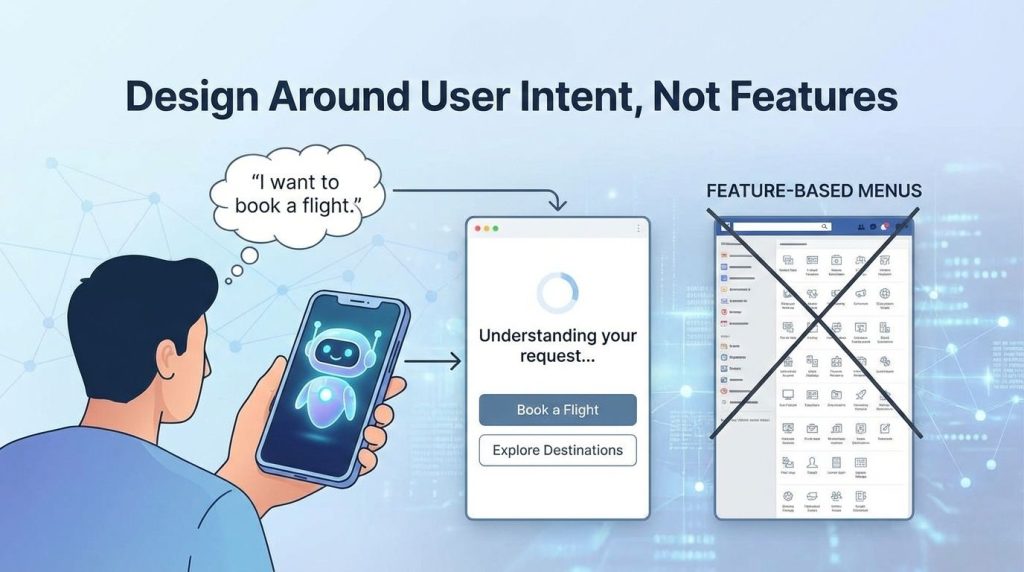
1. Design Around User Intent, Not Features
Every chatbot conversation starts with understanding user intent. Users usually come with a particular purpose: to get support, find information, complete a task, or make a decision. Every chatbot design should prioritize intent recognition. Instead of presenting users with extensive menus, great design analyzes language correctly, anticipates user needs, and presents them with the next logical step in the conversation.
By focusing on actual user intents, rather than assumptions, ChatN.ai designs chatbots that are instinctive to use, truly responsive, and genuinely helpful. Consequently, users experience more natural conversations, resolve problems more easily, and are more satisfied.
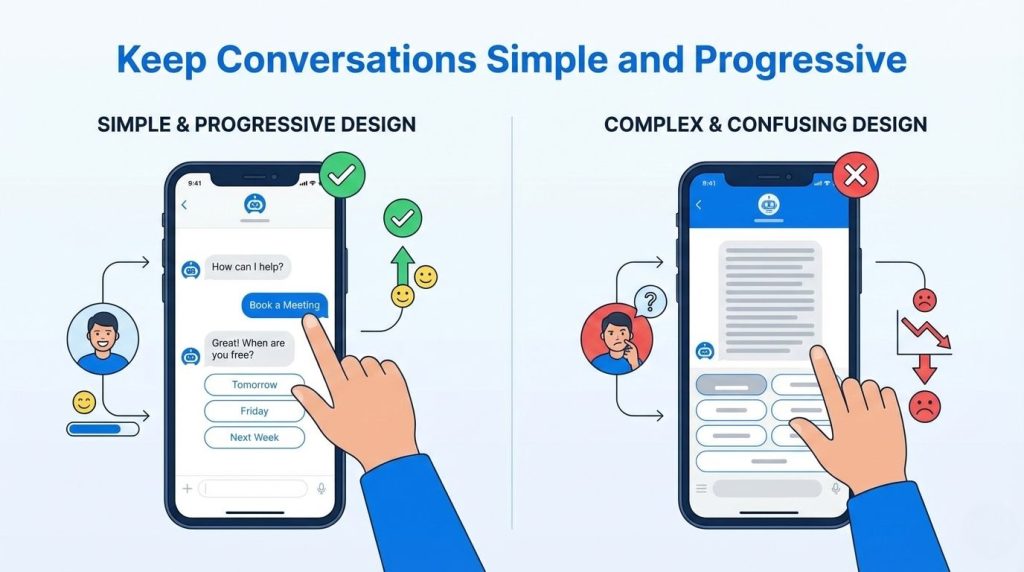
2. Keep Conversations Simple and Progressive
Complex dialogues will confuse the user; completion would not be easy. However, simplicity will make things work. You can achieve effective chatbot design by following a few steps. These include asking a question every time, keeping the responses short and straightforward, and establishing context. Therefore, users remain engaged, the drop-off rate decreases, and confidence in the chatbot increases.
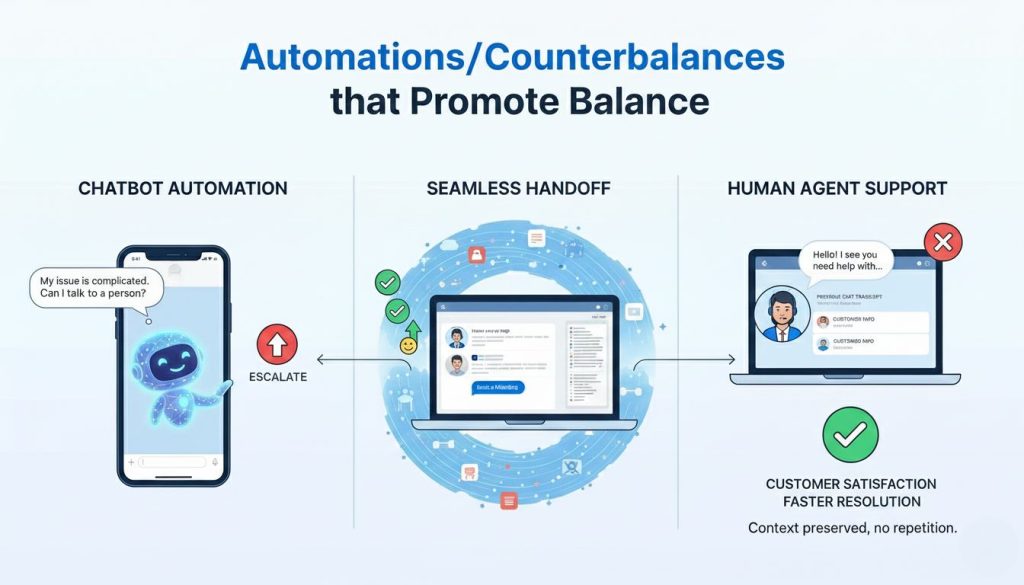
3. Automations/Counterbalances that Promote Balance
There would be no chatbot capable of dealing with every situation correctly. Thus, the intelligent design of a chatbot would include appropriate escalation criteria, effective transition to a human agent, and preservation of context. These updates maintain the chatbot’s optimal performance.
Additionally, ChatN.ai can provide human operators with all information from previous conversations, ensuring the communication flow retains all information and that customers do not have to repeat their messages or information. This helps keep all operations smooth and resolves issues much faster, thereby increasing customer satisfaction levels.
Conversational Design: How Chatbots Should “Talk”
- Tone defines trust.
- Tone is not cosmetic.
- It shapes perceptions and builds trust.
A well-designed chatbot speaks in a voice that is:
- Clear
- Polite
- Confident
- Approachable
Where the tone seems robotic, users tune out and go elsewhere. Conversely, overly casual language weakens credibility. Hence, this means chatbot tone must walk a delicate balance: professional but human.
ChatN.ai personalizes tone to the brand voice, industry expectations, and audience requirements. Consequently, every interaction feels organic, believable, and purposeful. This consistency keeps conversations both interesting and reliable.
Clarity Beats Cleverness
Most chatbot failures stem from clever wording rather than clear communication. But clarity always wins.
Practical design for chatbots:
Direct language
Short sentences
Familiar terms.
When users have to stop and consider what this means, the design has already failed. Clear communication removes friction, accelerates understanding, and keeps conversations moving forward.
Confirmation Builds Confidence
Good chatbot design actively confirms understanding.
For example, the chatbot clarifies intent by asking:
“I can help with billing or account access. Which do you need?”
Then, it checks for accuracy by prompting:
“You’re asking about order status. Is that correct?
These checkpoints added within chatbot design reduce errors, minimize frustration, and keep conversations on track. As a result, users feel more understood, confident, and more willing to continue the interaction.
Chatbot UX: Designing for the User Journey
Chatbot UX focuses on how conversations fit into the broader user experience.
First, entry points matter.
Users interact with chatbots from various locations, including:
- Websites
- Apps
- portals
- support pages
Each of these entry points indicates a different intent. For this reason, an intelligent chatbot design will adjust its responses based on where the conversation starts. Users then receive guidance that seems relevant and timely.
ChatN.ai uses contextual triggers to initiate the appropriate conversation in real-time. Through this, the interactions start with a purpose, reducing friction and guiding users quickly toward resolution.
Reduce Cognitive Load
During a conversation, users should never feel lost.
Therefore, a strong chatbot UX actively reduces cognitive load.
Designing effective chatbots:
Limits choices to avoid overwhelm.
Uses visual cues to guide attention*
Highlight the following actions to create momentum. Consequently, the users always know what to do next. Conversations flow better, users engage more, and they achieve results.
Design for Completion, Not Conversation Length
The goal is not to extend conversations unnecessarily; rather, it is to achieve successful outcomes. Therefore, chatbot design effectively focuses on efficiency and clarity. It:
Quickly solves problems to keep users on track.
Avoids unnecessary steps that create friction
Closes the conversation cleanly.
By performing tasks efficiently, the chatbot reinforces user satisfaction, strengthens trust, and fosters repeat use.
Chatbot Architecture: The Backbone of Scalable Design
Behind every great chatbot is a robust architecture.
Modular conversation flows
Modular conversation flows are at the heart of scalable chatbot design. Each module is responsible for some active handling of tasks, such as:
Authentication
Data Collection
Issue resolution
Escalation
This modular construction not only simplifies updates but also prevents system failures during changes. Consequently, ChatN.ai designs chatbots that evolve seamlessly, allowing for improvements and expansions without requiring a complete rebuild.
Data Integration Is Essential
Disconnected chatbots do not meet user expectations.
Consequently, a robust chatbot design actively integrates with central systems, including:
CRMs
Help desks
Knowledge Bases
Internal Systems
By integrating with these platforms, chatbots can access accurate, real-time information. This approach ensures chatbots deliver precise answers, resolve issues quickly, and enhance the overall user experience.
AI Learning Improves Design Over Time
Design doesn’t stop upon launch. On the contrary, ChatN.ai chatbots are continually evolving to improve performance. They:
Learn from interactions to understand user requirements.
Identify drop-off points and friction in conversations.
Automatic: Optimize responses for clarity and efficiency.
Continuous improvement implemented by ChatN.ai can ensure that chatbots maintain high performance and user experience, thereby always meeting user expectations.
Designing Chatbot Workflows That Drive Results
Start With High-Impact Use Cases
Not every task needs to be automated. Because of this, sound chatbot design focuses resources on the most value-laden tasks, including:
- High-volume demands that occur frequently
- Repetitive questions that occupy staff time
- Actions needing urgent attention – time-sensitive
Focus on these high-impact use cases, and the chatbots drive immediate ROI, reduce workload, and improve overall efficiency.
Chart the Optimal Route
Before building a chatbot, define what success will look like.
To accomplish this, ask key questions:
- Which should be first?
- What decisions are required?
Where should the user end up? Next, ChatN.ai visually maps the workflows to ensure each step flows logically. By removing friction, this approach helps users navigate more effectively, reduces errors, and provides a seamless conversation experience.
Handle Errors Gracefully
Errors are inevitable; it is considerate design that determines how users recover. Therefore, great chatbot design actively includes:
- Clear fallback responses to get users back on track
- Constructive suggestions to clear up confusion quickly
Easy Escalation to Human Support when needed. Graceful error management by chatbots sustains contact, reduces frustration, and ensures a positive user experience even when problems arise.
Designing Enterprise Chatbots: Scaling Without Chaos
Enterprise environments require more than just core functionality.
These needs require governance and control. The needs that large organizations have include:
- Role-based access for effective permission management.
- Controls to achieve compliance with regulatory requirements
Audit trails to monitor activities to ensure accountability. Thus, ChatN.ai implements enterprise-class chatbot design from day one. It allows organizations to scale operations effectively, providing control and a seamless user experience.
Consistency Across Teams
Several organizations have multiple departments that deploy chatbots independently. Without clear design standards, organizations create fragmented experiences. For this, ChatN.ai unifies chatbot design while still allowing teams to customize workflows. Therefore, organizations achieve consistent interactions across departments without sacrificing flexibility or creativity.
Security by Design
Trust starts with protection.
Therefore, enterprise chatbot design needs to proactively account for security.
Secure authentication to identify users.
Data privacy controls to secure sensitive information.
Compliance alignment with regulatory requirements. ChatN.ai embeds security from the beginning, rather than adding it as an afterthought, to ensure chatbots remain safe, reliable, and trusted in every interaction.
Measuring Chatbot Design Success
Effective design should be demonstrably valuable. To do so, organizations monitor key metrics, which include:
- Resolution rate to measure problem-solving efficiency
- Conversation completion to ensure users reach their goals
- Frequency of escalation to monitor handoffs to human agents
- User satisfaction to measure the quality of experience
Conversion impact to gauge business outcomes. Furthermore, ChatN.ai provides real-time analytics that enable teams to fine-tune chatbot design. Organizations analyze data and turn assumptions into actionable improvements to enhance performance continuously.
Common Chatbot Design Mistakes to Avoid
Overloading Conversations
Too many options presented at once may overwhelm users and halt interactions. Hence, the practical design of chatbots aims for simplicity: simplifying choices by guiding users through one stage at a time and highlighting the following action. Streamlining interactions can help users stay focused on their goals and avoid misunderstandings while achieving them efficiently.*
User Feedback Ignored
Users bring new insights into the process, quickly identifying flaws in a design. Second, ignoring feedback not only stalls improvement but also risks user frustration and disengagement. ChatN.ai prevents this by actively incorporating feedback loops in chatbot design. By examining user responses, identifying pain points, and making targeted improvements, chatbots continually evolve. As a result, organizations enhance usability, boost satisfaction, and maintain high engagement over time.
Treating Chatbots as Static Tools
Static chatbots become outdated quickly, since user needs, product offerings, and expectations change. Therefore, treating a chatbot as a one-time deployment creates missed opportunities and a decline in engagement. Designing effective chatbots requires ongoing optimization. Monitoring conversations, collating performance metrics, and periodically updating workflows keep chatbots relevant and responsive. In this way, the chatbots remain eternal servants, changing with business goals and user expectations over time.
Why ChatN.ai Leads in Chatbot Design
UX strategy for intuitive and engaging interactions
Automating workflows to ease tasks and reduce manual effort. Enterprise scalability to support the growth across various departments and locations. Each chatbot actively minimizes friction, maximizes efficiency, and enhances the user experience. Coupled together, ChatN.ai enables teams to create chatbots that evolve and scale with their business, ensuring long-term value is consistently delivered.
The Future of Chatbot Design
Chatbot design will continue to evolve rapidly as user expectations, technology, and business needs change.
Looking ahead, future-ready chatbots will predict user intent earlier, deliver deeply personalized responses, and blend AI with human support seamlessly to create frictionless experiences.
Consequently, organizations that invest in thoughtful chatbot design today will gain a competitive advantage tomorrow. By anticipating needs and adopting advanced strategies, they stay ahead of the curve. ChatN.ai is already shaping that future, empowering teams to build chatbots that adapt, learn, and deliver exceptional results over time.
Conclusion: Chatbot Design is a Business Strategy
The design of chatbots is not simply a technical task; it is actually a strategic decision with direct implications on business outcomes.
Properly implemented, a chatbot’s design scales operations, improves customer satisfaction, and drives measurable growth. On the other hand, poorly designed chatbots destroy trust, frustrate users, and create inefficiencies. We help businesses everywhere create chatbots that bring clarity, instill confidence, and drive tangible outcomes. When a chatbot is not working well, it is hardly ever the automation; the problem is the design. With ChatN.ai, the strategy of focusing on user experience and intelligent workflows ensures each chatbot will empower your business, engage customers, and deliver long-term success.