

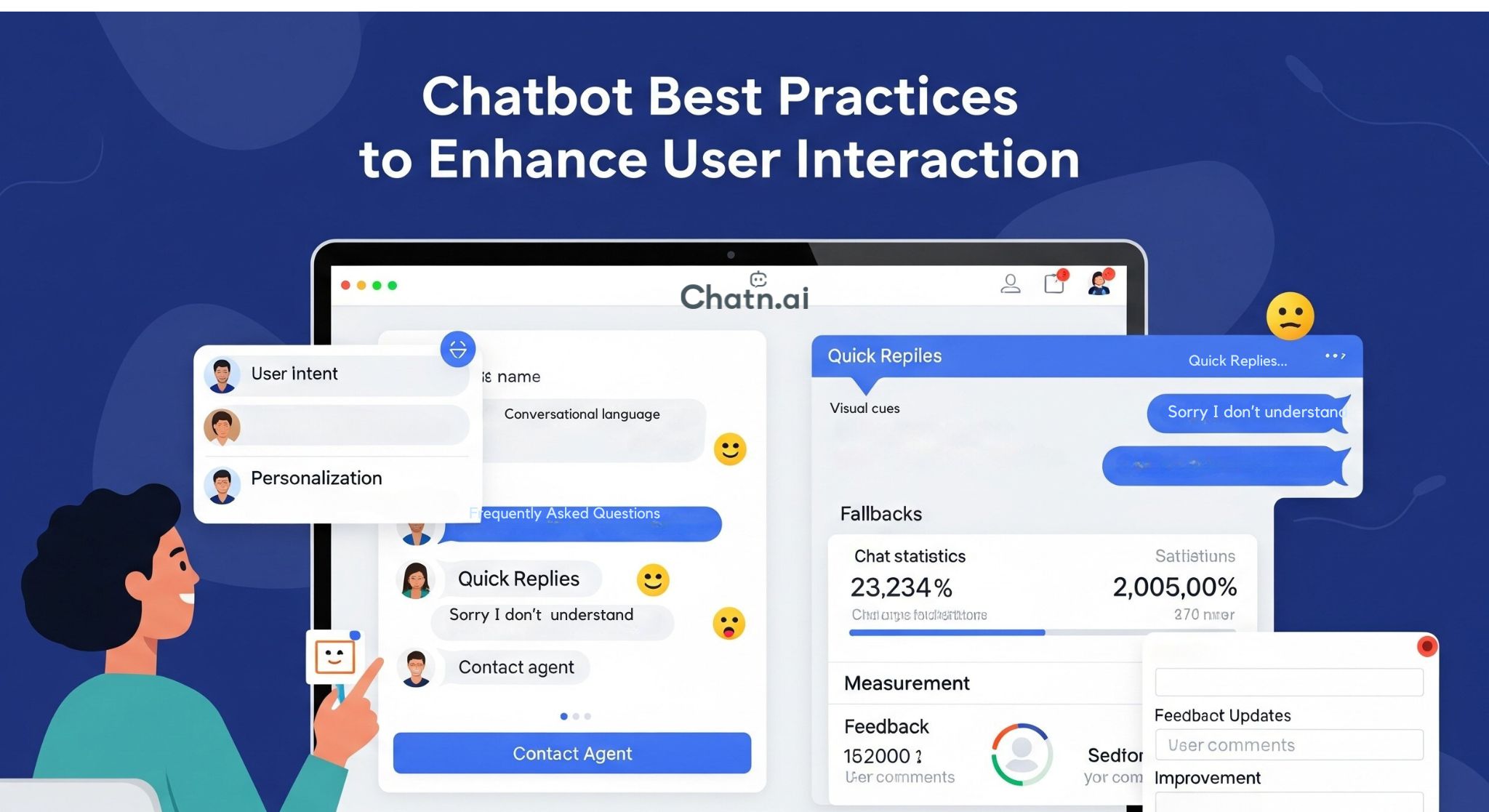
Chatbots are not new anymore. In 2025, they will be the digital interface of business. However, the fact is that not every chatbot works. Other ones give frustration to users. Others stall some conversions. This is the difference in execution. This guide outlines chatbot best practices to enhance your user interaction and ultimately derive real value from your AI assistant.
These are the strategies top-performing companies use to build conversational bots that feel helpful, not robotic.
Why User Interaction Matters More Than Ever
User expectations have changed. A chatbot isn’t just a tool anymore—it’s part of your brand experience. When done correctly, chatbots build trust, reduce support costs, and encourage users to return. But if users bounce after one confusing reply? You’ve lost a chance to convert or serve.
The Shift from Automation to Experience
Initially, companies used chatbots to automate mundane, repetitive tasks. Saving time and reducing costs was all. However, the competition now is higher. Users now have an interest not only in answers, but also in conversations that are convenient, intimate, and helpful.
The best practices of modern chatbots extend beyond automation. It is not a replacement for human beings, but rather a means of supporting them. The best bots possess knowledge of intent, are empathetic, and know how to direct users to the correct solution. Well-built chatbots will improve the customer journey, not disturb it.
What If Chatbots Don’t Engage
Inability to relate to users can be costly when chatbots fail to perform effectively. Confusing flows, cold responses, or missing options often lead to quick drop-offs. Frustrated users may leave negative feedback, abandon your brand, or flood support with repeat requests.
If your chatbot doesn’t provide value in the first few messages, most users won’t give it a second chance. That’s why following chatbot best practices is crucial. You only get one chance to make a positive impression — and bots that engage effectively can foster lasting trust.
1. Start with Intent: Know Your Users Inside and Out
The first step to creating an effective chatbot is to be clear. What kind of problems do the users need to address? Which are the most frequently asked questions among them? Study logged support and opinion to determine the most popular user intents.
Mapping Real User Journeys
To create a helpful chatbot, the first step is to understand the authentic journeys of your users. Monitor them from the first click to the conversion. Note down the points at which they pause, lose contact, or become confused.
Researchers find such patterns insightful. You will gain insight into what users want and whether the chatbot will be sufficient. By mapping actual behavior, not assumptions, you can design conversation flows that feel intuitive and timely.
This step is essential in applying chatbot best practices. It helps your bot anticipate needs before users even ask.
Align Chatbot Goals with User Needs
Too often, businesses design chatbots to meet internal objectives, such as reducing call volume or promoting products. Users do not care about such. They desire rapid solutions and unscheduled services.
It is, therefore, crucial to ensure that the purpose of your chatbot aligns with users’ needs. An excellent chatbot will assist humans in solving problems, but not in making monkeys. It makes work easy and opens a way to the correct solution.
When you align your objectives with that of user intent, everybody wins. This alignment is one of the most essential best practices for chatbots to follow.
2. Write Like a Human: Use Conversational Language
People want to talk, not type commands. The best chatbot experiences mimic natural conversation without pretending to be human.
Use NLP to Understand and Respond in Real-Time
Natural Language Processing (NLP) allows chatbots to understand variations in human speech. It assists in deciphering purpose and contextual feedback, which are the most significant in smooth interaction.
Do not use jargon and Over-Automation
The language that your bot employs needs to be articulate and uncomplicated. There is no need to use technical words or sound robotic. The sounds are not those of a machine, but rather those of your support team. And never automate anything that is not on a working basis. Some activities require a human touch.
3. Make it Personal
The decision to personalize is not something optional. Users expect bots to recognize context, like recent purchases, past issues, or name and location.
Personalization yields the best results when applied with care and consideration. Utilize the information on customer bases to enhance responses and deliver a more personalized and valuable experience to customers. However, it is essential to understand how and why you use that data. Openness creates confidence.
Inform users about how their data helps the chatbot become more responsive or precise. However, remember always to make the option to opt out available. Respecting privacy is a core part of modern chatbot best practices, and users appreciate it.
When done right, data can power more intelligent, more meaningful conversations without feeling intrusive
Dynamic Responses vs. Static Scripts
Nobody enjoys talking to a script. Static replies often make users feel like they’re talking to a wall. In its place, you can use dynamic responses that adapt to the user’s circumstances, history, and performance.
This approach makes the chatbot non-technical and engaging. It is also able to maintain a conversation in a personalized manner. Chatbot best practices recommend providing individualized responses in real-time, rather than using one-size-fits-all scripts.
The greater the levels of adaptability you give your bot, the higher the chances are that users will remain, interact, and come back.
4. Guide the Conversation with Visual Cues and Quick Replies
Chatbots should feel intuitive. Visual elements, such as quick replies and buttons, help users make decisions faster without typing.
Use Guided Choices Instead of Open-Ended Questions
Don’t make users guess what to type. Instead, give them clear options. Guided choices—like buttons or quick replies—make the experience easier.
These prompts help users navigate the conversation without confusion. They also reduce errors and speed up resolution time. It’s one of the simplest yet most effective chatbot best practices you can apply. When users know exactly what to do next, they’re more likely to complete the task.
Design for Mobile Responsiveness
Most chatbot interactions now happen on mobile devices. Therefore, your design must function flawlessly on smaller screens.
Make buttons easy to tap and keep text short and readable. A cluttered or unresponsive interface can quickly frustrate users. That’s why mobile-first design is a key part of modern chatbot best practices.
If your chatbot doesn’t work well on mobile, it won’t work at all for most people.
5. Keep It Short, Smart, and Goal-Oriented
Long-winded answers overwhelm users. Stick to short messages that move the conversation forward.
The 3-Second Rule of Bot Messaging
If users can’t read and understand your bot’s message in three seconds, it’s too long. Cut the fluff.
Short, clear messages reduce friction and keep the conversation moving. Every word should serve a purpose. Long replies slow users down and break their focus.
One of the most overlooked chatbot best practices is simplicity. Say less, but say it better.
Build for Completion, Not Just Engagement
A response by a user is good. It is more appropriate to aid them in the process of achieving a solution. Pay attention to the results, rather than exchanging back and forth.
Limit every interaction to a particular end. The process of deciding whether to book a service or find an answer should be straightforward.
When you employ chatbot best practices, which involve focusing on user intent, you craft engaging and effective conversations.
6. Build in Fallbacks and Human Escalation
No bot gets it right 100% of the time—plan for errors and dead ends.
Best Practices for Error Handling
Every chatbot will misunderstand a user at some point. What matters is how it handles the moment. Instead of saying, “I didn’t get that,” your bot should offer a helpful next step. Try rephrasing the question, suggesting popular options, or asking for clarification.
Clear guidance keeps the conversation going. More importantly, it prevents user frustration from building up. One of the most essential chatbot best practices is designing smooth error recovery. A thoughtful response can turn a mistake into a positive experience.
When and How to Escalate to a Live Agent
A chatbot can’t solve every issue—and that’s okay. Some questions need a human touch.
Make it easy for users to reach live support when they need to. Don’t wait for them to ask. Instead, offer the option during complex, sensitive, or high-stakes interactions.
Smooth escalation isn’t a fallback—it’s a sign of good design. Being part of intelligent chatbot best practices, it fosters trust and ensures that no user is left unattended or unsupported.
7. Measure, Iterate, and improve.
Chatbots have to improve. Optimize scripts, flows, and features using analytics.
To enhance your chatbot, you must measure what matters. Begin by measuring bounce rate, session duration, and completions.
The KPIs used demonstrate the interaction between users and their drop-off. The CSAT scores also indicate the level of user satisfaction following a chat. As part of effective chatbot best practices, regularly reviewing these metrics helps you identify issues early and improve overall performance.
A/B Testing Scripts and Flows
Don’t guess what works—test it. Try different greetings, button labels, and conversation paths to see which ones work best.
Compare results, then keep what works best. A/B testing is one of the most reliable chatbot best practices for improving engagement over time. It’s a simple way to turn insights into action.
Bonus Tip: Make Your Bot Feel Like Part of the Brand
Your chatbot represents your brand, so don’t treat it like an afterthought. Your chatbot is your brand: do not treat it as superfluous.
Deciding On A Voice And Name To Go With Your Brand
Give your chatbot a name, tone, and style that align with the personality of your company. Be consistent, whether it is the type that is friendly, witty, or all business. This allows the users to make it feel like they are conversing with an extension of your brand.
Keeping Visual Design and UX Consistent
Align your chatbot’s design with your site or app. Use the same fonts, colors, and icons. It is a minor feature that creates confidence and an uninterrupted user experience throughout.
A constant, properly branded chatbot increases customer engagement and enhances your presence in the digital space as a whole.
Common Mistakes to Avoid
Avoid these pitfalls that hurt interaction:
- Using overly complex language
- Offering too many or too few options
- Ignoring user feedback
- Failing to escalate when needed
- Making users repeat themselves
Final Thoughts: Build a Bot Users Want to Talk To
A chatbot isn’t just software. It’s an extension of your brand and your team. When it listens, responds, and solves problems well, users notice. Following these chatbot best practices will help you create experiences people actually enjoy—and come back for.
Want help building a smarter chatbot? Let’s talk!