
Chatbots: More Than a Trend
Chatbots are no longer just a passing trend—they’ve become essential tools in modern customer engagement. As technology advances, so do the types of chatbots available to businesses. Today, the chatbot landscape is incredibly diverse, offering a wide range of solutions tailored to different operational needs.
Some bots operate on simple rule-based frameworks, while others use artificial intelligence to learn, adapt, and respond with surprising sophistication. With so many choices, it’s easy to feel overwhelmed. That’s why understanding the different types of chatbots—and how they function—is critical. In this guide, we’ll break them down clearly so you can identify the one that fits your business goals, audience expectations, and use cases.
What Makes One Chatbot Different from Another?
These differences aren’t just cosmetic—they stem from the underlying technology, the purpose behind the bot, and how it’s expected to serve your business. Understanding these variations is essential. The more closely a chatbot aligns with your specific use case, the more effective it will be in meeting both user expectations and business outcomes.
Purpose and Functionality
At the core of every chatbot lies its intended purpose—and that’s where key distinctions begin. Some developers design bots to provide rapid responses to routine questions, making them ideal for addressing everyday customer service needs. Others, however, go several steps further. They can guide users through complex workflows, offer tailored advice, or even make dynamic decisions based on real-time data.
Therefore, matching the chatbot’s function to your business objective is critical. A simple FAQ bot won’t suffice if your goal is to automate onboarding or personalize user journeys. In contrast, a more intelligent, data-driven assistant becomes essential when handling nuanced interactions or supporting critical decisions. Ultimately, the more complex your needs, the more advanced your chatbot must be.
Technology Behind the Bot
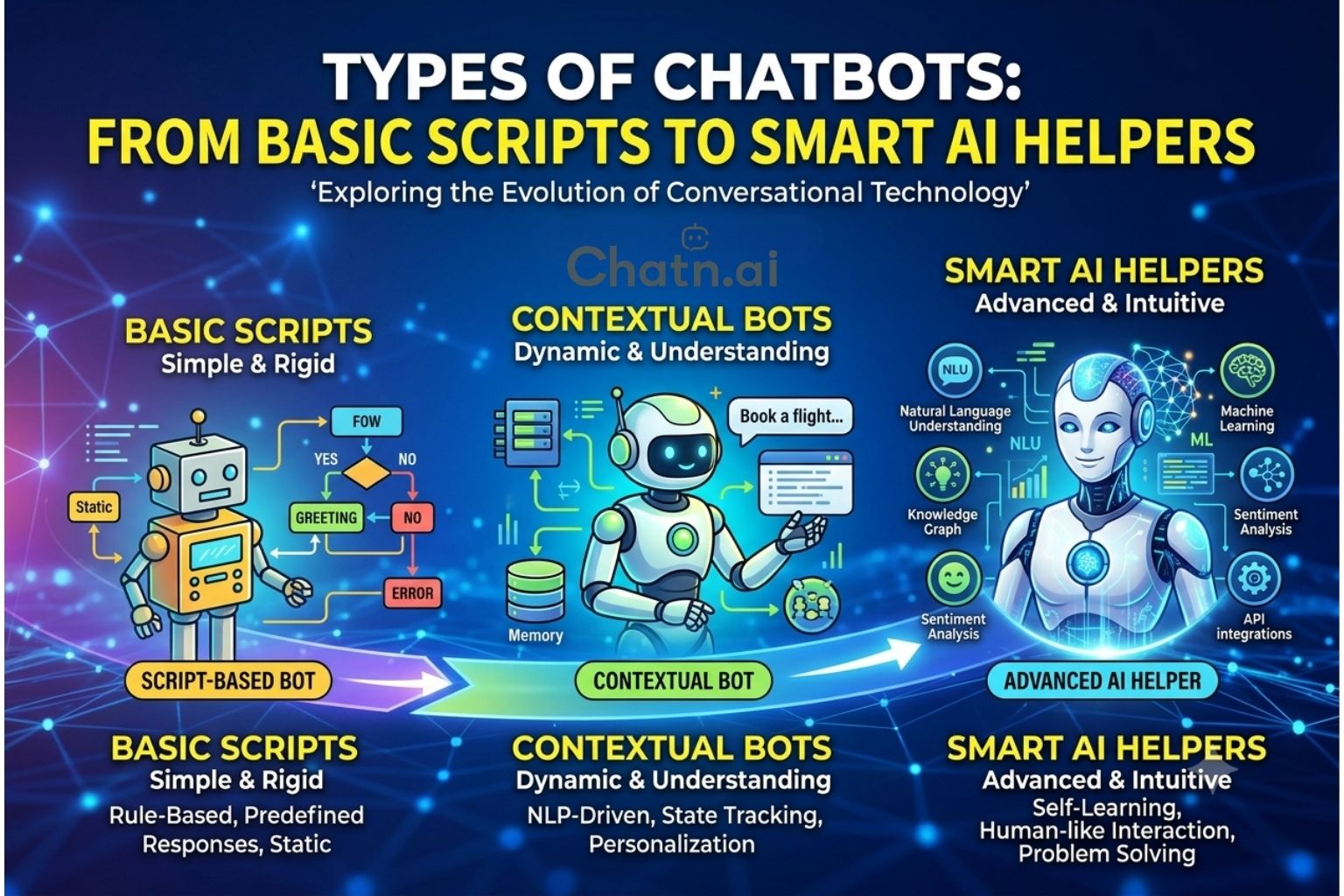
A chatbot’s performance depends heavily on the technology that powers it. Developers build some chatbots using rule-based systems, which rely on rigid scripts and respond only to predefined prompts. These bots follow strict decision trees and are best suited for limited, predictable interactions.
In contrast, chatbots driven by natural language processing (NLP) and machine learning are far more dynamic. They can recognize user intent, handle a variety of input styles, and gradually improve through ongoing interactions. Moreover, when integrated with systems like CRMs, knowledge bases, or help desks, these bots become even more powerful. Such integrations allow them to access real-time data, streamline workflows, and provide highly contextual responses—enhancing both functionality and value.
User Experience and Learning Capability
How a chatbot engages with users directly influences the overall experience. Basic bots follow a fixed script and cannot adapt outside of it. While this approach works well for handling straightforward requests, it often leads to frustration during more complex and nuanced interactions.
Conversely, AI-powered bots offer a far more engaging experience. They can understand diverse input formats, learn from past conversations, and adapt their responses over time. In many cases, they even remember previous interactions, creating a sense of continuity that feels more natural and personalized. As user expectations rise, this ability to evolve becomes a major differentiator. Businesses that deploy adaptive bots often see stronger engagement, improved satisfaction, and better long-term outcomes.
The 6 Main Types of Chatbots You Need to Know
Understanding the existing alternatives is key to making an informed decision. Below are six significant chatbot types, each with distinct advantages and ideal use cases.
1. Rule-Based (Scripted) Chatbots

These are the most basic type. They follow a predefined script and respond only to specific prompts.
Pros: These bots are easy to build and quick to launch, making them an attractive option for businesses with limited resources. They are also cost-effective for handling basic tasks and offer consistency when dealing with repetitive queries.
Cons: However, they provide limited flexibility and struggle with understanding anything outside of their programmed rules. As a result, they are inadequate for managing complex or dynamic user interactions.
Ideal for: FAQs, surveys, and simple forms.
2. Menu/Button-Based Chatbots

These bots guide users through options using clickable buttons, offering a structured experience.
Pros: These chatbots offer an intuitive and user-friendly experience, making them easy to navigate even for non-technical users. They provide fast access to information through clearly labeled buttons or menus, which helps users reach their goals quickly. Additionally, they reduce confusion by eliminating the risk of misunderstood inputs.
Cons: On the downside, these bots can feel mechanical and impersonal. They lack the natural flow of a human-like conversation, which may limit user engagement and make the interaction feel rigid.
Ideal for: E-commerce, appointment scheduling, and onboarding.
3. Keyword Recognition Chatbots

These chatbots scan user input for specific keywords and respond with relevant replies based on those matches. They aim to provide a more dynamic interaction than simple button-based bots.
Pros: Keyword recognition bots offer a more natural way to interact compared to structured menus. They allow users to type freely, making the experience feel less constrained. Additionally, they offer a degree of flexibility within set limits, enabling slightly more personalized responses.
Cons: However, these bots may misinterpret user intent, especially when the phrasing doesn’t match the programmed keywords. They also lack proper contextual awareness, which can lead to irrelevant or confusing responses during more complex conversations.
Ideal for: Simple customer support and internal knowledge queries.
4. AI-Powered Contextual Chatbots

These NLP-driven bots understand context and user preferences.
Pros: These AI-powered chatbots deliver personalized and adaptive interactions by analyzing user behavior and preferences. They can handle complex tasks such as guiding users through multi-step processes or offering tailored recommendations. Even better, they improve over time by learning from every interaction, which makes them increasingly accurate and helpful.
Cons: On the downside, developing and maintaining these advanced bots comes with higher costs. They also require access to quality training data and ongoing fine-tuning to perform effectively, which can demand additional time and technical resources.
Ideal for: Customer support, sales automation, and retention.
5. Voice Assistants (Voice-Recognition Chatbots)

These bots use voice input and output for hands-free interaction.
Pros: Voice assistants are highly convenient for multitasking, allowing users to interact without using their hands—ideal for driving, cooking, or managing other activities. They also enhance accessibility, making digital services available to users with disabilities or limited mobility. Furthermore, they offer a natural and intuitive user experience by mimicking real conversations through speech.
Cons: However, these bots are more complex to develop compared to text-based chatbots. They require advanced voice recognition technology and robust speech synthesis systems to function accurately and reliably, which can increase both development time and cost.
Ideal for: Smart homes, vehicles, and assistive tools.
6. Human-and-AI Hybrid Chatbots

These combine automation with human intervention when needed.
Pros: Human-and-AI hybrid chatbots offer a balanced approach by combining the speed of automation with the empathy of human interaction. They handle routine inquiries efficiently but can escalate complex or emotionally sensitive cases to a live agent when needed. This ensures that users receive timely support without sacrificing the personal touch. By integrating both machine intelligence and human insight, these bots can provide a more thoughtful and reassuring customer experience.
Cons: However, this setup requires reliable backend systems to ensure smooth handoffs between the bot and human agents. It also demands the availability of trained staff to step in when the bot reaches its limitations, which can add to operational costs and planning.
Ideal for: Healthcare, finance, and sensitive services.
Which Type of Chatbot Is Right for Your Business?
Choosing the right chatbot starts with understanding your business goals.
Think of Your Objectives
Start by identifying what you want to achieve. If you need fast lead qualification, a rule-based bot may suffice. For deeper engagement or personalized experiences, opt for an AI-powered solution. Knowing your goals ensures you choose a bot that meets them without overcomplicating your strategy.
Budget and Technology Resources
Your available resources play a key role. Simpler bots are ideal for small budgets and quick launches. If you can invest, AI bots offer scalability and cost-efficiency over time.
Customer Expectations
Different audiences prefer different interfaces. Tech-savvy users may expect natural conversations, while others might favor structured options. Aligning your bot’s design with user preferences builds trust and improves engagement.
Real-World Examples: Matching Chatbots to Industries
E-commerce: Use button bots to guide purchases, then layer AI for personalization. Example: Product recommendation quiz.
Healthcare: Hybrid bots collect symptoms, prep doctors, and escalate urgent cases. Example: Pre-consultation symptom checker.
SaaS & Tech Support: AI bots solve common issues, then hand off to human agents as needed. Example: Tier-1 support bot.
Banking & Finance: Voice and AI bots help users manage accounts and track spending. Example: Virtual financial advisor.
The Evolution of Chatbots: From 2010 to 2025
Where We Started
Early bots like Eliza mimicked conversation but lacked understanding.
The NLP Boom
With Siri and Alexa, NLP became mainstream. Users began to expect natural dialogue.
AI-Powered Everything
Modern bots use language models to adapt in real-time, offering context-aware responses.
Why Chatn.ai Builds Smarter Chatbots
At Chatn.ai, we understand that no single chatbot works for every use case. That’s why we support both simple rule-based flows and advanced AI-driven agents.
Designed with Flexibility in Mind
Our drag-and-drop builder allows anyone to build chatbots—no code required. With templates and intuitive design, most users launch within hours.
Designed for Real Impact
We go beyond automation. Our bots guide users, reduce confusion, and deliver measurable results like lower support costs, higher satisfaction, and better conversion rates.
Fast Deployment, Scalable Solutions
Chatn.ai integrates with CRMs, help desks, and analytics tools. Start small and expand over time without starting from scratch.

Final Thoughts: Start Smart with the Right Type of Chatbot
Choosing the right chatbot doesn’t mean picking the most complex one—it means selecting the one that meets your goals, fits your budget, and resonates with your audience. Start with what you need today, then evolve as your business grows. With Chatn.ai, it’s easy to build smart, scalable solutions that work.
Ready to Meet the Right Bot for Your Business?
Call to Action: Book a free demo with Chatn.ai today. Discover which chatbot fits your journey—and your future.